 Mr Bhaskar Thakur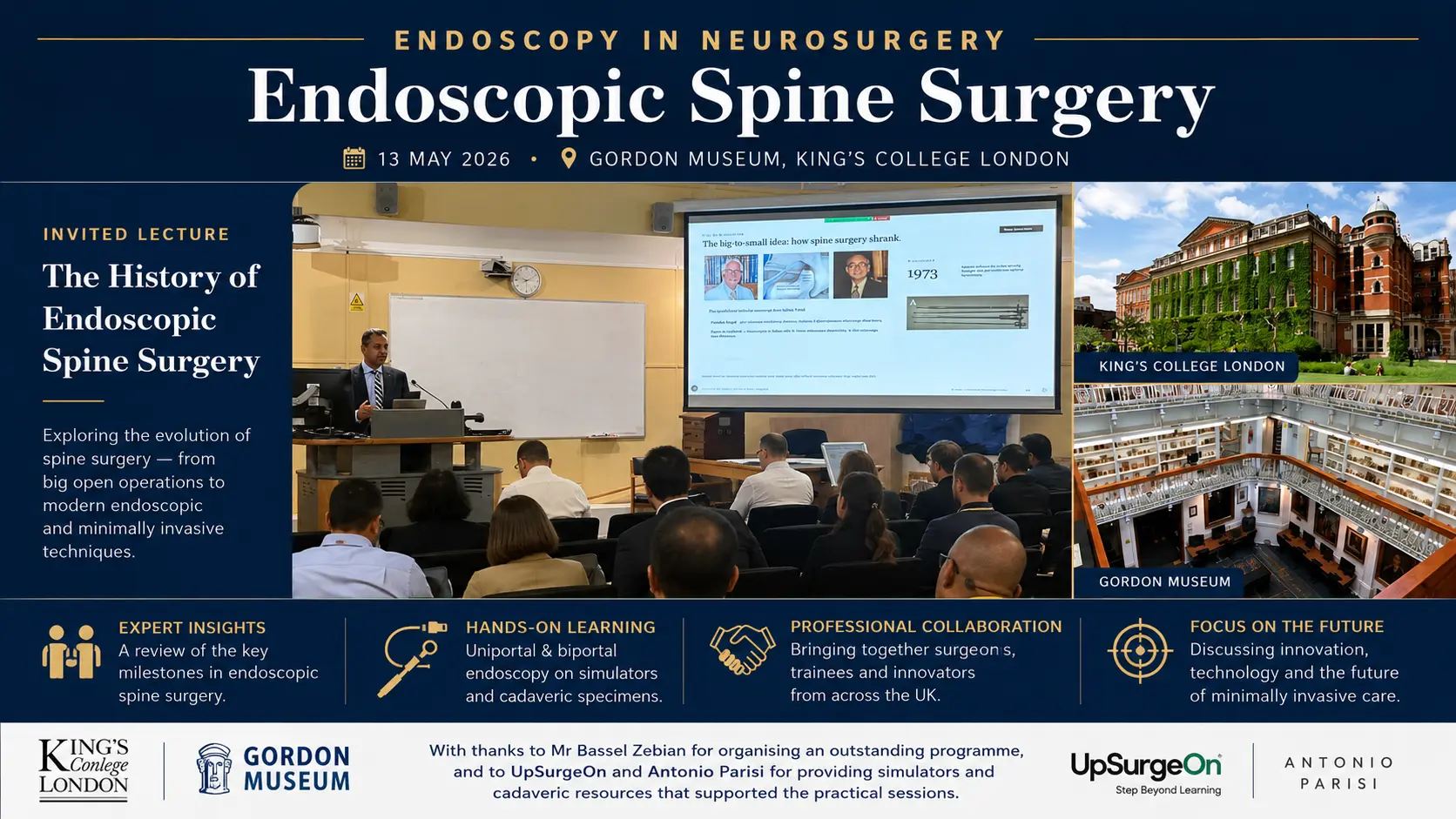
13 May 2026 | Gordon Museum, King’s College London
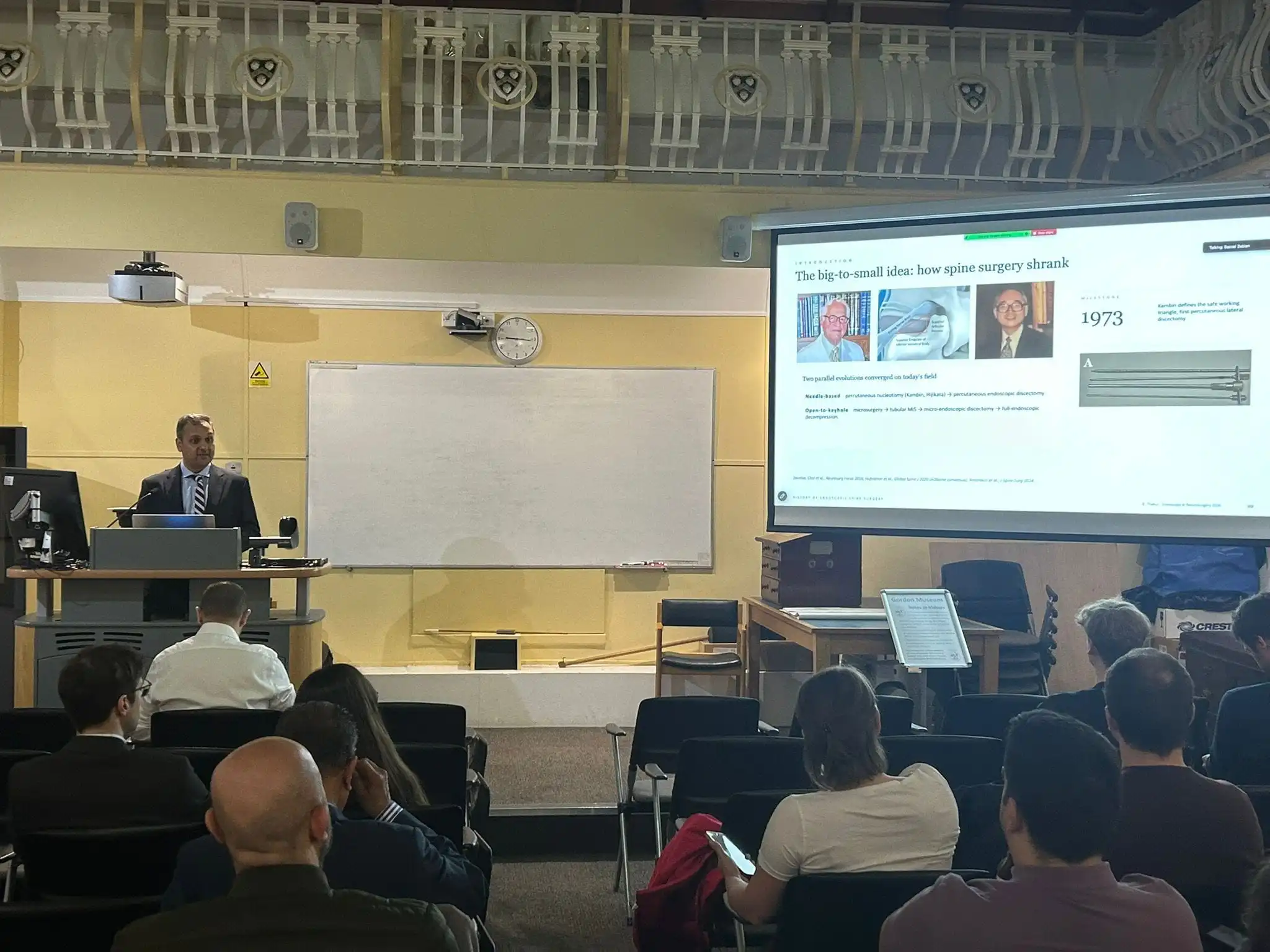
Mr Bhaskar Thakur recently delivered an invited lecture at the Gordon Museum, King’s College London, as part of a specialist programme focused on the growing role of endoscopy in modern neurosurgical and spinal practice.
The presentation, entitled “The History of Endoscopic Spine Surgery”, explored the evolution of minimally invasive spinal procedures and the technological innovations that have shaped contemporary surgical techniques. The lecture examined how advances in optics, visualisation systems and specialised instrumentation have enabled surgeons to perform increasingly sophisticated procedures through smaller surgical corridors while maintaining precision and safety.
The event formed part of a wider educational programme dedicated to endoscopy in neurosurgery and brought together surgeons, trainees and healthcare professionals interested in the future of minimally invasive spinal care.
Speaking at King’s College London
Hosted at the historic Gordon Museum, one of the largest medical museums in the United Kingdom, the programme provided an excellent forum for professional discussion and collaboration. Located within King’s College London, the venue has a long-standing association with medical education, surgical innovation and clinical research.
Mr Thakur’s invitation to speak reflected his ongoing interest in the development of minimally invasive spinal techniques and his commitment to advancing patient care through innovation and evidence-based practice.
Key Topics Discussed During the Lecture
- The evolution of spinal surgery from open procedures to modern minimally invasive approaches
- The development of endoscopic techniques and surgical visualisation
- Uniportal and biportal endoscopic surgery
- The role of technological innovation in improving patient outcomes
- Current developments in endoscopic spinal surgery within NHS practice
The History and Evolution of Endoscopic Spine Surgery
During the lecture, Mr Thakur reviewed key milestones in the development of endoscopic spinal procedures, tracing the journey from early percutaneous techniques to modern uniportal and biportal approaches.
The presentation highlighted how improvements in imaging technology, endoscopic visualisation and specialised instrumentation have expanded the possibilities of minimally invasive surgery for selected spinal conditions.
Drawing upon clinical experience, Mr Thakur also discussed current developments within NHS practice and shared insights gained through the introduction and development of newer surgical technologies.
Mr Thakur also shared aspects of the endoscopic spinal surgery work being developed within Barking, Havering and Redbridge University Hospitals NHS Trust, discussing practical lessons learned and the opportunities presented by modern minimally invasive techniques.
Patients interested in modern minimally invasive techniques can learn more about Endoscopic Keyhole Spine Surgery and Minimally Invasive Spine Surgery.
The Big-to-Small Idea: How Spine Surgery Evolved
One of the themes explored during the lecture was the remarkable evolution of spinal surgery over the past several decades. The presentation examined how advances in technology have enabled surgeons to move from larger open procedures towards increasingly less invasive techniques.
Historically, many spinal operations required extensive surgical exposure in order to access the affected anatomy. While these procedures remain important in certain situations, developments in imaging, optics and specialised instrumentation have gradually reduced the size of the surgical corridor required for many conditions.
The lecture reviewed how two parallel developments helped shape modern practice. The first was the progression of needle-based and percutaneous techniques, while the second involved advances in microsurgery and minimally invasive spinal surgery. Over time, these pathways converged and contributed to the development of contemporary endoscopic approaches.
This evolution has allowed surgeons to visualise anatomical structures with increasing precision while minimising disruption to surrounding tissues. The result has been a growing range of treatment options that can be tailored to individual patients and specific spinal conditions.
The session highlighted how ongoing innovation continues to influence the future of spinal surgery, with developments focused on improving visualisation, surgical accuracy and patient outcomes.
Professional Collaboration and Practical Learning
The programme brought together neurosurgeons, spine surgeons and trainees from across the United Kingdom with a shared interest in advancing spinal care and improving patient outcomes.
Alongside the lecture sessions, delegates participated in practical workshops using simulation technology and cadaveric specimens, providing valuable exposure to a range of contemporary surgical approaches.
The hands-on sessions included both uniportal and biportal endoscopic techniques, allowing participants to gain practical experience across different approaches while exchanging ideas and experiences with colleagues involved in the continued development of spinal surgery.
The event also provided an opportunity to discuss emerging technologies, future directions within the specialty and the challenges associated with adopting innovative techniques into routine clinical practice.
Acknowledgements
Mr Thakur would like to thank Mr Bassel Zebian for organising and curating an outstanding programme and for bringing together an excellent faculty of speakers and contributors.
Thanks are also extended to King’s College London and the Gordon Museum for hosting the event, as well as UpSurgeOn and Antonio Parisi for providing the simulation platforms and cadaveric resources that supported the practical workshops.
Continuing Professional Development
Participation in professional meetings, academic programmes and collaborative educational events remains an important part of maintaining high standards of patient care and staying informed about developments within spinal surgery.
Mr Bhaskar Thakur regularly contributes to professional discussions, educational initiatives and collaborative projects that support innovation and the ongoing advancement of spinal care.
To learn more about Mr Thakur’s clinical practice and specialist interests, visit the About Mr Bhaskar Thakur page or explore the range of spinal treatments available.
Further Reading
Additional photographs and commentary from this event are available in Mr Bhaskar Thakur’s original LinkedIn post.
View the original LinkedIn post →
Patients seeking specialist advice can arrange a consultation to discuss treatment options and whether minimally invasive techniques may be appropriate for their condition.
