Spinal injections for pain relief are commonly used to help manage persistent neck, back, and nerve-related pain caused by inflammation or irritation around the joints, discs, or nerves.
Mr Bhaskar Thakur is a consultant neurosurgeon in London with expertise in non-surgical pain management, minimally invasive procedures, and advanced treatment for conditions affecting the back, neck, and nervous system.
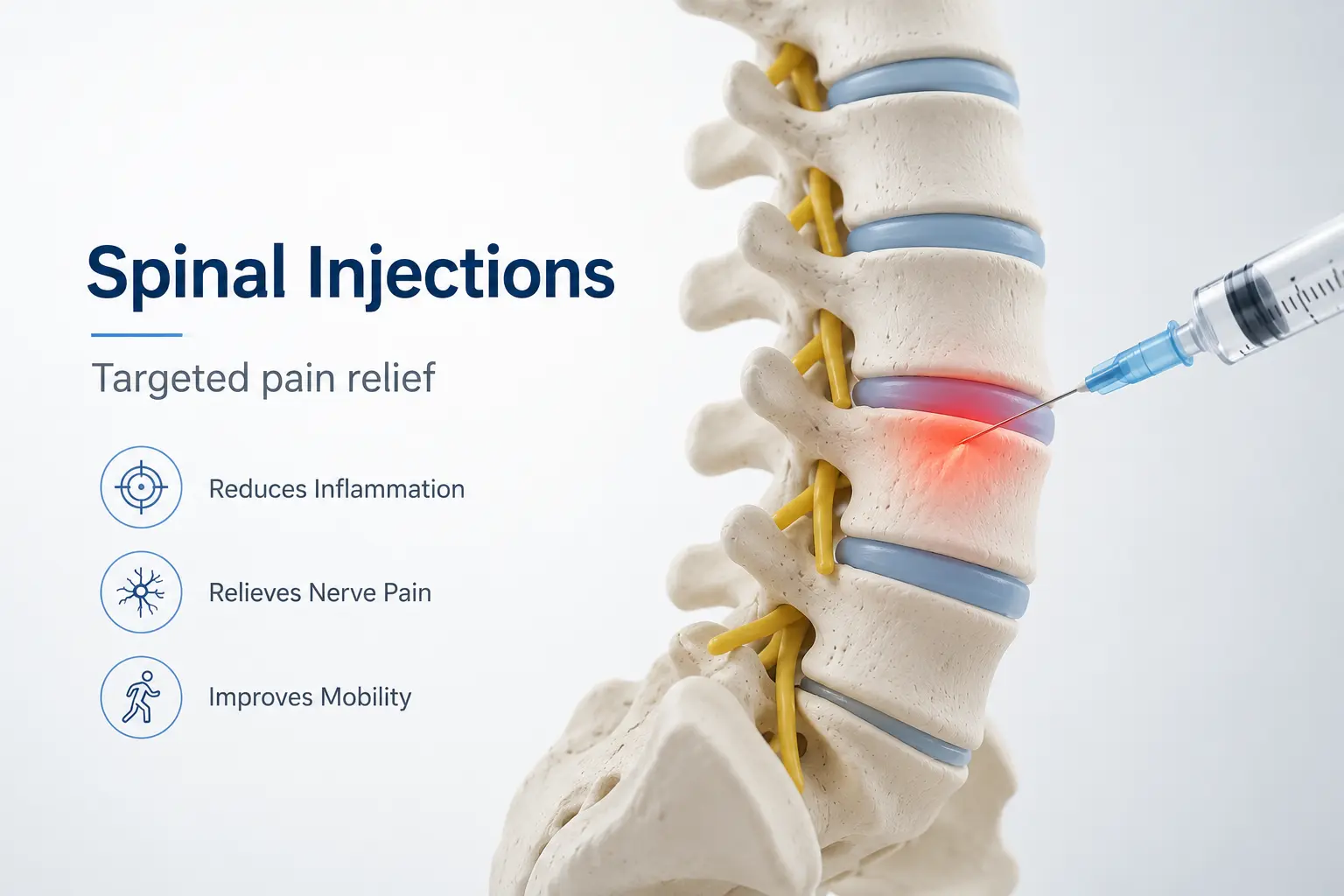
Targeted injections may help reduce inflammation, relieve nerve irritation, and improve mobility in patients experiencing ongoing symptoms despite physiotherapy, medication, or rehabilitation.
Many individuals seeking specialist care in London for persistent pain, sciatica, nerve compression, or degenerative conditions may benefit from carefully planned injection therapy as part of a broader treatment programme.
What Are Spinal Injections?
Spinal image guided injections involve delivering anti-inflammatory medication and local anaesthetic to specific areas causing pain or nerve irritation.
The procedure is designed to reduce inflammation around affected nerves, joints, or soft tissues while helping improve mobility and daily function.
These treatments may also assist in identifying the source of pain in certain patients by targeting specific anatomical structures.
Injection therapy is commonly performed using imaging guidance such as fluoroscopy or CT imaging to improve accuracy and safety during the procedure.
Conditions That May Benefit From Injection Therapy
Targeted injections may be recommended for several conditions affecting the neck, lower back, and nerves.
- Chronic back pain
- Neck pain
- Sciatica
- Slipped disc (disc prolapse)
- Spinal stenosis
- Nerve root irritation
- Facet joint pain
- Degenerative disc disease
- Inflammatory joint-related pain
Patients experiencing pain radiating into the arms or legs, numbness, tingling, or reduced mobility may benefit from specialist assessment to determine whether injection therapy is appropriate.
Who May Benefit From Spinal Injections?
Patients may be considered for spinal injections if they experience:
- Pain radiating into the arms or legs
- Sciatica symptoms
- Persistent lower back problems
- Neck pain associated with nerve irritation
- Tingling or numbness
- Symptoms worsening with walking or standing
- Pain not improving with physiotherapy or medication
- Inflammation around compressed spinal nerves
Types of Injections Commonly Performed
Several types of spinal injections may be used to help manage persistent neck and lower back pain, sciatica, nerve irritation, and inflammation affecting the spine and surrounding joints.
The most appropriate injection procedure depends on the patient’s symptoms, neurological examination, MRI or CT imaging findings, and the underlying spinal condition causing issues.
Epidural Injections
Epidural steroid injections are commonly used to reduce inflammation around irritated or compressed spinal nerves. These injections may help relieve symptoms associated with sciatica, slipped disc (disc prolapse), spinal stenosis, lumbar radiculopathy, and nerve compression affecting the neck or lower back.
Medication is delivered into the epidural space surrounding the spinal nerves using imaging guidance to improve procedural accuracy and safety.
Some patients experience improvement in leg and arm pain, tingling, numbness, or mobility following treatment, particularly when inflammation around the affected nerve begins to settle.
Nerve Root Blocks
Selective nerve root blocks target specific spinal nerves affected by inflammation, irritation, or compression.
These image-guided injections may be recommended for patients experiencing radiating nerve pain travelling into the arms, buttocks, or legs due to conditions such as cervical radiculopathy, lumbar nerve compression, or disc prolapse.
Nerve root injections may help reduce inflammation around the affected nerve while also assisting in identifying the precise source of symptoms in certain patients.
Facet Joint Injections
Facet joint injections are designed to treat pain arising from the small stabilising joints located between the vertebrae of the spine.
Degeneration, inflammation, arthritis, or mechanical stress affecting these joints may contribute to persistent neck and lower back pain, stiffness, and reduced spinal mobility.
Targeted facet joint injections may help reduce local inflammation, improve flexibility, and support rehabilitation in selected patients with chronic spinal discomfort.
Sacroiliac Joint Injections
Sacroiliac joint injections may be considered for pain originating from the sacroiliac joints located between the lower spine and pelvis.
Inflammation or dysfunction affecting these joints can sometimes cause lower back and buttock pain, pelvic discomfort, or symptoms that mimic sciatica.
Image-guided sacroiliac joint injections may help reduce inflammation and improve movement in patients experiencing persistent symptoms affecting daily activities, walking tolerance, or physical function.
Careful clinical assessment is important, as different spinal conditions respond differently to injection therapy. In many patients, spinal injections form part of a broader non-surgical treatment plan that may also include physiotherapy, rehabilitation, posture correction, exercise therapy, and long-term spinal care.
How the Procedure Is Performed
Spinal injection procedures are typically performed using local anaesthetic together with imaging guidance, such as fluoroscopy or CT imaging, to improve precision and safety during treatment.
Before the procedure begins, the affected area is cleaned carefully and prepared in a sterile manner. Local anaesthetic is usually used to numb the skin and surrounding tissues to help minimise discomfort during the injection.
Using imaging guidance, the needle is positioned accurately near the targeted nerve, joint, or inflamed spinal structure before medication is delivered to the affected area.
During the procedure, patients may experience temporary pressure or mild discomfort, although most injections are generally well tolerated and completed within a relatively short period of time.
- The skin is cleaned and prepared carefully
- Local anaesthetic is used to help numb the area
- Imaging guidance assists with accurate needle positioning
- Anti-inflammatory medication is delivered to the targeted region
- Patients are monitored briefly following the procedure
Most spinal injections are performed as day-case procedures, meaning patients are usually able to return home on the same day without requiring an overnight hospital stay.
Depending on the type of injection performed, some patients may notice symptom improvement within several days, while others experience more gradual relief over the following weeks.
Potential Benefits of Injection Therapy

Targeted pain management procedures may provide several potential benefits in selected patients.
- Reduction in inflammation
- Relief of nerve-related pain
- Improved mobility and flexibility
- Reduced leg or arm symptoms
- Improved tolerance for physiotherapy and rehabilitation
- Delay or avoidance of surgery in some patients
The duration and degree of symptom relief vary depending on the underlying condition and individual patient factors.
When Are Injections Recommended?
Injection therapy may be considered when symptoms persist despite conservative treatment measures such as:
- Physiotherapy
- Medication
- Exercise rehabilitation
- Posture modification
- Activity adjustment
Patients with ongoing nerve pain, inflammation, or mobility limitations may benefit from specialist assessment to determine whether targeted treatment is appropriate.
In some cases, injections may also help determine whether surgery or additional treatment is required.
In clinical practice, many patients seek injection therapy after prolonged symptoms affecting sleep, work, exercise tolerance, or mobility despite physiotherapy and medication.
What Happens During Your Appointment?
During your consultation, Mr Bhaskar Thakur will carry out a detailed assessment of your symptoms, medical history, mobility, and neurological function to help identify the underlying cause of your problems.
Any previous MRI scans, CT scans, X-rays, or imaging results will be reviewed carefully to determine whether spinal injection therapy may be appropriate for your condition.
The appointment may include discussion of:
- The location and severity of your symptoms
- How long the pain has been present
- Previous treatments such as physiotherapy or medication
- Whether symptoms are affecting walking, sleep, work, or daily activities
- Imaging findings and possible causes of nerve irritation or inflammation
Following assessment, a personalised treatment plan will be discussed based on your symptoms, examination findings, and imaging results.
Patients are given the opportunity to discuss:
- The most suitable type of injection procedure
- Potential benefits and expected outcomes
- Possible risks and limitations
- Recovery expectations
- Alternative treatment options, including physiotherapy or surgery if required
If injection therapy is considered appropriate, the procedure can often be arranged as a planned day-case treatment.
Careful patient selection is important, as not all forms of neck or back pain respond equally to spinal injections. In some patients, injections may help reduce inflammation and improve mobility, while in others they may assist in identifying the precise source of pain before considering further treatment.
Recovery After Injection Procedures
Most patients recover relatively quickly following spinal injection therapy and are usually able to return home on the same day after a short period of observation.
Recovery time can vary depending on the type of injection performed, the severity of the underlying spinal condition, and the degree of nerve inflammation or compression present before treatment.
Some patients notice an improvement in symptoms within several days, particularly where inflammation around irritated spinal nerves begins to settle. Others may experience more gradual relief over one to three weeks as the medication takes effect and surrounding tissues recover.
It is not uncommon to experience temporary soreness, mild stiffness, or discomfort around the injection site for a short period following the procedure. In some cases, patients may also notice a temporary increase in symptoms before improvement occurs.
Patients are often advised to avoid excessive physical strain for a brief period after treatment while gradually returning to normal daily activities as tolerated.
To support longer-term recovery and spinal health, ongoing rehabilitation is frequently recommended following injection therapy, which may include:
- Physiotherapy and guided rehabilitation programmes
- Stretching and mobility exercises
- Posture correction and ergonomic advice
- Core strengthening exercises
- Activity modification to reduce spinal strain
- Long-term management of degenerative spinal conditions
In many patients, spinal injections form part of a broader non-surgical treatment plan designed to improve mobility, reduce nerve irritation, and support recovery from conditions such as sciatica, disc prolapse, spinal stenosis, and chronic neck or lower back pain.
Patients experiencing worsening neurological symptoms, increasing weakness, or persistent pain despite treatment may require further specialist assessment and additional investigation.
Potential Risks and Considerations
As with all medical procedures, injection therapy carries potential risks and limitations.
Possible risks may include:
- Temporary discomfort at the injection site
- Bleeding
- Infection
- Allergic reaction
- Temporary worsening of symptoms
- Nerve irritation
Serious complications are uncommon when procedures are performed using appropriate imaging guidance and sterile techniques.
Not all patients experience long-term symptom relief, and some conditions may still require surgical treatment or ongoing rehabilitation.
Non-Surgical Management of Neck and Back Pain
Many conditions affecting the neck and lower back can be managed successfully without surgery.
Treatment plans may include:
- Physiotherapy
- Rehabilitation programmes
- Pain management strategies
- Exercise therapy
- Posture improvement
- Lifestyle modification
Mr Bhaskar Thakur provides comprehensive assessment and treatment planning for patients experiencing persistent pain, nerve irritation, and degenerative conditions affecting mobility and quality of life in London and Essex.
Specialist Injection Therapy in London
Mr Bhaskar Thakur is a consultant neurosurgeon in London with expertise in minimally invasive procedures, nerve compression disorders, degenerative conditions, and advanced pain management techniques.
Patients across Central London, Harley Street, and Essex may seek specialist assessment for persistent neck & lower back pain, sciatica, disc prolapse, and nerve-related symptoms affecting mobility and daily activities.
Early specialist assessment may help identify whether injection therapy, physiotherapy, rehabilitation, or surgical treatment is the most appropriate option based on imaging findings and neurological symptoms.
Book a Consultation
If you are experiencing persistent neck pain, lower back pain, sciatica, or nerve-related symptoms, specialist assessment may help determine the most appropriate treatment approach.
Reviewed by Mr Bhaskar Thakur
Mr Bhaskar Thakur is a consultant neurosurgeon specialising in minimally invasive procedures, nerve compression disorders, degenerative conditions affecting the back and neck, and advanced neurosurgical care in London and Essex.
