Cerebral aneurysms Treatment in London
Comprehensive overview, symptoms, causes, and treatment options for Cerebral aneurysms.
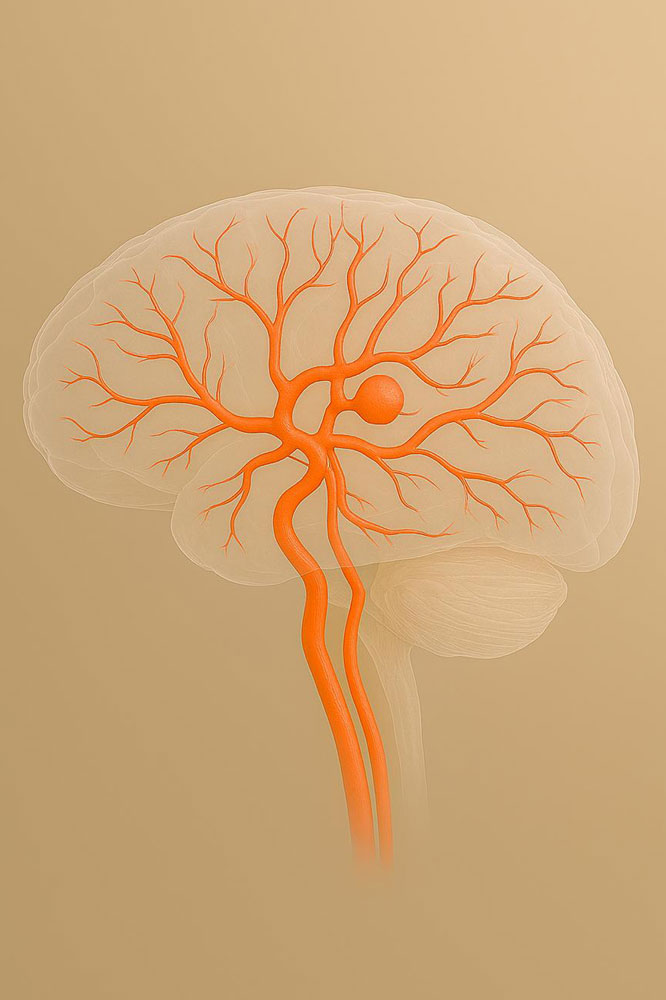
Cerebral aneurysms are abnormal bulges or balloon-like dilations that form in the walls of blood vessels within the brain. These aneurysms may develop silently over time and are often detected incidentally during imaging performed for other medical reasons.
The risk associated with cerebral aneurysms depends on several factors, including size, shape, and location. While some aneurysms remain stable, others may change over time, making careful assessment essential. The condition can be concerning due to its potential impact on brain circulation and neurological function.
Living with a cerebral aneurysm may create uncertainty for patients, highlighting the importance of accurate diagnosis and expert evaluation. Modern imaging techniques allow clinicians to monitor aneurysms closely and assess potential risks with greater precision.
Early detection and appropriate management planning play a critical role in minimising complications. With advances in medical and surgical care, many patients achieve favourable outcomes and maintain normal daily functioning.
What Is a Cerebral Aneurysm?
A cerebral aneurysm, also known as a brain aneurysm or intracranial aneurysm, occurs when a weakened area within the wall of a blood vessel in the brain begins to bulge outward. Over time, pressure from blood flow may cause the weakened vessel wall to enlarge.
Cerebral aneurysms can develop in different areas of the brain circulation and vary considerably in size and shape. Some remain small and stable for many years, while others may enlarge progressively.
Many aneurysms do not cause symptoms unless they become large, place pressure on surrounding brain structures, or rupture. In some patients, aneurysms are discovered incidentally during MRI or CT imaging performed for headaches, dizziness, or unrelated neurological symptoms.
Patients diagnosed with a cerebral aneurysm in London often seek specialist neurosurgical assessment to better understand the condition, associated risks, and available treatment options.
Types of Cerebral Aneurysms
Several different types of cerebral aneurysms may occur within the brain circulation.
Saccular Aneurysm
Saccular aneurysms, sometimes referred to as berry aneurysms, are the most common type. These appear as rounded outpouchings arising from the blood vessel wall.
Fusiform Aneurysm
Fusiform aneurysms involve widening along a segment of the blood vessel rather than forming a distinct sac.
Dissecting Aneurysm
Dissecting aneurysms occur when a tear develops within the blood vessel wall, allowing blood to track between vessel layers.
The most appropriate management strategy depends on the aneurysm type, size, location, patient age, and overall neurological health.
Symptoms of a Cerebral Aneurysm
Many unruptured cerebral aneurysms do not produce noticeable symptoms. However, larger aneurysms or aneurysms pressing on surrounding nerves or brain structures may cause neurological symptoms.
Possible symptoms include:
- Persistent or severe headaches
- Pain behind the eye
- Blurred or double vision
- Facial numbness
- Difficulty with balance
- Neck pain
- Dilated pupil
- Visual disturbances
- Neurological weakness
Symptoms vary depending on the size and location of the aneurysm within the brain circulation.
Patients experiencing persistent headaches or unexplained neurological symptoms in London may benefit from specialist neurological assessment and imaging investigations.
What Happens if a Cerebral Aneurysm Ruptures?
A ruptured cerebral aneurysm is a serious medical emergency that causes bleeding around the brain, known as subarachnoid haemorrhage.
Symptoms of aneurysm rupture may include:
- Sudden severe headache
- Loss of consciousness
- Nausea and vomiting
- Neck stiffness
- Sensitivity to light
- Confusion
- Seizures
- Sudden neurological weakness
The headache associated with aneurysm rupture is often described as the “worst headache of life.”
Urgent emergency medical assessment is essential if rupture is suspected.
Causes and Risk Factors for Cerebral Aneurysms
The exact cause of cerebral aneurysm formation is not always fully understood. However, several factors may increase risk.
- High blood pressure
- Smoking
- Family history of aneurysms
- Age-related blood vessel changes
- Certain inherited connective tissue disorders
- Previous aneurysm history
- Vascular abnormalities
Some aneurysms may develop gradually over many years without causing symptoms.
How Cerebral Aneurysms Are Diagnosed
Diagnosis usually begins with neurological assessment and detailed imaging of the brain circulation.
Investigations may include:
- MRI brain scan
- CT scan
- CT angiography (CTA)
- MR angiography (MRA)
- Cerebral angiography
Modern imaging allows detailed assessment of aneurysm size, shape, and location, helping specialists determine the most appropriate management strategy.
Patients in London and Essex with suspected aneurysms may undergo advanced neurovascular imaging to assess treatment options and long-term monitoring requirements.
Treatment Options for Cerebral Aneurysms
Treatment recommendations depend on several factors, including aneurysm size, location, patient age, symptoms, and estimated rupture risk.
Observation and Monitoring
Some smaller aneurysms may be monitored with regular imaging scans to assess for changes over time.
Endovascular Coiling
Endovascular treatment involves accessing the aneurysm through blood vessels using minimally invasive catheter techniques.
Coils may be inserted into the aneurysm to reduce blood flow and lower rupture risk.
Surgical Clipping
Surgical clipping involves placing a small clip across the aneurysm neck to isolate it from normal circulation.
This procedure is performed using specialised microsurgical techniques.
The most appropriate treatment approach depends on detailed neurovascular assessment and individual patient factors.
Recovery After Cerebral Aneurysm Treatment
Recovery following aneurysm treatment varies depending on whether the aneurysm was ruptured or unruptured, the treatment approach used, and the patient’s overall neurological condition.
Many patients gradually return to normal activities following treatment and monitoring. Recovery may involve follow-up imaging, neurological assessment, and rehabilitation where necessary.
Ongoing specialist follow-up is important to monitor long-term vascular health and assess for any changes in the brain circulation.
When Should You Seek Specialist Assessment?
Patients experiencing persistent neurological symptoms, unexplained severe headaches, visual changes, or a family history of cerebral aneurysms may benefit from specialist assessment.
Mr Bhaskar Thakur is a consultant neurosurgeon in London with expertise in neurovascular and complex cranial conditions. Patients across Central London, Harley Street, and Essex may seek specialist evaluation for cerebral aneurysms and related neurological disorders.
Early diagnosis and careful assessment can help guide appropriate monitoring and treatment decisions while supporting long-term neurological health.
Reviewed by Mr Bhaskar Thakur
Mr Bhaskar Thakur is a consultant neurosurgeon specialising in neurovascular conditions, complex cranial disorders, minimally invasive neurosurgery, and advanced spinal surgery in London and Essex.
Key Symptoms
Treatment Options
Observation and Risk Management
Small, unruptured aneurysms may be managed with careful observation.
Regular imaging and blood pressure control help reduce rupture risk.
Lifestyle changes such as smoking cessation and stress management are strongly advised.
Close monitoring ensures early detection of changes requiring intervention.
Endovascular Treatment
Minimally invasive endovascular procedures are commonly used to treat aneurysms.
Techniques such as coiling or flow diversion prevent blood flow into the aneurysm.
These procedures are performed through blood vessels, avoiding open surgery.
They offer shorter recovery times and excellent outcomes for many patients.
Surgical Clipping
Surgical clipping may be recommended for complex or high-risk aneurysms.
The procedure isolates the aneurysm from circulation, preventing rupture.
Modern microsurgical techniques ensure safety and durability.
Treatment decisions depend on aneurysm size, location, and patient health.
Need Expert Care for Cerebral aneurysms?
Dr. Bhaskar Thakur provides personalised assessment and treatment options to help you manage Cerebral aneurysms effectively and safely.
Book a ConsultationFrequently Asked Questions About Cerebral Aneurysms
Can a cerebral aneurysm go unnoticed?
Yes. Many cerebral aneurysms remain asymptomatic and are discovered incidentally during imaging scans performed for unrelated reasons.
Are all cerebral aneurysms dangerous?
Not all aneurysms carry the same risk. Factors including size, location, and shape influence the likelihood of complications.
What does an aneurysm headache feel like?
Aneurysm-related headaches may vary. Ruptured aneurysms often cause sudden severe headache, while unruptured aneurysms may produce milder or persistent symptoms.
Can cerebral aneurysms be treated without surgery?
Some aneurysms may be monitored with imaging alone, while others may require endovascular or surgical treatment depending on risk assessment.
Is a brain aneurysm hereditary?
Family history may increase aneurysm risk in some individuals, particularly when multiple family members are affected.
