Cavernoma treatment in London
Comprehensive overview, symptoms, causes, and treatment options for Cavernoma.
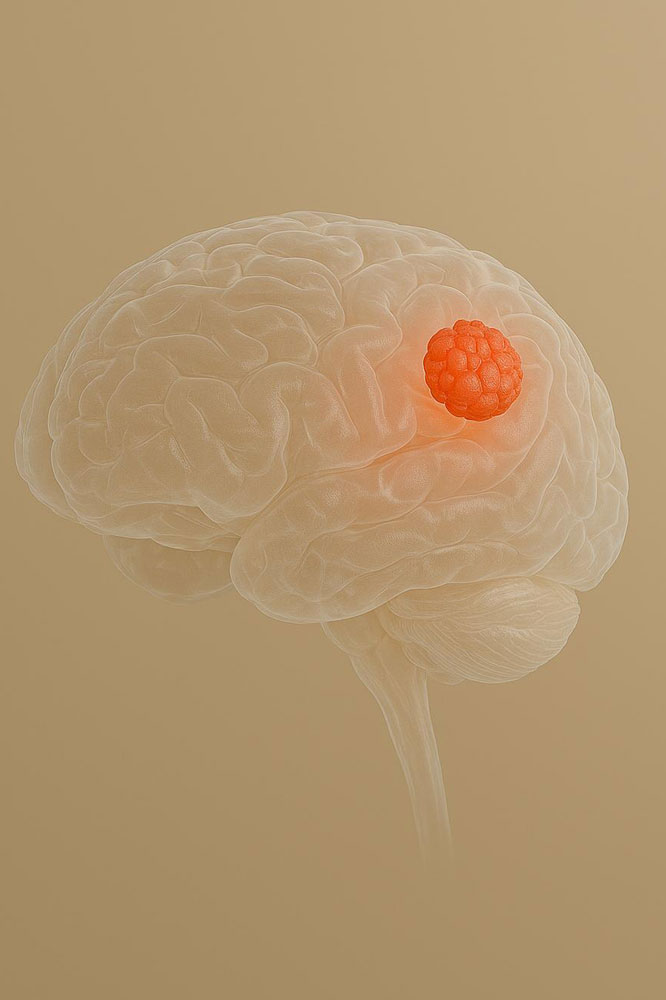
Cavernoma, also referred to as cavernous malformation, is a vascular condition involving clusters of abnormally formed blood vessels within the brain or spinal cord. These lesions may vary in size and location and can behave differently from one patient to another.
In many cases, cavernomas remain stable and are discovered incidentally during imaging performed for unrelated reasons. However, depending on their location, they may affect surrounding neural structures and interfere with normal neurological function. The behavior of a cavernoma can be unpredictable, which makes careful evaluation and monitoring important.
The presence of a cavernoma can raise concerns for patients, particularly when it involves critical areas of the brain or spinal cord. Advances in neuroimaging have improved the ability to detect and assess these lesions accurately, allowing for better-informed clinical decisions.
Early diagnosis and individualized management strategies help reduce potential risks and support long-term neurological health. With appropriate care and follow-up, many patients with cavernoma are able to maintain a good quality of life.
What Is a Cavernoma?
A cavernoma is a cluster of abnormal blood vessels that forms within the central nervous system, most commonly in the brain or spinal cord. These vascular malformations contain thin-walled blood-filled spaces that may leak small amounts of blood over time.
Cavernomas can occur in different parts of the brain, including the cerebral hemispheres, brainstem, cerebellum, and spinal cord. Some lesions remain asymptomatic throughout life, while others may cause neurological symptoms depending on their size, location, and tendency to bleed.
Many patients diagnosed with cavernoma in London seek specialist neurological or neurosurgical assessment to better understand the condition and its long-term implications.
Symptoms of Cavernoma
The symptoms associated with cavernoma vary depending on the location of the lesion and whether bleeding has occurred.
Common symptoms may include:
- Headaches
- Seizures
- Dizziness
- Balance difficulties
- Visual disturbances
- Numbness or tingling
- Muscle weakness
- Speech difficulties
- Memory or concentration problems
- Neurological deficits
Some cavernomas produce no symptoms and are discovered incidentally during MRI scans performed for unrelated medical concerns.
Symptoms affecting the spinal cord may cause weakness, sensory changes, or difficulty walking.
What Causes Cavernoma?
The exact cause of cavernoma formation is not always fully understood.
Some cavernomas occur sporadically, while others may be associated with inherited genetic conditions. Familial cavernoma syndromes may result in multiple lesions developing within the brain or spinal cord.
In some patients, cavernomas may slowly change over time or bleed intermittently, contributing to neurological symptoms.
How Cavernoma Can Affect Daily Life
The impact of cavernoma varies considerably between individuals.
Some patients remain asymptomatic and continue normal activities without limitations, while others may experience neurological symptoms that affect work, mobility, balance, or daily functioning.
Persistent headaches, seizures, or neurological symptoms may interfere with driving, employment, exercise, and overall quality of life.
Patients diagnosed with cavernoma often experience uncertainty regarding the risk of future bleeding or neurological complications, making specialist follow-up important.
When Should You Seek Specialist Assessment?
Specialist neurological or neurosurgical assessment may be recommended if patients experience:
- Persistent unexplained headaches
- Seizures
- Sudden neurological symptoms
- Weakness or numbness
- Balance difficulties
- Visual changes
- MRI findings suggesting cavernoma
Patients in London with suspected cavernoma or unexplained neurological symptoms may benefit from advanced neuroimaging and specialist evaluation.
How Cavernoma Is Diagnosed
Diagnosis usually begins with neurological assessment and detailed brain or spinal imaging.
Investigations may include:
- MRI brain scan
- MRI spinal imaging
- CT scan
- Neurological examination
MRI scanning is particularly important for identifying cavernomas and assessing their location, size, and evidence of previous bleeding.
Modern imaging techniques allow detailed evaluation of surrounding neural structures and help guide management decisions.
Treatment Options for Cavernoma
Treatment recommendations depend on several factors, including symptom severity, lesion location, bleeding history, and overall neurological condition.
Observation and Monitoring
Many cavernomas are monitored with periodic MRI scans and neurological follow-up, particularly when symptoms are minimal or absent.
Medication
Patients experiencing seizures or headaches may require medication to manage symptoms.
Microsurgical Removal
In selected cases, surgical removal may be considered when cavernomas cause recurrent bleeding, seizures, or progressive neurological symptoms.
Microsurgical techniques aim to remove the lesion while preserving surrounding neurological structures where possible.
The most appropriate treatment approach depends on careful neurovascular and neurosurgical assessment.
Recovery and Long-Term Follow-Up
Recovery and long-term outcomes vary depending on lesion location, symptom severity, and whether treatment is required.
Many patients with stable cavernomas continue normal activities with regular imaging surveillance and neurological follow-up.
Patients undergoing surgery may require rehabilitation and ongoing neurological assessment during recovery.
Long-term monitoring is important to assess for changes in lesion size, bleeding risk, or the development of new neurological symptoms.
Living With Cavernoma
Living with cavernoma may create anxiety or uncertainty for some patients, particularly when lesions are located near critical neurological structures.
Education, specialist follow-up, and clear management planning can help patients better understand the condition and make informed decisions regarding treatment and lifestyle.
With appropriate care and monitoring, many individuals maintain independence, mobility, and a good quality of life.
Specialist Cavernoma Assessment in London
Mr Bhaskar Thakur is a consultant neurosurgeon in London with expertise in neurovascular conditions, complex cranial disorders, and minimally invasive neurosurgical procedures.
Patients across Central London, Harley Street, and Essex may seek specialist assessment for cavernoma, cerebral vascular malformations, and neurological symptoms affecting the brain or spinal cord.
Early diagnosis and specialist evaluation may help guide appropriate monitoring, treatment planning, and long-term neurological care.
Reviewed by Mr Bhaskar Thakur
Mr Bhaskar Thakur is a consultant neurosurgeon specialising in neurovascular disorders, complex cranial surgery, minimally invasive neurosurgery, and advanced spinal surgery in London and Essex.
Key Symptoms
Treatment Options
Observation and Monitoring
Many cavernomas remain stable and do not require immediate treatment.
Regular monitoring through imaging studies helps track changes in size or bleeding risk.
This approach is suitable for asymptomatic patients or those with minimal symptoms.
Close follow-up ensures timely intervention if neurological symptoms develop.
Medical Management
Medications may be prescribed to control symptoms associated with cavernomas.
These include drugs to manage seizures, headaches, or neurological discomfort.
While medications do not eliminate the lesion, they help improve quality of life and reduce complications.
Individualized treatment plans are essential for long-term symptom control.
Surgical Treatment
Surgery may be recommended for symptomatic cavernomas causing bleeding or neurological deficits.
The goal is to remove the lesion safely while preserving surrounding brain tissue.
Advances in neurosurgical techniques allow precise and effective treatment.
Surgical decisions are based on lesion location, symptoms, and patient health.
Need Expert Care for Cavernoma?
Dr. Bhaskar Thakur provides personalised assessment and treatment options to help you manage Cavernoma effectively and safely.
Book a ConsultationFrequently Asked Questions About Cavernoma
Can cavernoma go unnoticed?
Yes. Many cavernomas remain asymptomatic and are discovered incidentally during MRI scans performed for unrelated reasons.
Is cavernoma a brain tumour?
No. Cavernoma is a vascular malformation involving abnormal blood vessels and is not considered a brain tumour.
Can cavernoma cause seizures?
Yes. Depending on location and bleeding history, cavernomas may irritate surrounding brain tissue and contribute to seizures.
Can cavernoma bleed?
Yes. Some cavernomas may leak or bleed, potentially causing neurological symptoms depending on their location.
Is surgery always necessary for cavernoma?
No. Many cavernomas are managed conservatively with monitoring and imaging follow-up.
Can cavernoma return after surgery?
Recurrence is uncommon after complete surgical removal, although long-term follow-up may still be recommended.
