Spine fractures
Comprehensive overview, symptoms, causes, and treatment options for Spine fractures.
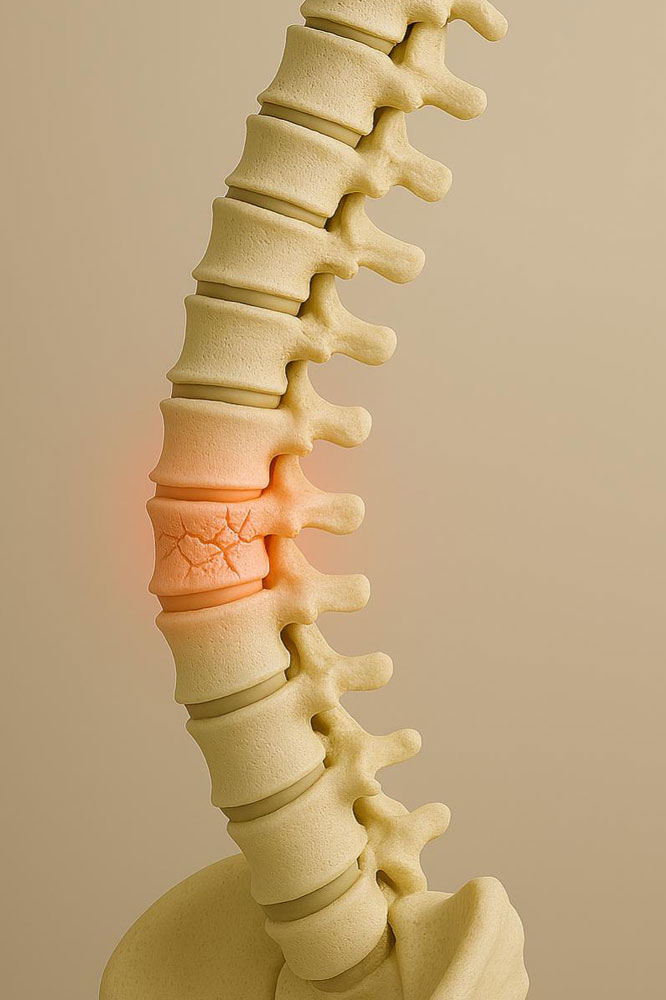
Spine fractures occur when one or more vertebrae are damaged due to trauma, weakened bone structure, or underlying medical conditions. These fractures can range from mild compression injuries to more complex structural damage affecting spinal stability.
The spine is essential for supporting the body and protecting the spinal cord, making fractures a potentially serious condition. Spine fractures may significantly limit mobility and interfere with daily activities, depending on their severity and location.
Some fractures may develop gradually, particularly in individuals with reduced bone strength, while others occur suddenly following injury or impact. Accurate assessment is critical to determine stability and potential risks.
Early diagnosis and appropriate management are key to ensuring proper healing and preventing complications. With modern diagnostic tools and individualized care, many patients recover well and regain functional mobility.
Key Symptoms
Treatment Options
Non-Surgical Treatment
Stable spine fractures are often treated without surgery.
Bracing, pain management, and controlled activity allow natural healing.
Physiotherapy helps restore strength and mobility safely.
Minimally Invasive Stabilization
Procedures such as vertebroplasty or kyphoplasty may be recommended.
These techniques stabilize the fracture and reduce pain.
They are performed with minimal incisions and rapid recovery.
Surgical Stabilization
Surgery is required for unstable or severe fractures.
The goal is to restore spinal alignment and protect the spinal cord.
Modern surgical techniques ensure safety and long-term stability.
Need Expert Care for Spine fractures?
Dr. Bhaskar Thakur provides personalised assessment and treatment options to help you manage Spine fractures effectively and safely.
Book a Consultation