Slipped Disc Treatment in London
Comprehensive overview, symptoms, causes, and treatment options for Slipped Disc.
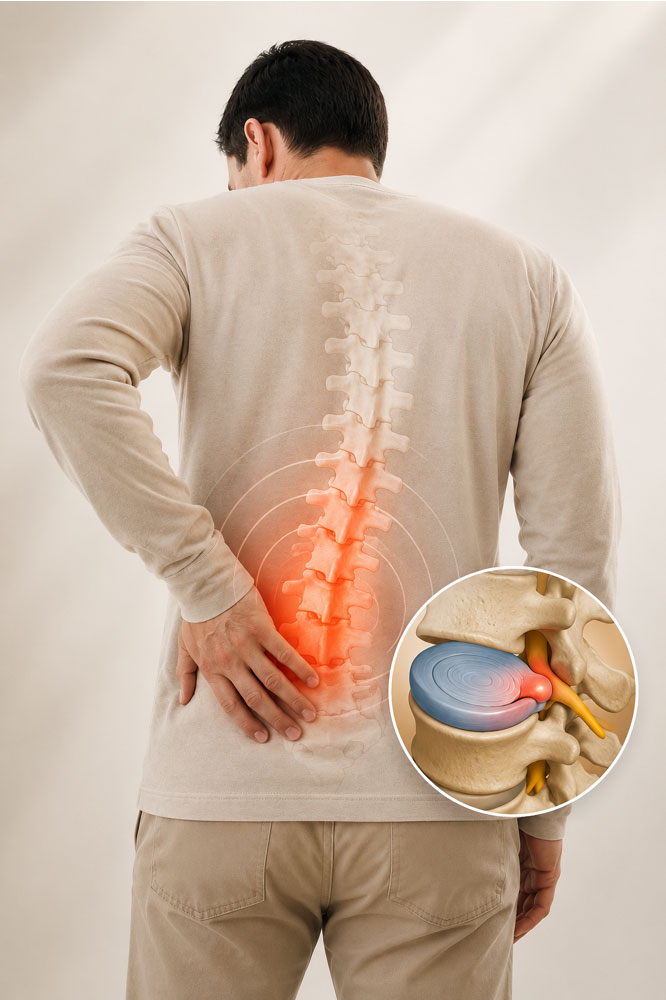
A slipped disc, also known as a herniated disc or prolapsed disc, is one of the most common causes of lower back pain and sciatica. It occurs when the soft centre of an intervertebral disc pushes through its tougher outer layer, potentially irritating or compressing nearby spinal nerves.
The condition most frequently affects the lumbar spine (lower back), although it can also occur in the cervical spine (neck). While some people experience only mild discomfort, others develop severe leg pain, numbness, tingling, or muscle weakness that significantly affects mobility and quality of life.
Many slipped discs improve with conservative treatment such as physiotherapy, medication, and activity modification. However, persistent nerve compression or progressive neurological symptoms may require specialist assessment and, in selected cases, minimally invasive spinal surgery.
Early diagnosis is important to identify the underlying cause of symptoms and determine the most appropriate treatment. With timely assessment and personalised care, many patients experience significant pain relief, regain mobility, and return to normal daily activities.
What Is a Slipped Disc?
The spine is made up of a series of bones called vertebrae, separated by soft discs that act as cushions and shock absorbers. Each disc has a tough outer layer (annulus fibrosus) surrounding a softer gel-like centre (nucleus pulposus).
A slipped disc occurs when part of the inner material pushes through a tear in the outer layer. This bulging disc may press against nearby spinal nerves, causing inflammation, pain, or neurological symptoms.
Although the term “slipped disc” is widely used, the disc does not actually slip out of place. Instead, it bulges or herniates beyond its normal boundary.
The condition most commonly develops in the lower back, where it often causes sciatica, but it can also affect the neck, leading to arm pain or cervical nerve compression.
Common Symptoms of a Slipped Disc
Symptoms depend on the size and location of the disc prolapse, as well as whether nearby nerves are compressed.
Common symptoms include:
- Lower back pain
- Pain radiating into one leg (sciatica)
- Sharp, burning, or shooting leg pain
- Numbness or tingling in the leg or foot
- Muscle weakness
- Pain that worsens when coughing or sneezing
- Difficulty standing or walking for prolonged periods
- Reduced spinal mobility
- Pain aggravated by sitting for long periods
Some people have a slipped disc visible on MRI without experiencing symptoms, while others develop significant pain from even a relatively small disc prolapse.
What Causes a Slipped Disc?
Most slipped discs develop gradually due to age-related degeneration of the spinal discs. As discs lose water content over time, they become less flexible and more prone to tearing.
Common causes and risk factors include:
- Age-related disc degeneration
- Heavy lifting with poor technique
- Twisting injuries
- Repetitive bending
- Sudden trauma
- Obesity
- Smoking
- Physically demanding occupations
- Family history of disc disease
In many patients, a slipped disc develops without any obvious injury and is simply part of the natural ageing process affecting the spine.
How a Slipped Disc Can Affect Daily Life
A slipped disc can interfere with many aspects of everyday life. Persistent back or leg pain may make routine activities uncomfortable and reduce overall quality of life.
Patients commonly experience difficulty:
- Sitting comfortably
- Driving long distances
- Walking for prolonged periods
- Sleeping through the night
- Working at a desk
- Lifting objects safely
- Exercising
- Bending or twisting
When symptoms persist, they may affect work performance, physical activity, sleep quality, and emotional wellbeing. Many patients seek specialist assessment when conservative treatment no longer provides adequate relief.
When Should You Seek Specialist Assessment?
Many slipped discs improve naturally over several weeks. However, specialist assessment is recommended if symptoms:
- Persist beyond six weeks
- Become progressively worse
- Cause severe leg pain
- Lead to numbness or tingling
- Cause weakness in the leg or foot
- Interfere with walking or daily activities
- Do not improve despite physiotherapy or medication
Patients experiencing persistent symptoms may benefit from specialist neurological assessment and spinal imaging to determine whether nerve compression or another spinal condition is responsible for their symptoms.
Slipped Disc and Sciatica
A slipped disc is the most common cause of sciatica. When a lumbar disc herniates, it may compress one of the spinal nerve roots that form the sciatic nerve. This irritation causes pain that travels from the lower back into the buttock, thigh, calf, or foot.
Sciatica is a symptom rather than a diagnosis. While a slipped disc is the most frequent cause, other spinal conditions such as spinal stenosis or spondylolisthesis may also produce similar symptoms.
Patients with sciatica often describe sharp, shooting, burning, or electric shock-like pain that radiates down one leg. Depending on the affected nerve, numbness, tingling, or muscle weakness may also develop.
Identifying the underlying cause of sciatica is important because treatment varies depending on the source of nerve compression.
Emergency Symptoms That Require Urgent Medical Attention
Although most slipped discs are not medical emergencies, certain symptoms may indicate severe compression of the spinal nerves.
Seek urgent medical assessment if you experience:
- Loss of bladder or bowel control
- Numbness around the groin or saddle area
- Rapidly worsening weakness in one or both legs
- Difficulty walking due to increasing weakness
- Severe pain following significant trauma
These symptoms may indicate cauda equina syndrome, a rare but serious condition requiring emergency spinal assessment and prompt treatment.
How a Slipped Disc Is Diagnosed
Diagnosis begins with a detailed discussion of your symptoms, medical history, and a physical examination. During the consultation, your specialist will assess spinal movement, muscle strength, sensation, reflexes, and nerve function.
Investigations may include:
- MRI scan of the lumbar spine
- CT scan when MRI is unsuitable
- X-rays to assess spinal alignment
- Nerve conduction studies in selected cases
MRI is considered the most useful investigation because it clearly demonstrates disc herniation, nerve compression, and other spinal abnormalities that may be contributing to symptoms.
Imaging findings are always interpreted alongside clinical symptoms, as many people have disc bulges without experiencing pain.
Non-Surgical Treatment for a Slipped Disc
Most patients recover without surgery. Conservative treatment focuses on reducing pain, relieving nerve irritation, and restoring normal movement.
Physiotherapy
Structured physiotherapy programmes help improve flexibility, strengthen the muscles supporting the spine, and encourage gradual recovery while reducing the risk of future episodes.
Medication
Pain-relieving medication and anti-inflammatory drugs may help control symptoms during the early stages of recovery.
Activity Modification
Remaining active within comfortable limits is generally recommended. Extended bed rest is rarely advised, as gradual movement often promotes recovery.
Exercise Rehabilitation
Once pain begins to settle, supervised exercises focusing on core stability and spinal flexibility may improve long-term outcomes and reduce recurrence.
Spinal Injections for a Slipped Disc
Some patients continue to experience leg pain despite physiotherapy and medication. In these cases, spinal injections may help reduce inflammation around the affected nerve root.
Treatment options may include:
- Epidural steroid injections
- Selective nerve root blocks
- Image-guided spinal injections
These procedures are minimally invasive and may provide temporary or longer-lasting pain relief while supporting rehabilitation.
Minimally Invasive Surgery for a Slipped Disc
Surgery is usually considered only when symptoms fail to improve with conservative treatment or when significant nerve compression causes persistent pain or neurological deficits.
Modern minimally invasive spinal surgery aims to relieve nerve compression while preserving surrounding muscles and tissues.
Surgical options may include:
- Microdiscectomy
- Endoscopic discectomy
- Minimally invasive lumbar decompression
The most appropriate procedure depends on the location of the disc herniation, imaging findings, and individual patient factors.
Recovery After a Slipped Disc
Recovery varies depending on the severity of symptoms and the treatment received. Many patients notice gradual improvement within several weeks of conservative treatment.
Patients who undergo minimally invasive surgery often benefit from reduced tissue disruption, shorter hospital stays, and an earlier return to normal activities compared with traditional open procedures.
Recovery is supported by physiotherapy, gradual increases in activity, and following personalised rehabilitation advice.
Preventing Future Slipped Discs
Although not every slipped disc can be prevented, healthy lifestyle choices may reduce the risk of future spinal problems.
- Maintain a healthy body weight
- Exercise regularly
- Strengthen core muscles
- Lift objects safely
- Avoid prolonged sitting
- Maintain good posture
- Stop smoking where appropriate
Regular physical activity and attention to spinal health may help reduce future episodes of back pain and disc injury.
Living With a Slipped Disc
Many people recover fully from a slipped disc, while others experience occasional flare-ups of back or leg pain. Long-term management focuses on maintaining spinal mobility, improving strength, and avoiding activities that excessively strain the lower back.
Persistent symptoms should not be ignored, particularly when they affect work, mobility, sleep, or quality of life. Specialist assessment helps determine whether ongoing nerve compression requires further treatment.
Specialist Slipped Disc Assessment in London
Mr Bhaskar Thakur is a Consultant Neurosurgeon and Spine Surgeon with expertise in diagnosing and treating slipped discs, lumbar nerve compression, and degenerative spinal conditions.
Patients across Central London, Harley Street, Brentwood, and Essex seek specialist assessment for persistent back pain, sciatica, and lumbar disc prolapse. Following a comprehensive clinical assessment and appropriate imaging, an individualised treatment plan is developed based on each patient’s symptoms and lifestyle.
Early diagnosis and timely treatment may relieve pain, restore mobility, and help patients return to normal daily activities as safely and quickly as possible.
Reviewed by Mr Bhaskar Thakur
Mr Bhaskar Thakur is a Consultant Neurosurgeon specialising in minimally invasive spinal surgery, lumbar disc disease, sciatica, spinal nerve compression, and complex spinal disorders in London and Essex.
Key Symptoms
Treatment Options
Conservative Care
Most slipped discs improve without surgery.
Physiotherapy, activity modification, and pain-relieving medication are often effective in reducing symptoms.
Rehabilitation programmes focus on restoring movement, improving core strength, and supporting long-term spinal health.
Many patients recover successfully with structured conservative treatment.
Interventional Pain Management
Persistent leg pain may benefit from image-guided spinal injections.
Epidural steroid injections and selective nerve root blocks help reduce inflammation around compressed nerves.
These minimally invasive procedures may provide pain relief and support rehabilitation when physiotherapy alone is insufficient.
Minimally Invasive Surgery
Surgery may be recommended when significant nerve compression causes persistent symptoms.
Microdiscectomy and endoscopic discectomy are commonly performed to relieve pressure on affected nerves while preserving healthy tissues.
Modern minimally invasive techniques aim to reduce recovery time and enable an earlier return to daily activities.
Need Expert Care for Slipped Disc?
Dr. Bhaskar Thakur provides personalised assessment and treatment options to help you manage Slipped Disc effectively and safely.
Book a ConsultationFrequently Asked Questions About a Slipped Disc
What is a slipped disc?
A slipped disc, also known as a herniated or prolapsed disc, occurs when the soft inner part of a spinal disc pushes through its outer layer and may press on nearby nerves, causing pain or neurological symptoms.
Can a slipped disc heal without surgery?
Yes. Most slipped discs improve with conservative treatment, including physiotherapy, activity modification, and pain relief. Surgery is usually reserved for persistent symptoms or significant nerve compression.
What are the symptoms of a slipped disc?
Symptoms may include lower back pain, sciatica, numbness, tingling, muscle weakness, and pain that worsens with sitting, bending, coughing, or sneezing.
Can a slipped disc cause sciatica?
Yes. A slipped disc is the most common cause of sciatica because it can compress one of the nerve roots that form the sciatic nerve.
When is surgery needed for a slipped disc?
Surgery may be recommended when symptoms persist despite conservative treatment, severe leg pain affects quality of life, or muscle weakness and neurological deficits develop.
How is a slipped disc diagnosed?
Diagnosis involves a medical history, physical examination, and imaging such as an MRI scan, which provides detailed information about the spinal discs and surrounding nerves.
How long does recovery take?
Many patients improve within six to twelve weeks with non-surgical treatment. Recovery following minimally invasive surgery is often quicker, although this varies depending on the individual and the procedure performed.
Can a slipped disc come back?
Most patients recover well, but recurrence is possible. Maintaining a healthy weight, strengthening the core muscles, using correct lifting techniques, and staying active may help reduce the risk of future disc problems.
