Spinal Stenosis Treatment in London
Comprehensive overview, symptoms, causes, and treatment options for Spinal Stenosis.
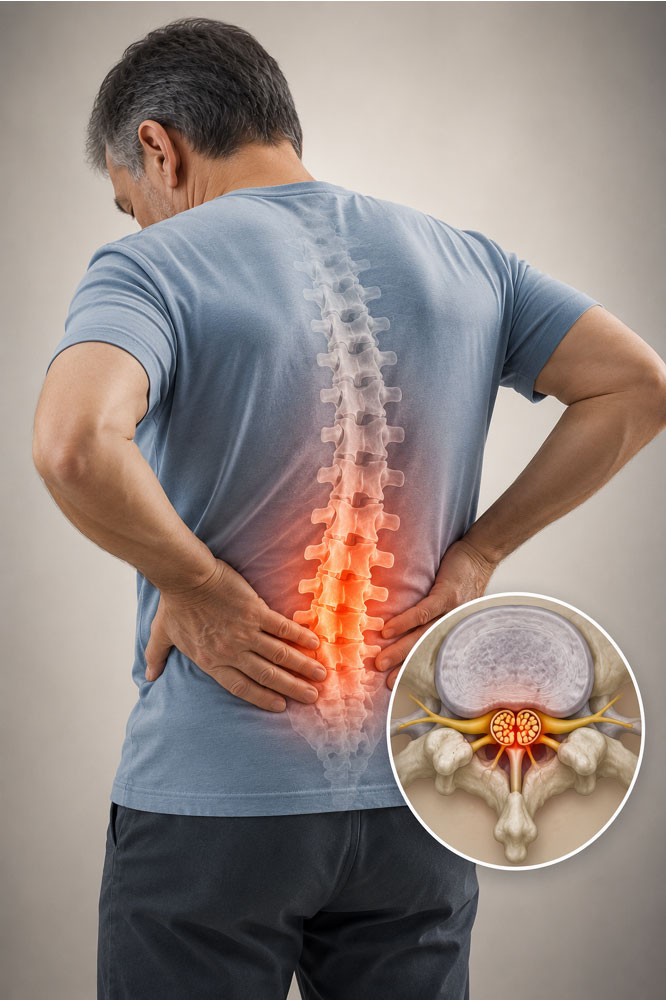
Spinal stenosis is a condition in which the spaces within the spine become narrowed, placing pressure on the spinal cord or the nerves that travel through the spinal canal. It most commonly develops as part of the natural ageing process and is a frequent cause of back pain, leg pain, numbness, and walking difficulties.
Although spinal stenosis can affect any part of the spine, it most commonly occurs in the lumbar spine (lower back) and the cervical spine (neck). Symptoms vary depending on the location and severity of the narrowing. Some people experience only mild discomfort, while others develop persistent pain, weakness, balance problems, or difficulty walking.
Many patients improve with conservative treatment, including physiotherapy, activity modification, medication, and spinal injections. However, when symptoms significantly affect mobility or quality of life, minimally invasive spinal surgery may be recommended to relieve pressure on the affected nerves.
Early diagnosis allows the underlying cause of nerve compression to be identified and helps determine the most appropriate treatment plan. With specialist assessment and personalised care, many patients experience meaningful symptom relief and improved function.
What Is Spinal Stenosis?
Spinal stenosis occurs when the spinal canal becomes narrower than normal, reducing the available space for the spinal cord or spinal nerves. This narrowing may place pressure on nearby nerves, leading to pain, numbness, weakness, or changes in balance and walking.
The condition usually develops gradually over many years as part of age-related degeneration. Changes such as thickened ligaments, enlarged joints, disc degeneration, and bone spurs can all contribute to narrowing of the spinal canal.
Most cases affect the lumbar spine, where nerve compression commonly causes lower back pain and leg symptoms. When stenosis develops in the cervical spine, it may affect the spinal cord itself, sometimes leading to problems with hand function, coordination, or walking.
Although spinal stenosis is common in older adults, not everyone with narrowing seen on an MRI scan develops symptoms. Treatment is based on both imaging findings and the patient’s clinical symptoms.
Common Symptoms of Spinal Stenosis
Symptoms vary depending on which nerves are affected and the degree of spinal narrowing.
Common symptoms include:
- Lower back pain
- Pain in one or both legs
- Numbness or tingling in the legs or feet
- Weakness in the legs
- Difficulty walking long distances
- Pain that improves when sitting or leaning forwards
- Cramping in the legs during walking
- Balance problems
- Reduced walking endurance
Some patients also develop symptoms similar to sciatica, particularly when lumbar spinal stenosis compresses the spinal nerve roots.
What Causes Spinal Stenosis?
The most common cause of spinal stenosis is age-related degeneration of the spine. Over time, normal wear and tear can lead to structural changes that reduce the space available for the nerves.
Common causes include:
- Degenerative disc disease
- Bone spurs (osteophytes)
- Facet joint arthritis
- Thickening of spinal ligaments
- Slipped discs
- Spondylolisthesis
- Previous spinal injury
- Congenital spinal canal narrowing
In many patients, several of these changes occur together, gradually narrowing the spinal canal and contributing to symptoms.
How Spinal Stenosis Can Affect Daily Life
Spinal stenosis often develops slowly, with symptoms becoming more noticeable over time. Activities that were previously straightforward may become increasingly difficult as walking distance decreases and pain becomes more persistent.
Patients commonly experience difficulty:
- Walking long distances
- Standing for prolonged periods
- Shopping or travelling
- Climbing stairs
- Gardening or household tasks
- Exercising
- Sleeping comfortably
Many people find that leaning forwards, such as when pushing a shopping trolley or cycling, temporarily relieves symptoms because this position creates more space within the spinal canal.
When Should You Seek Specialist Assessment?
Many patients initially manage mild symptoms with exercise, physiotherapy, and pain relief. However, specialist assessment is recommended if symptoms:
- Continue to worsen over time
- Limit walking distance
- Cause numbness or weakness
- Interfere with work or daily activities
- Do not improve with conservative treatment
- Affect balance or coordination
Patients experiencing progressive neurological symptoms may benefit from specialist spinal assessment and MRI imaging to determine whether nerve compression is responsible for their symptoms and whether further treatment is appropriate.
Lumbar and Cervical Spinal Stenosis
Spinal stenosis can develop anywhere along the spine, but it most commonly affects the lumbar (lower back) and cervical (neck) regions. The symptoms depend on which part of the spine is affected and which nerves are under pressure.
Lumbar Spinal Stenosis
Lumbar spinal stenosis affects the lower back and is the most common form of the condition. Compression of the spinal nerves may cause lower back pain, leg pain, numbness, weakness, and difficulty walking.
Many patients notice that symptoms improve when sitting down or leaning forwards, such as when pushing a shopping trolley or riding a bicycle.
Cervical Spinal Stenosis
Cervical spinal stenosis affects the neck and may compress the spinal cord or nerve roots. In addition to neck pain, patients may experience numbness or weakness in the arms and hands, reduced hand coordination, balance problems, or difficulty walking.
When the spinal cord becomes compressed, the condition is known as cervical myelopathy, which requires prompt specialist assessment.
Spinal Stenosis and Sciatica
Lumbar spinal stenosis is one of the most common causes of sciatica. As the spinal canal narrows, the nerves that form the sciatic nerve may become compressed, producing pain that travels from the lower back into the buttock, thigh, calf, or foot.
Unlike sciatica caused by a slipped disc, symptoms associated with spinal stenosis often develop gradually and tend to affect both legs, although one side may be worse than the other.
Accurate diagnosis is important because treatment varies depending on the underlying cause of nerve compression.
Neurogenic Claudication
One of the hallmark symptoms of lumbar spinal stenosis is neurogenic claudication. This refers to pain, heaviness, numbness, or weakness in the legs that develops during walking or prolonged standing.
Many patients find they need to stop frequently after walking short distances because their legs become increasingly uncomfortable.
Symptoms often improve within a few minutes of sitting down or bending forwards, as these positions temporarily reduce pressure on the spinal nerves.
Neurogenic claudication is an important clinical feature that helps distinguish spinal stenosis from other causes of leg pain.
Emergency Symptoms That Require Urgent Medical Attention
Most cases of spinal stenosis develop gradually and are not emergencies. However, urgent medical assessment is recommended if you experience:
- Loss of bladder or bowel control
- Numbness around the groin or saddle area
- Rapidly worsening leg weakness
- Sudden difficulty walking
- Progressive loss of balance
- Severe spinal pain following trauma
These symptoms may indicate significant spinal cord or nerve compression requiring urgent specialist assessment.
How Spinal Stenosis Is Diagnosed
Diagnosis begins with a detailed medical history and physical examination. Your specialist will assess muscle strength, sensation, reflexes, balance, walking pattern, and neurological function.
Investigations may include:
- MRI scan of the spine
- CT scan
- Standing X-rays
- Nerve conduction studies where appropriate
MRI is the most useful investigation because it clearly demonstrates narrowing of the spinal canal, nerve compression, disc degeneration, and other spinal abnormalities.
Imaging findings are always considered alongside symptoms and examination findings to determine the most appropriate treatment.
Non-Surgical Treatment for Spinal Stenosis
Many patients improve without surgery. Conservative treatment focuses on reducing symptoms, improving mobility, and maintaining independence.
Physiotherapy
Targeted physiotherapy programmes strengthen the muscles supporting the spine, improve flexibility, and encourage better posture and movement patterns.
Medication
Pain-relieving medication and anti-inflammatory drugs may help control discomfort during flare-ups.
Activity Modification
Adjusting daily activities and avoiding prolonged standing may help minimise symptoms while maintaining an active lifestyle.
Exercise Rehabilitation
Regular low-impact exercise, including walking, cycling, and supervised strengthening programmes, may improve function and reduce stiffness.
Spinal Injections for Spinal Stenosis
Some patients benefit from spinal injections when conservative treatments do not provide sufficient relief.
These may include:
- Epidural steroid injections
- Selective nerve root injections
- Facet joint injections
Injection therapy aims to reduce inflammation around compressed nerves and may improve walking tolerance while supporting rehabilitation.
Minimally Invasive Surgery for Spinal Stenosis
Surgery may be considered when symptoms continue to worsen despite conservative treatment or when nerve compression significantly limits mobility and quality of life.
Modern minimally invasive spinal surgery techniques aim to relieve pressure on the spinal nerves while minimising disruption to surrounding muscles and tissues.
Surgical procedures may include:
- Lumbar decompression surgery
- Laminectomy
- Minimally invasive decompression
- Spinal fusion in selected patients
The most appropriate procedure depends on the location of the stenosis, spinal stability, imaging findings, and the patient’s overall health.
Recovery After Treatment
Recovery depends on the severity of the condition and the treatment received. Many patients improve gradually with physiotherapy and conservative management over several weeks or months.
Patients undergoing minimally invasive surgery often benefit from shorter hospital stays, reduced postoperative discomfort, and a quicker return to normal daily activities compared with traditional open surgery.
Preventing Progression
Although age-related degeneration cannot be completely prevented, maintaining a healthy lifestyle may help support long-term spinal health.
- Maintain a healthy weight
- Exercise regularly
- Strengthen core muscles
- Avoid smoking
- Maintain good posture
- Stay physically active
- Manage other spinal conditions early
Regular exercise and good spinal health habits may help maintain mobility and reduce the impact of degenerative spinal conditions.
Living With Spinal Stenosis
Many people successfully manage spinal stenosis with a combination of exercise, physiotherapy, medication, and lifestyle adjustments. Early intervention often helps maintain independence and mobility.
Persistent symptoms should not be ignored, particularly when walking becomes increasingly limited or neurological symptoms develop. Specialist assessment helps determine whether further treatment is required.
Specialist Spinal Stenosis Assessment in London
Mr Bhaskar Thakur is a Consultant Neurosurgeon and Spine Surgeon with expertise in diagnosing and treating spinal stenosis, degenerative spinal disorders, nerve compression, and complex spinal conditions.
Patients across Central London, Harley Street, Brentwood, and Essex seek specialist assessment for persistent back pain, leg pain, walking difficulties, and spinal nerve compression. Following a detailed clinical assessment and advanced imaging, an individualised treatment plan is developed based on each patient’s condition and lifestyle.
Early diagnosis and appropriate treatment may relieve symptoms, improve mobility, and support long-term spinal health.
Reviewed by Mr Bhaskar Thakur
Mr Bhaskar Thakur is a Consultant Neurosurgeon specialising in minimally invasive spinal surgery, spinal stenosis, degenerative spinal disease, nerve compression, and complex spinal disorders in London and Essex.
Key Symptoms
Treatment Options
Conservative Care
Many patients with spinal stenosis improve without surgery.
Physiotherapy, medication, activity modification, and regular exercise may help reduce pain, improve mobility, and maintain independence.
A personalised rehabilitation programme can help strengthen the muscles supporting the spine and improve walking tolerance.
Conservative treatment is often the first step in managing spinal stenosis.
Interventional Pain Management
Image-guided spinal injections may provide relief when symptoms persist.
Epidural steroid injections and selective nerve root injections can reduce inflammation around compressed nerves.
These minimally invasive procedures may improve walking ability and support rehabilitation in selected patients.
Minimally Invasive Surgery
Surgery may be recommended when nerve compression significantly affects mobility or quality of life.
Modern minimally invasive decompression procedures relieve pressure on the spinal nerves while preserving surrounding tissues.
In selected patients, spinal stabilisation or fusion may be required to restore spinal stability and improve long-term outcomes.
Need Expert Care for Spinal Stenosis?
Dr. Bhaskar Thakur provides personalised assessment and treatment options to help you manage Spinal Stenosis effectively and safely.
Book a Consultation