
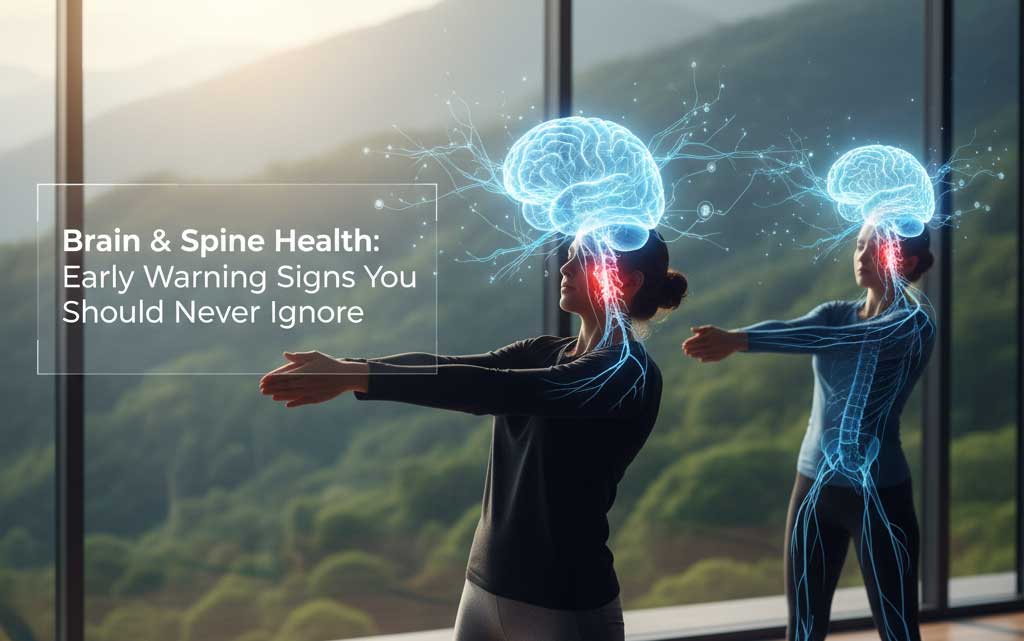
Your brain and spine act as the ultimate partnership. The brain is the Command Center, processing every thought and emotion, while the spine is the Information Highway, delivering those signals to every inch of your body. When this partnership is threatened, the symptoms aren’t always dramatic. They don’t always look like a movie scene; often, they start as subtle, easy-to-dismiss “glitches” in your daily routine.
Ignoring these signs is like ignoring a check-engine light on a high-performance vehicle. By the time the car stops running, the damage is extensive. Understanding the early warning signs of brain and spine health issues can be the difference between a simple physical therapy fix and a life-altering medical emergency.
1. The “Thunderclap” or Progressive Headache
We all get headaches, but a neurological headache feels fundamentally different. You should pay attention if:
- The Thunderclap: A sudden, severe headache that reaches maximum intensity within seconds (this can signal a vascular issue).
- The Morning Ache: A dull, persistent headache that is at its worst the moment you wake up and is often accompanied by nausea.
- The Positional Shift: Pain that changes significantly when you lie down versus when you stand up.
2. Unexplained Balance and “Clumsiness”
If you find yourself bumping into doorframes or suddenly feeling like the ground is tilting, it isn’t always “just being tired.” Your cerebellum (in the brain) and your spinal cord work together to provide proprioception—your body’s ability to sense its position in space.
“Early balance issues often manifest as ‘magnetic gait’ (feeling like your feet are heavy) or a sudden difficulty navigating stairs without holding the railing.”
3. Peripheral “Zaps” and Electric Sensations
Nerve signals are electrical. When a nerve in the spine is compressed or the brain’s signaling is disrupted, you may experience Lhermitte’s sign—a sudden, electric-like sensation that runs down your spine or into your limbs when you bend your neck. While often associated with Multiple Sclerosis, it can also indicate significant spinal stenosis or disc issues.
4. The “Muffled” Touch (Sensory Changes)
Before full numbness sets in, many patients report a feeling of decreased sensitivity. This might feel like:
- You can’t quite tell the difference between a nickel and a dime in your pocket by touch alone.
- One side of your face feels “heavy” or like it’s been injected with a mild anesthetic.
- Water feels freezing on one leg but lukewarm on the other.
[Image Suggestion: A close-up of hands typing or a person walking steadily to represent coordination]
5. Cognitive “Fogginess” and Word-Finding
The brain’s early warning signs aren’t always physical. Cognitive shifts are often the first red flag for neurological decline or pressure. Look out for:
- Aphasia: Struggling to find common words (e.g., calling a “refrigerator” a “cold box”).
- Executive Dysfunction: Suddenly struggling to follow a recipe or organize a simple daily schedule.
- Personality Shifts: Friends or family noticing you are more irritable or withdrawn than usual.
6. Muscle Atrophy and “Silent” Weakness
Spinal health is directly tied to muscle volume. If a nerve is being “choked” at the spinal level, the muscle it feeds will begin to waste away—a process called atrophy. You might notice your watch feels looser on one wrist, or one calf looks slightly smaller than the other. This is often a sign that the nerve signal is being cut off at the highway (the spine).
7. Vision “Glitches” and Double Sight
The eyes are technically an extension of the brain. Early signs of brain health issues often manifest through the optic nerves. This includes:
| Symptom | Potential Concern |
|---|---|
| Double Vision (Diplopia) | Nerve pressure or brainstem issues. |
| Temporary “Grey-out” | Fluctuations in intracranial pressure. |
| Loss of Peripheral Vision | Possible pressure on the optic chiasm. |
Modern Lifestyle: The Spine’s Greatest Enemy
In 2026, our biggest threat isn’t just injury; it’s immobility. “Tech Neck” (the 45-degree tilt we use to look at phones) can add up to 60 pounds of pressure on the cervical spine. Over time, this flattens the natural curve of the neck, leading to early-onset disc degeneration and “brain fog” caused by reduced blood flow and nerve irritation.
Summary: When to Seek Professional Help
While many of these symptoms can be caused by stress or minor strains, you should consult a neurologist or spine specialist if symptoms are:
- Persistent: Lasting more than two weeks.
- Progressive: Getting noticeably worse over time.
- Asymmetrical: Only occurring on one side of the body.
Protecting your brain and spine health is about being a proactive listener. Your body is constantly communicating; your job is to make sure you don’t wait until the “check engine” light is flashing red to take action.
Disclaimer: This blog post is for educational purposes only. If you are experiencing a “thunderclap” headache, sudden loss of vision, or inability to move a limb, seek emergency medical attention immediately.