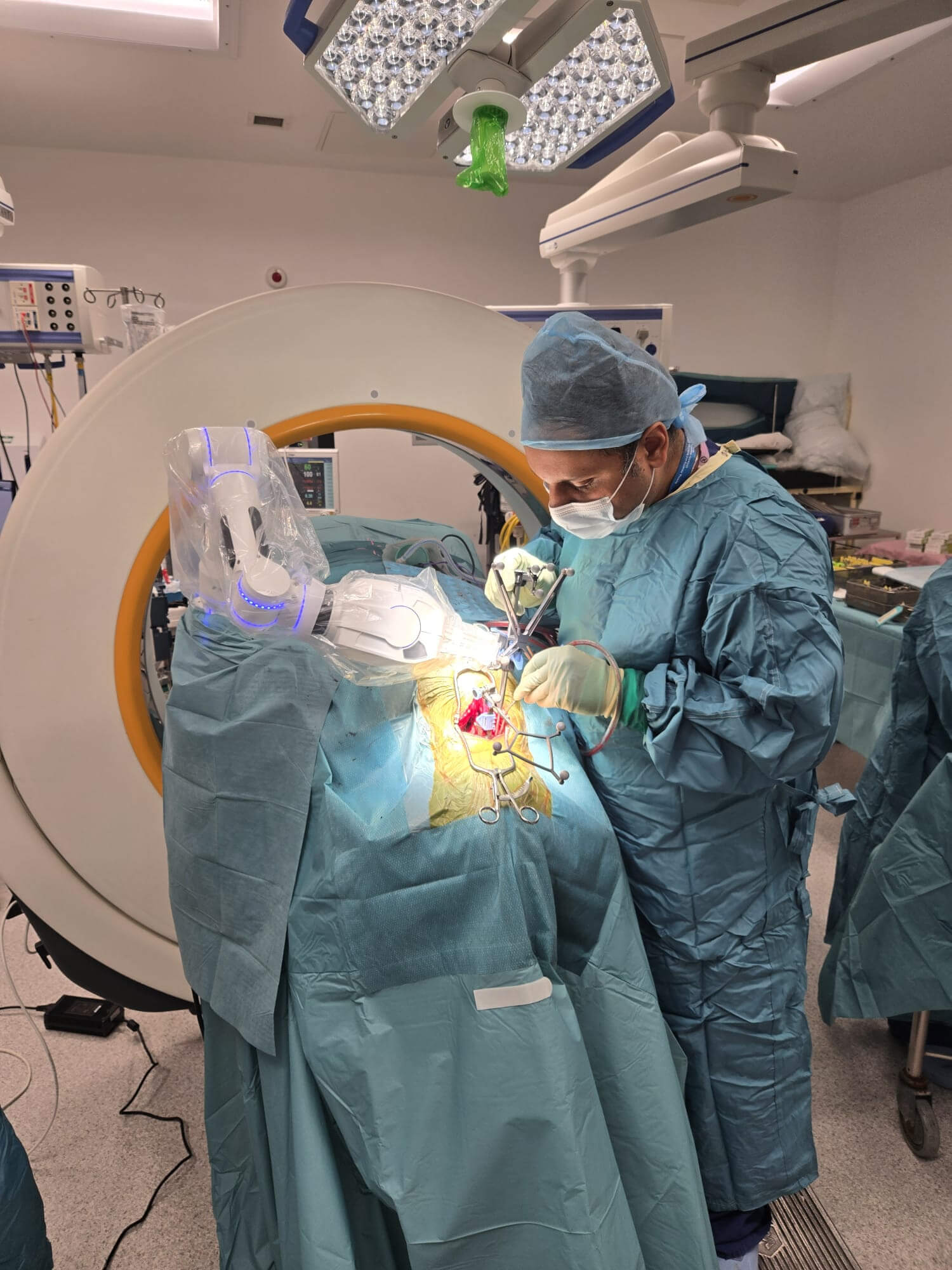
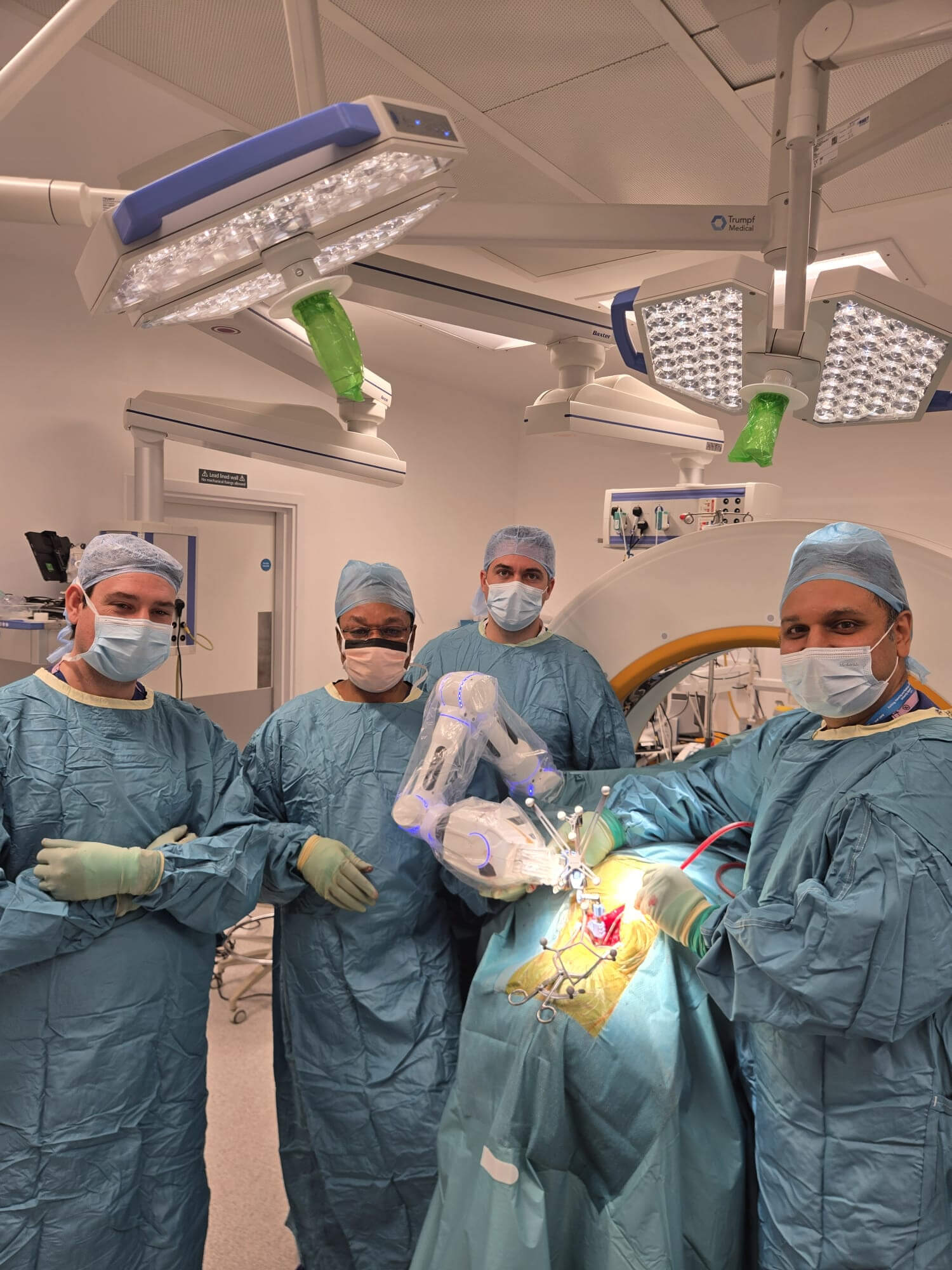
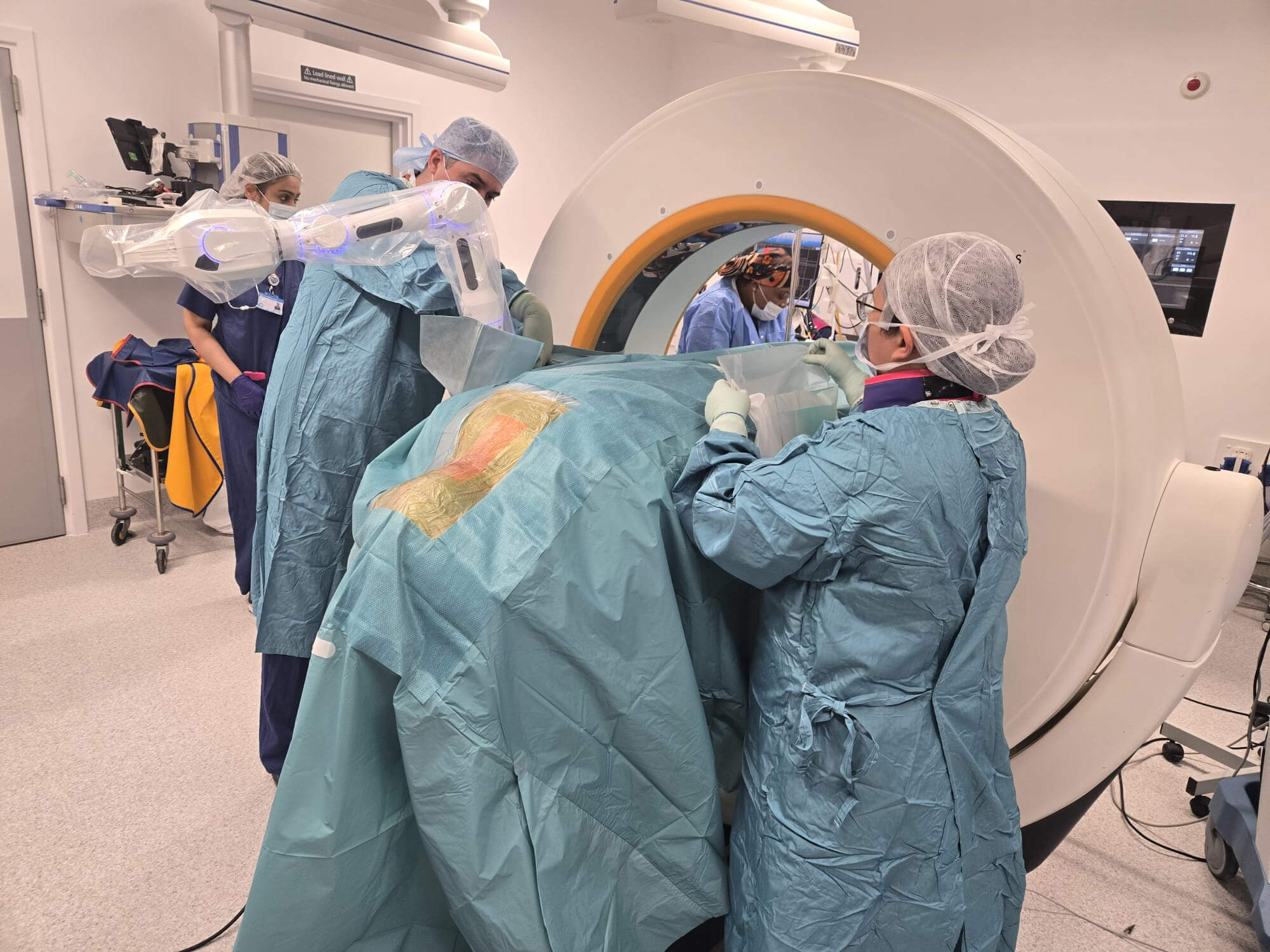
Robotic Spine Surgery represents an important development in modern spine surgery, combining detailed imaging, computer-assisted planning, and minimally invasive surgical techniques to support precision during complex spinal procedures.
Mr Bhaskar Thakur is a consultant neurosurgeon in London with expertise in minimally invasive spine surgery, spinal decompression procedures, and complex spinal disorders affecting the cervical, thoracic, and lumbar spine.
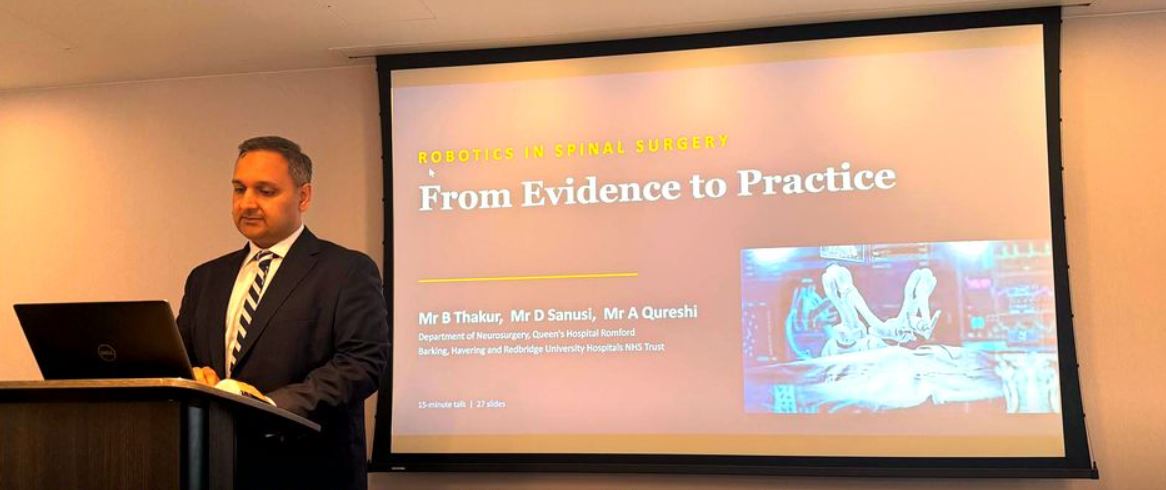
Robotic Spine Surgery surgical planning may help improve implant positioning, spinal alignment, and procedural accuracy while reducing disruption to surrounding muscles and soft tissues in selected patients.
Many individuals experiencing persistent spinal pain, nerve compression, spinal instability, or degenerative spinal disease may benefit from advanced image-guided spinal procedures when conservative treatment has not provided adequate symptom relief.
What Is Advanced Navigation-Assisted Robotic Spine Surgery?
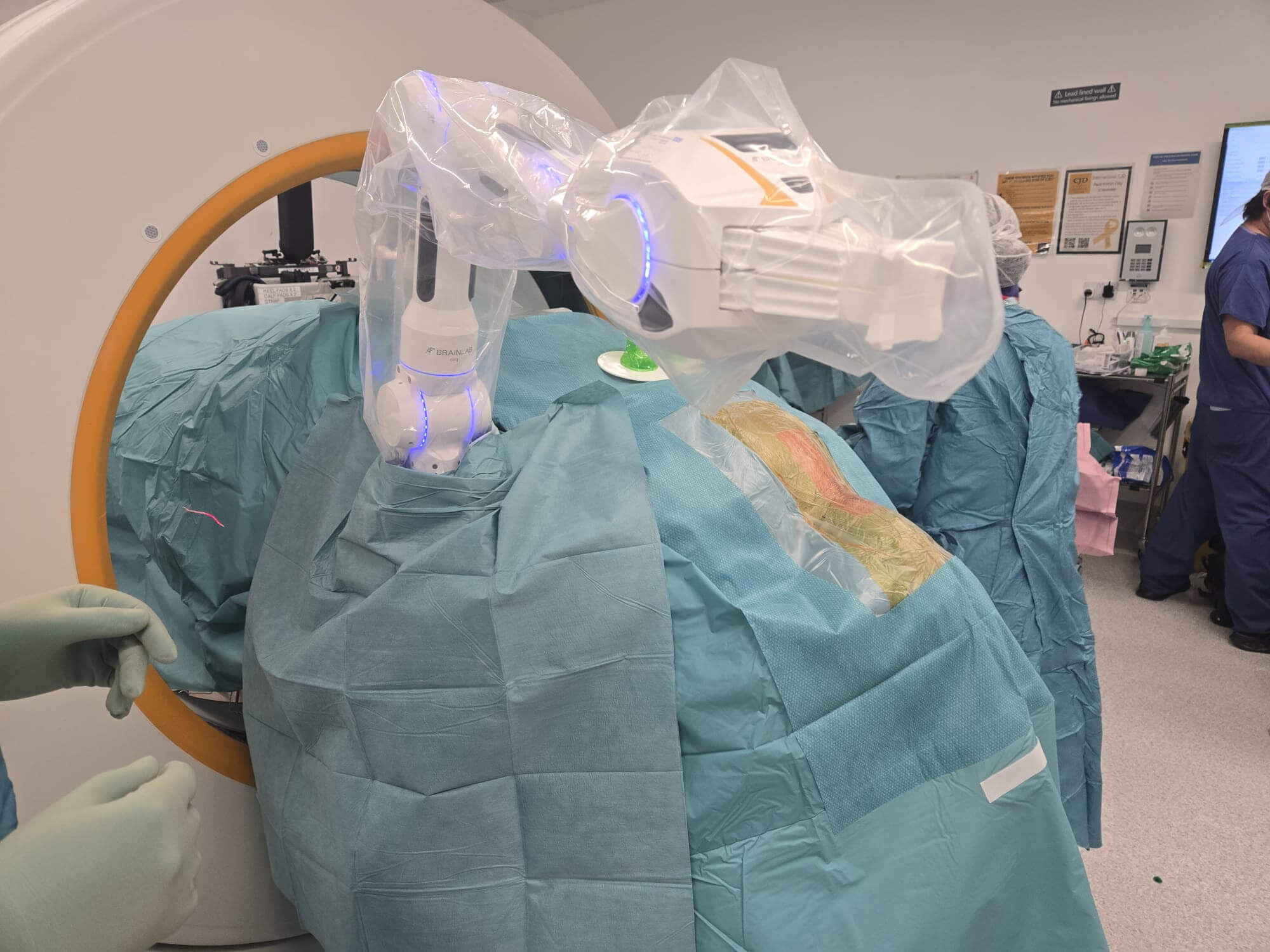
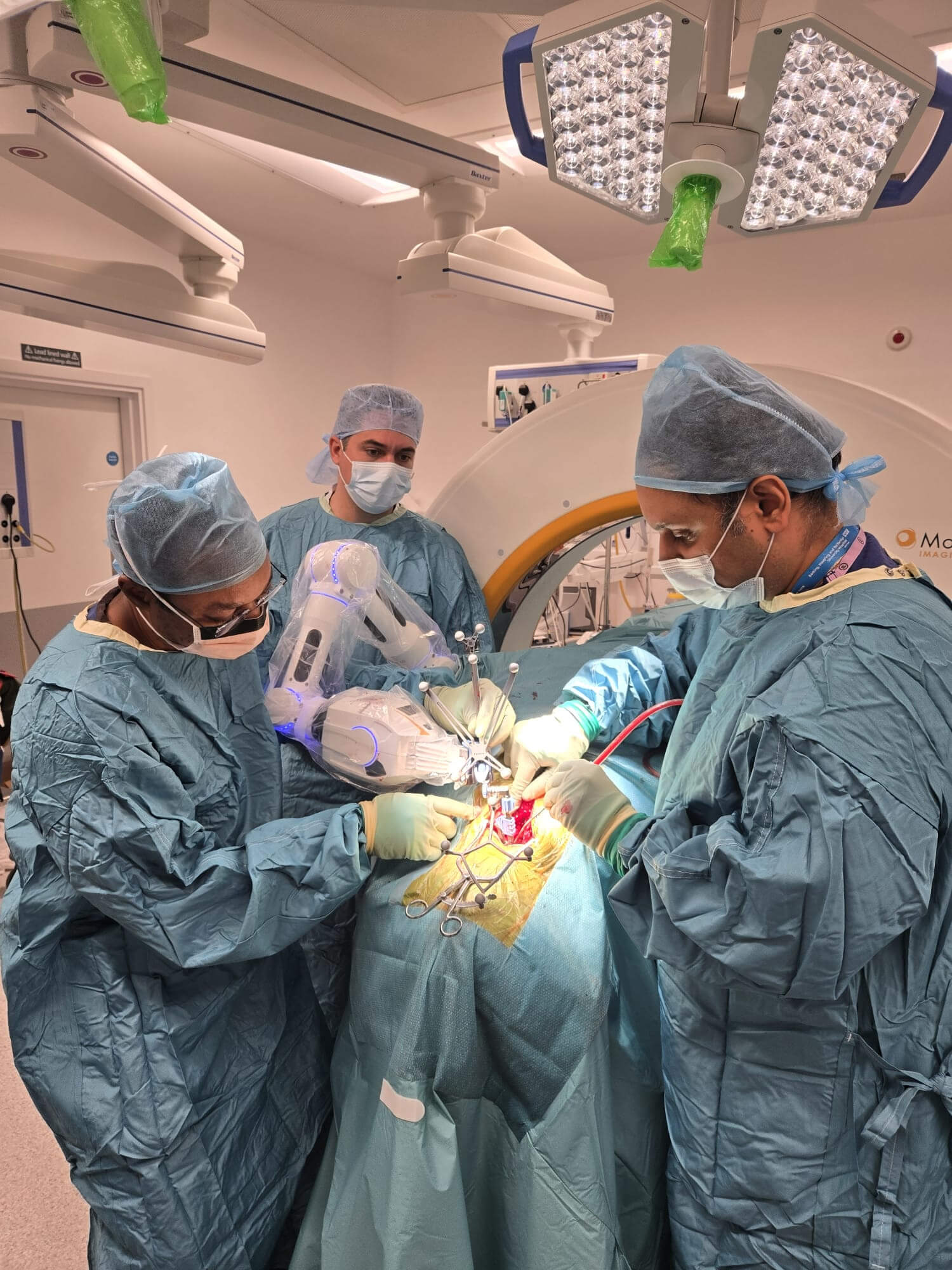
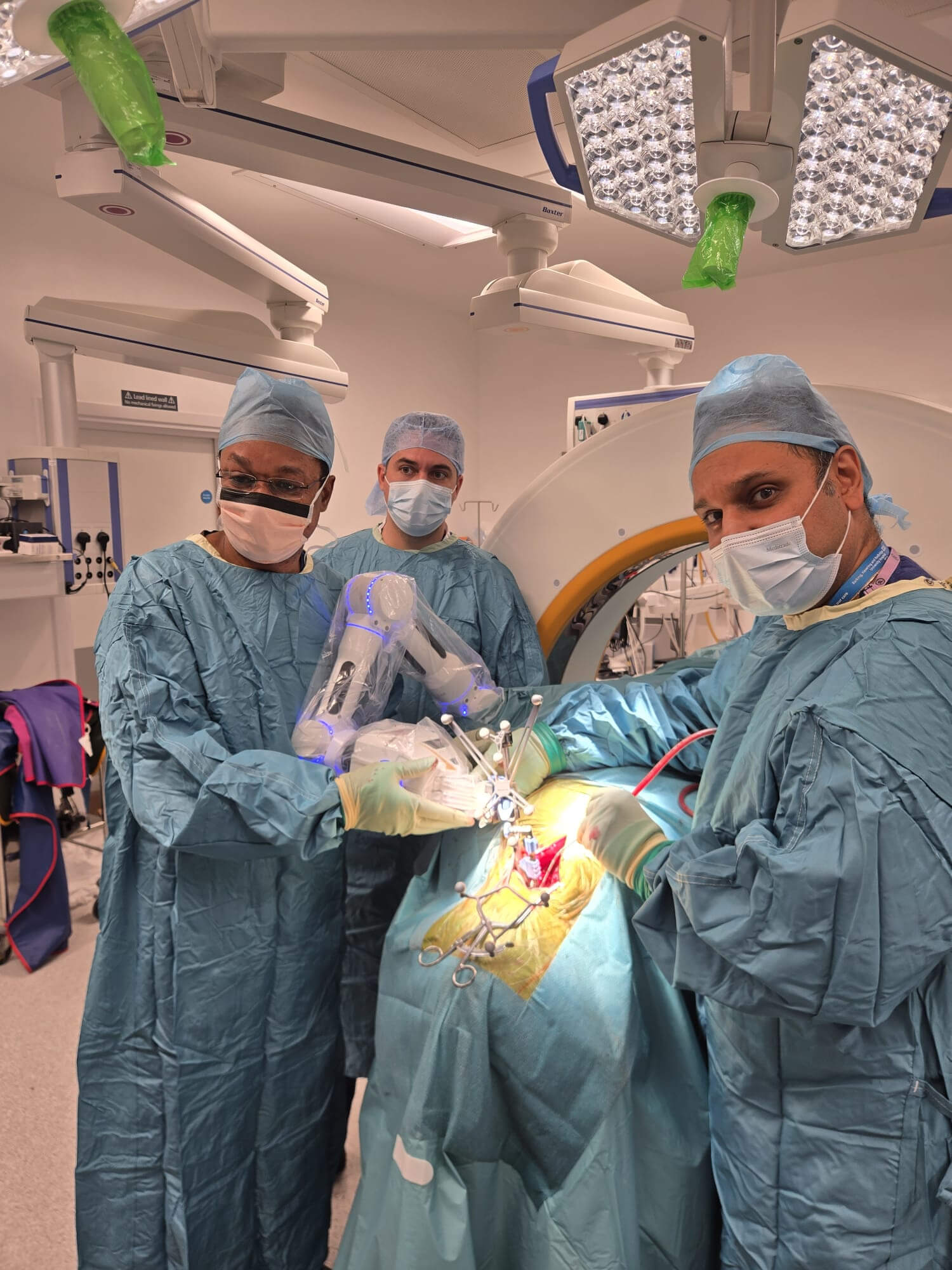
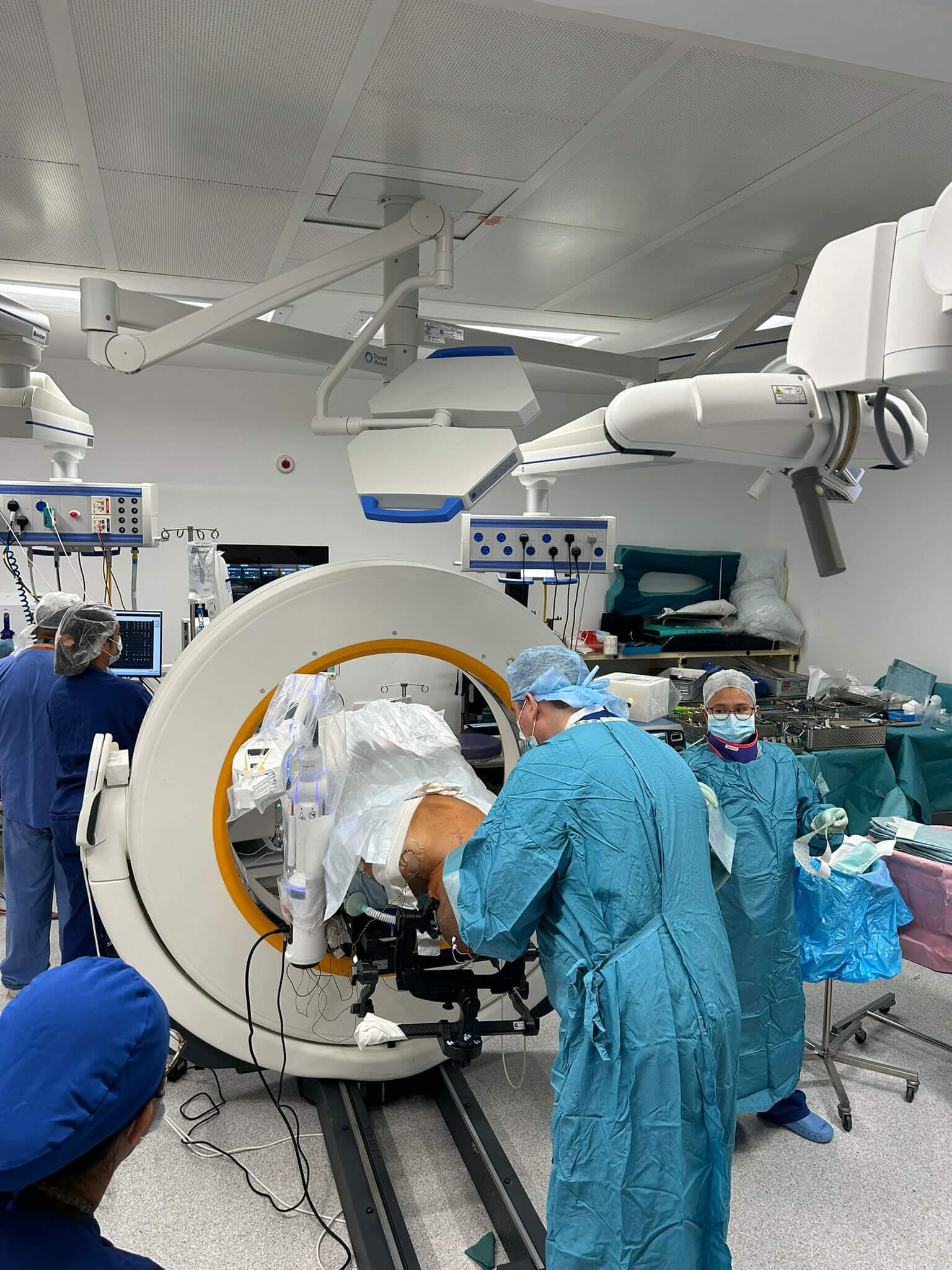
Modern spinal procedures increasingly use computer-assisted navigation systems designed to improve surgical precision during spinal decompression and stabilisation procedures.
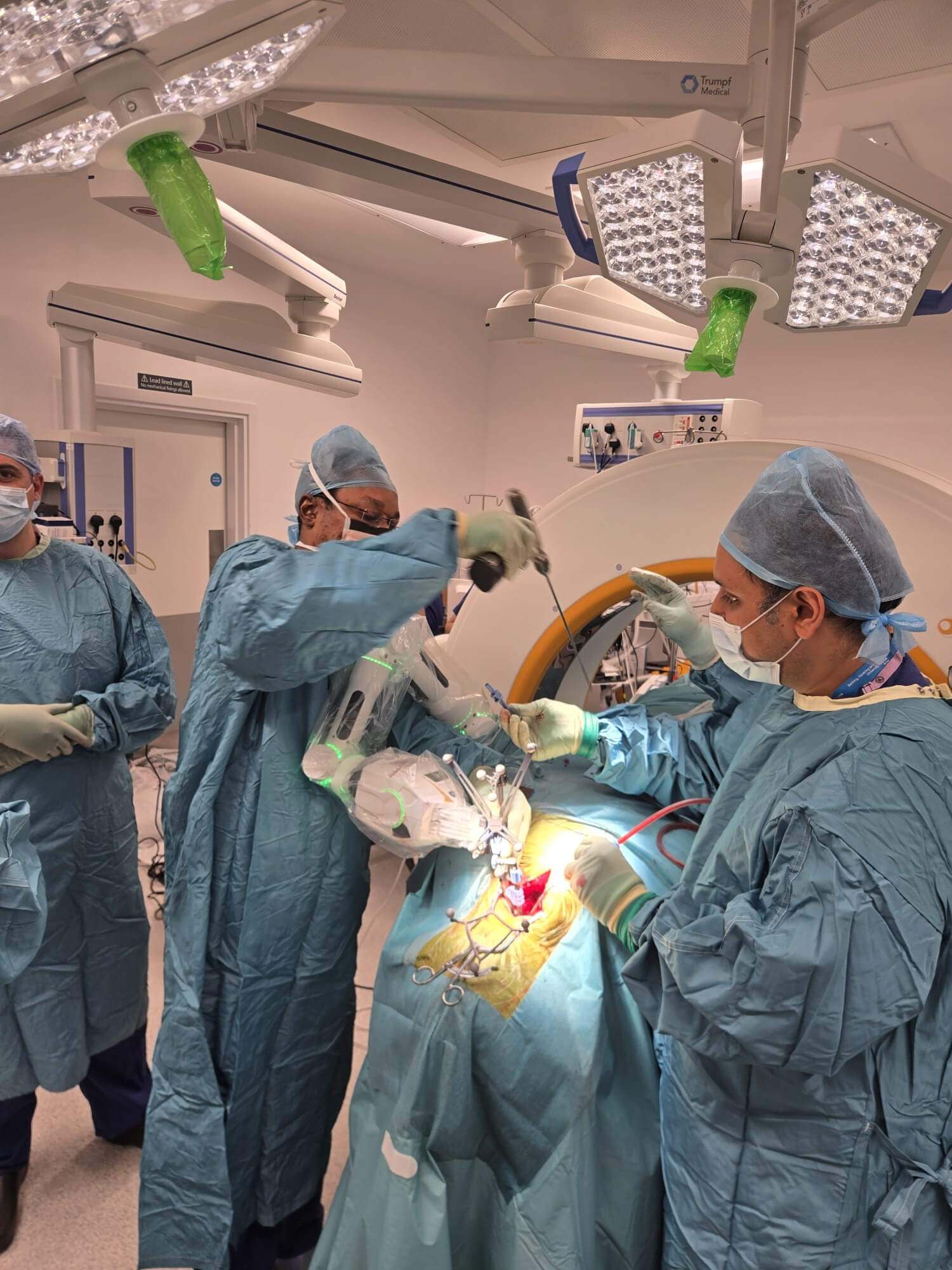
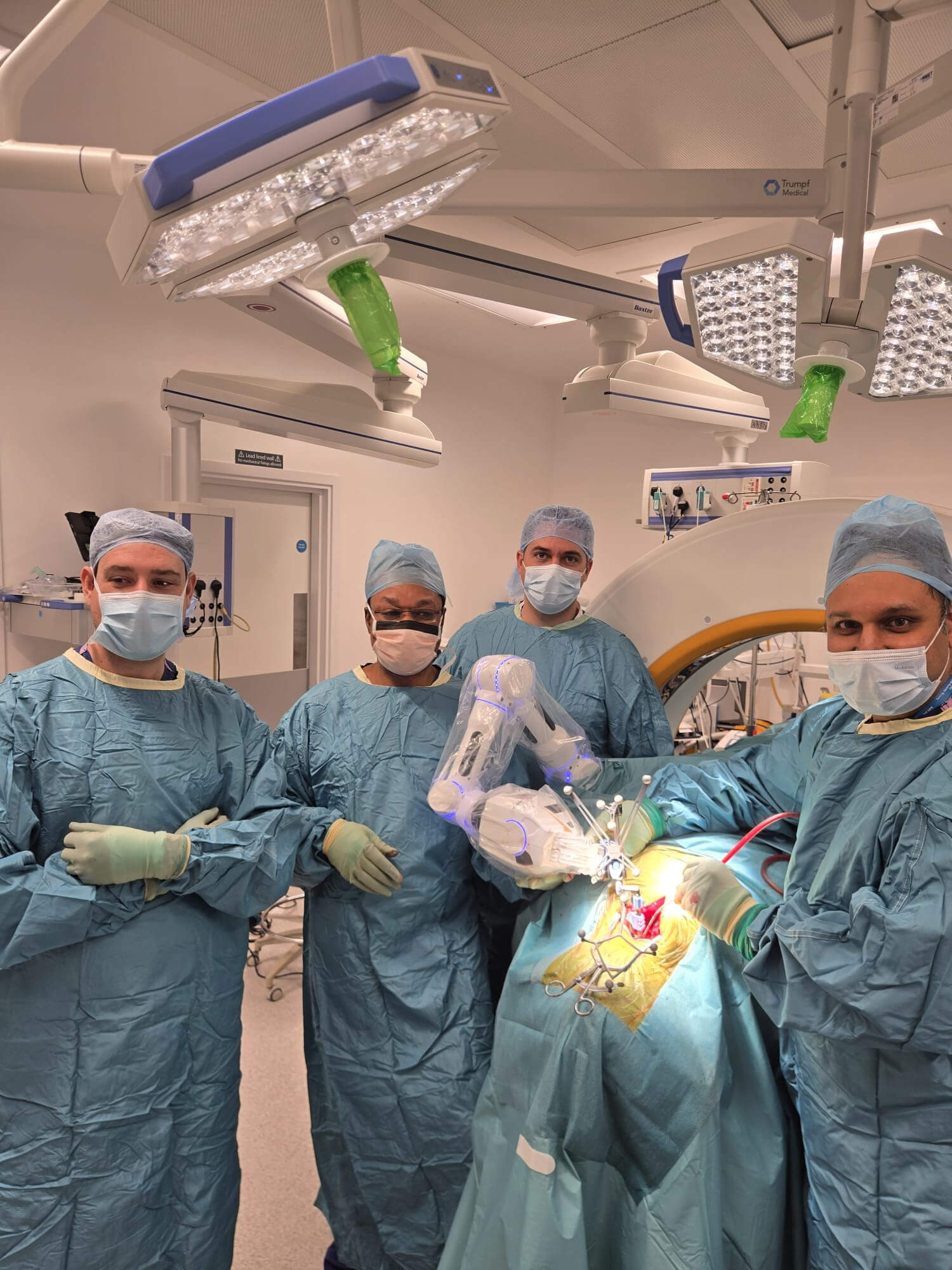
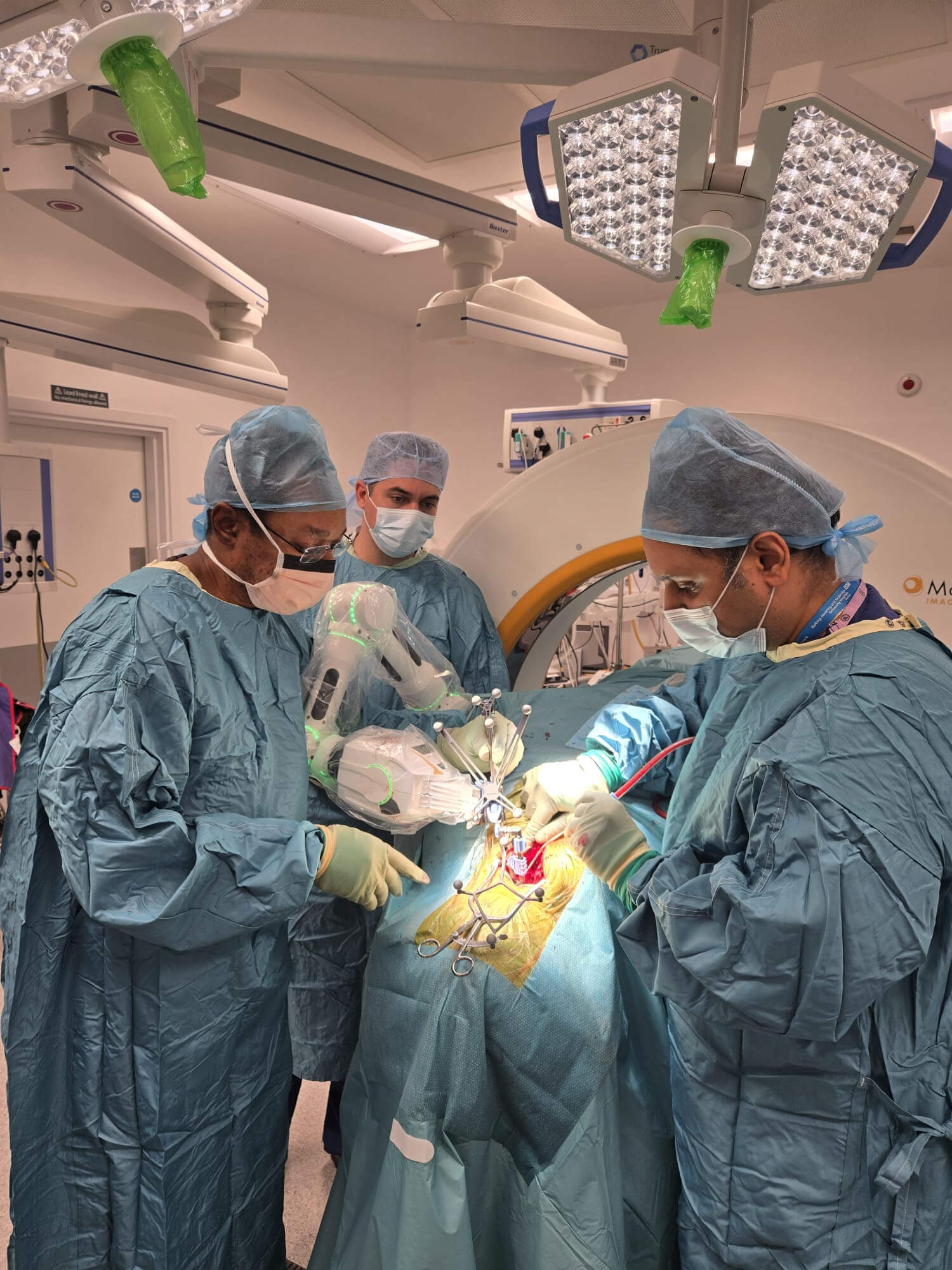
These systems create highly detailed anatomical imaging of the spine, allowing careful surgical planning before the operation begins. Real-time navigation technology then assists with instrument positioning and spinal alignment throughout the procedure.
The technology does not replace the surgeon. Instead, it supports accuracy during complex spinal procedures involving spinal implants, decompression of neural structures, spinal fixation, and correction of spinal instability.
Navigation-assisted techniques are frequently combined with minimally invasive spinal surgery, helping reduce tissue disruption and support postoperative recovery.
How Robotic Spinal Procedures Work
Detailed spinal imaging is used to create a three-dimensional representation of the patient’s spinal anatomy before surgery.
This allows careful planning of:
- Implant positioning
- Screw trajectories
- Spinal alignment correction
- Surgical access pathways
- Neural decompression strategies
During surgery, navigation technology provides real-time anatomical guidance, helping improve procedural accuracy and visualisation.
This approach may be particularly beneficial in patients with complex spinal anatomy, spinal deformity, revision surgery, or multilevel degenerative spinal disease.
Conditions That May Require Technology-Assisted Spinal Surgery
Advanced spinal navigation may be considered for a wide range of spinal conditions affecting the neck and back.
- Spinal stenosis
- Slipped disc (disc prolapse)
- Sciatica
- Degenerative disc disease
- Spondylolisthesis
- Scoliosis and spinal deformity
- Spinal instability
- Spinal cord compression
- Revision spinal surgery
- Spine fractures
The most appropriate surgical approach depends on spinal imaging findings, neurological symptoms, spinal stability, and the patient’s overall health.
Potential Benefits of Navigation-Assisted Spine Surgery
Robotic spinal procedures may offer several advantages during selected spinal operations.
- Improved surgical precision
- Enhanced implant placement accuracy
- Detailed spinal alignment planning
- Reduced disruption to surrounding tissues
- Smaller surgical incisions in selected cases
- Reduced postoperative discomfort
- Earlier mobilisation
- Shorter hospital stays in selected patients
- Improved visualisation during surgery
These techniques are commonly used alongside minimally invasive approaches, which may help reduce blood loss, muscle injury, and postoperative recovery time.
Minimally Invasive Surgical Techniques
Minimally invasive spinal surgery aims to reduce tissue trauma while treating spinal compression, instability, or degenerative spinal disease.
Compared with traditional open spinal surgery, minimally invasive techniques may involve:
- Smaller incisions
- Reduced muscle disruption
- Lower blood loss
- Reduced postoperative pain
- Earlier return to mobility
- Shorter rehabilitation periods
Patients with back pain, neck pain, sciatica, or spinal instability may benefit from minimally invasive treatment strategies depending on the underlying spinal condition.
Who May Benefit From Advanced Spinal Navigation?
Image-guided spinal procedures may be considered in patients requiring spinal decompression, stabilisation, deformity correction, or revision surgery.
Potential candidates may include patients with:
- Persistent spinal pain
- Nerve compression affecting the arms or legs
- Degenerative spinal disease
- Complex spinal deformities
- Spinal instability
- Previous spinal surgery
- Progressive neurological symptoms
Every patient undergoes detailed clinical assessment and spinal imaging before surgery is recommended.
Mr Bhaskar Thakur carefully evaluates whether computer-assisted navigation may improve surgical precision and safety for each individual patient.
Precision Planning Before Surgery
Detailed preoperative planning is an important component of modern spinal surgery.
Advanced imaging technology allows surgeons to assess spinal alignment, nerve compression, vertebral anatomy, and stabilisation requirements before surgery begins.
This planning process may help improve procedural efficiency and implant positioning, particularly in patients with scoliosis, revision surgery, spinal deformity, or multilevel spinal degeneration.
Recovery After Spine Surgery
Recovery timelines vary depending on the complexity of the spinal condition, the procedure performed, and the patient’s overall health.
Many patients undergoing minimally invasive spinal procedures experience earlier mobilisation and shorter hospital stays compared with traditional open surgery.
Postoperative rehabilitation may involve:
- Physiotherapy
- Walking programmes
- Gradual increase in activity levels
- Strengthening exercises
- Follow-up spinal imaging
Patients recovering from surgery for spinal stenosis, disc prolapse, or nerve compression disorders may gradually notice improvement in mobility and neurological symptoms during recovery.
Potential Risks and Limitations
As with all spinal procedures, surgery involving spinal decompression or stabilisation carries potential risks and limitations.
Possible risks may include:
- Infection
- Bleeding
- Nerve irritation or injury
- Incomplete symptom relief
- Implant-related complications
- Anaesthetic risks
Not all spinal conditions require surgical intervention, and not every patient is suitable for minimally invasive approaches.
Treatment recommendations depend on spinal anatomy, imaging findings, neurological symptoms, and overall patient health.
Is Computer-Guided Spine Surgery Safe?
Advanced spinal navigation systems are designed to support surgical accuracy and improve anatomical visualisation during spinal procedures.
These technologies assist the surgeon throughout surgery but do not replace operative judgement or surgical decision-making.
When used appropriately, image-guided navigation may help support precision during complex spinal procedures involving decompression or spinal fixation.
Consultation and Specialist Assessment
Every patient undergoes detailed clinical assessment before spinal surgery is recommended.
This typically includes:
- Neurological examination
- Review of MRI or CT imaging
- Assessment of previous treatments
- Evaluation of mobility and symptoms
- Discussion of surgical and non-surgical options
If advanced image-guided surgery is considered appropriate, Mr Bhaskar Thakur will explain the procedure, expected recovery process, potential benefits, and associated risks in detail.
Advanced Spine Surgery in London
Mr Bhaskar Thakur is a consultant neurosurgeon in London with expertise in minimally invasive spinal surgery, spinal decompression procedures, spinal stabilisation surgery, and complex spinal disorders.
Patients across Central London, Harley Street, and Essex may seek specialist spinal assessment for degenerative spinal disease, nerve compression disorders, spinal instability, and complex spinal conditions requiring advanced surgical planning.
Early specialist assessment may help determine whether minimally invasive or technology-assisted spinal procedures are appropriate based on the patient’s symptoms and spinal imaging findings.
Book a Consultation
If you are experiencing persistent spinal pain, nerve compression symptoms, spinal instability, or progressive mobility difficulties, specialist spinal assessment may help identify appropriate treatment options.
Reviewed by Mr Bhaskar Thakur
Mr Bhaskar Thakur is a consultant neurosurgeon specialising in minimally invasive spinal surgery, spinal decompression procedures, degenerative spinal disease, spinal cord compression, and advanced neurosurgical conditions in London and Essex.
