 Mr Bhaskar Thakur
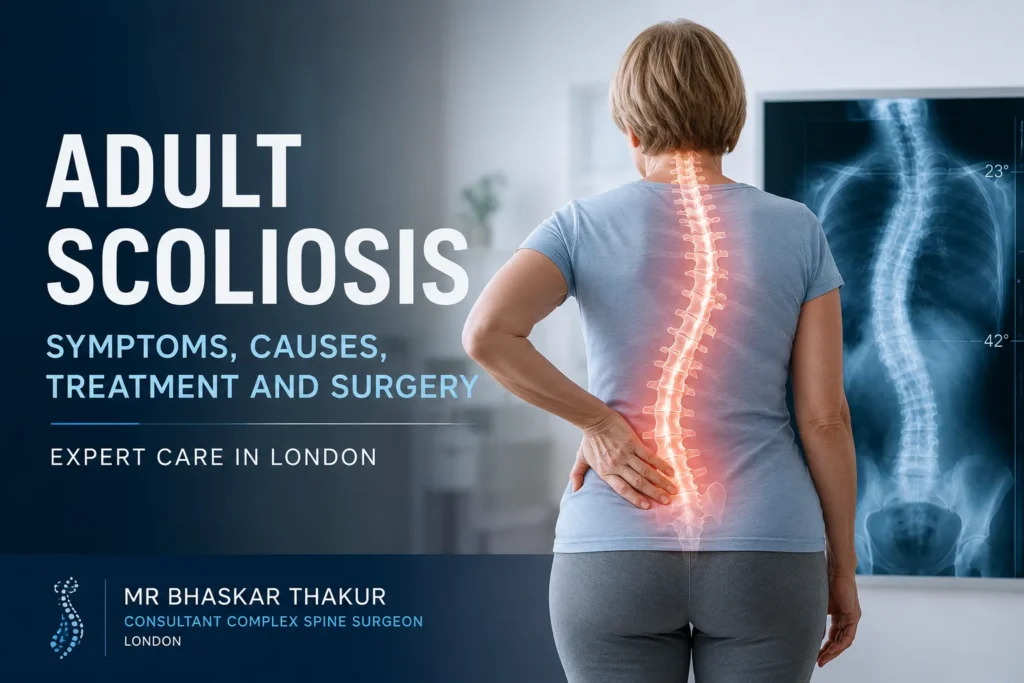
Adult scoliosis is a condition characterised by an abnormal sideways curvature of the spine that develops or persists during adulthood. While many people associate this condition with children and teenagers, it is increasingly common among adults and can significantly affect posture, mobility, balance, and overall quality of life.
Some individuals have a spinal curve that first developed during adolescence and gradually progressed over time. Others develop a curvature later in life as a result of age-related degeneration affecting the discs, joints, and supporting structures of the back. This form is commonly known as degenerative scoliosis and is becoming increasingly prevalent as people live longer and remain active later in life.
Symptoms vary considerably from person to person. Some individuals experience only mild discomfort, while others develop chronic back pain, sciatica, difficulty standing upright, progressive postural changes, reduced walking tolerance, and problems related to nerve compression.
Because these changes often develop gradually, many people adapt to worsening symptoms without realising how significantly their posture, balance, or mobility has changed. Early assessment by a specialist can help identify the underlying cause of symptoms and determine the most appropriate treatment options.
Mr Bhaskar Thakur is a Consultant Complex Spine Surgeon in London with extensive experience in the diagnosis and treatment of adult scoliosis and other forms of adult spinal deformity. He provides personalised treatment plans designed to relieve symptoms, improve function, restore alignment, and help patients return to the activities that matter most to them.
This guide explains the causes, symptoms, diagnosis, treatment options, and surgical procedures used to manage adult scoliosis.
Specialist Adult Scoliosis Treatment in London
Adult scoliosis can have a significant impact on posture, mobility, independence, and overall quality of life. Individuals seeking scoliosis treatment in London often present with chronic back pain, progressive postural changes, leg pain, sciatica, reduced walking tolerance, or difficulty standing upright for prolonged periods.
Because this condition frequently develops alongside degenerative changes affecting the discs, joints, and supporting structures of the spine, specialist assessment is important to determine the underlying cause of symptoms and identify the most appropriate treatment options.
Mr Bhaskar Thakur is a Consultant Complex Spine Surgeon in London with extensive experience in the assessment and treatment of adult scoliosis. He provides both non-surgical and surgical management, using advanced imaging, modern spinal technology, and evidence-based treatment strategies tailored to each individual.
Patients travel from across London and the surrounding regions to seek specialist assessment for adult scoliosis, degenerative scoliosis, spinal imbalance, and other complex spinal conditions.
Contents
- What Is Adult Scoliosis?
- Types of Adult Scoliosis
- Symptoms of Adult Scoliosis
- What Causes Adult Scoliosis?
- When Should You See a Specialist?
- How Is Adult Scoliosis Diagnosed?
- Non-Surgical Treatment for Adult Scoliosis
- When Is Surgery Needed?
- Adult Scoliosis Surgery
- Robotic-Assisted Scoliosis Surgery
- Recovery After Adult Scoliosis Surgery
- Why Choose Mr Bhaskar Thakur?
- Frequently Asked Questions
What Is Adult Scoliosis?
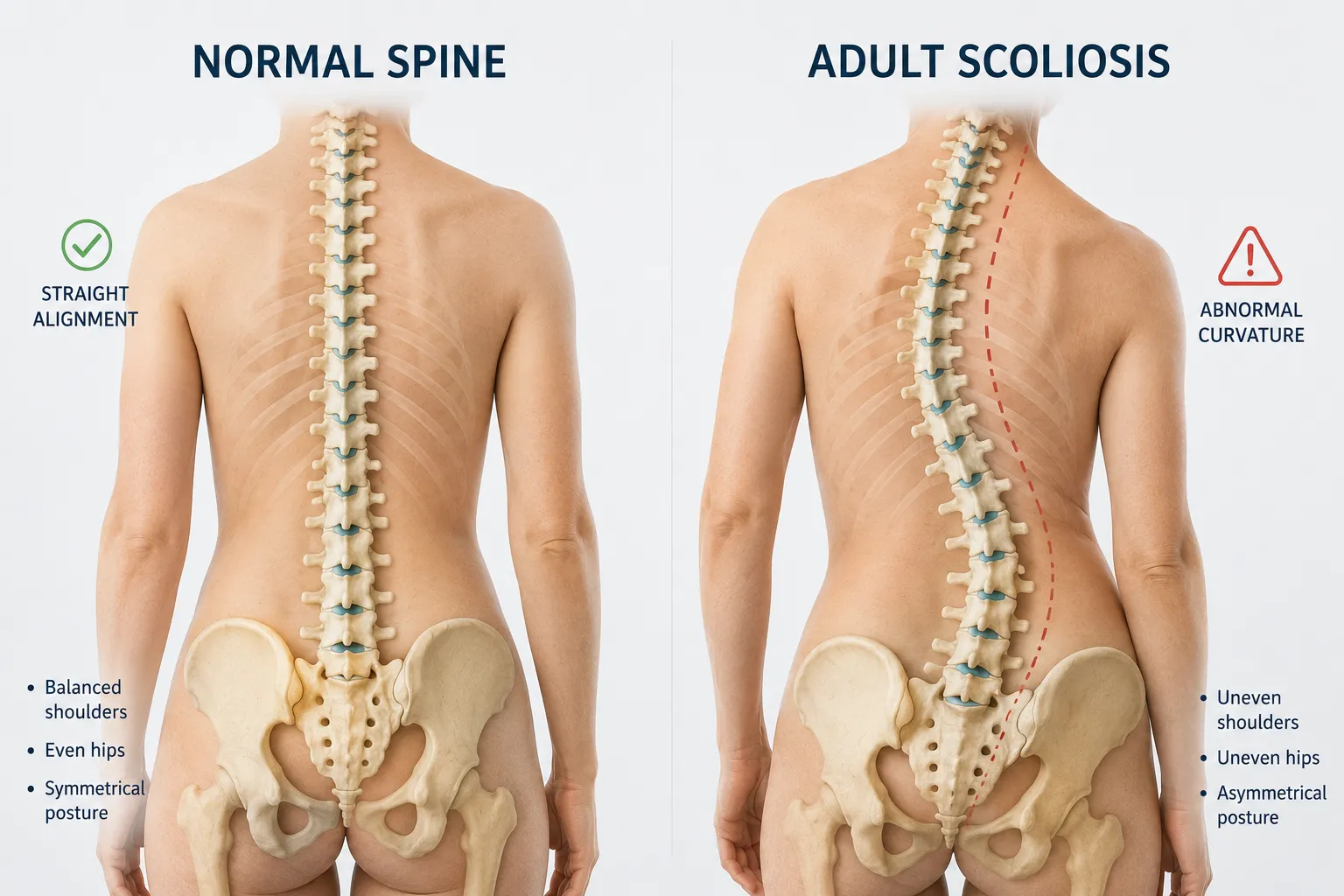
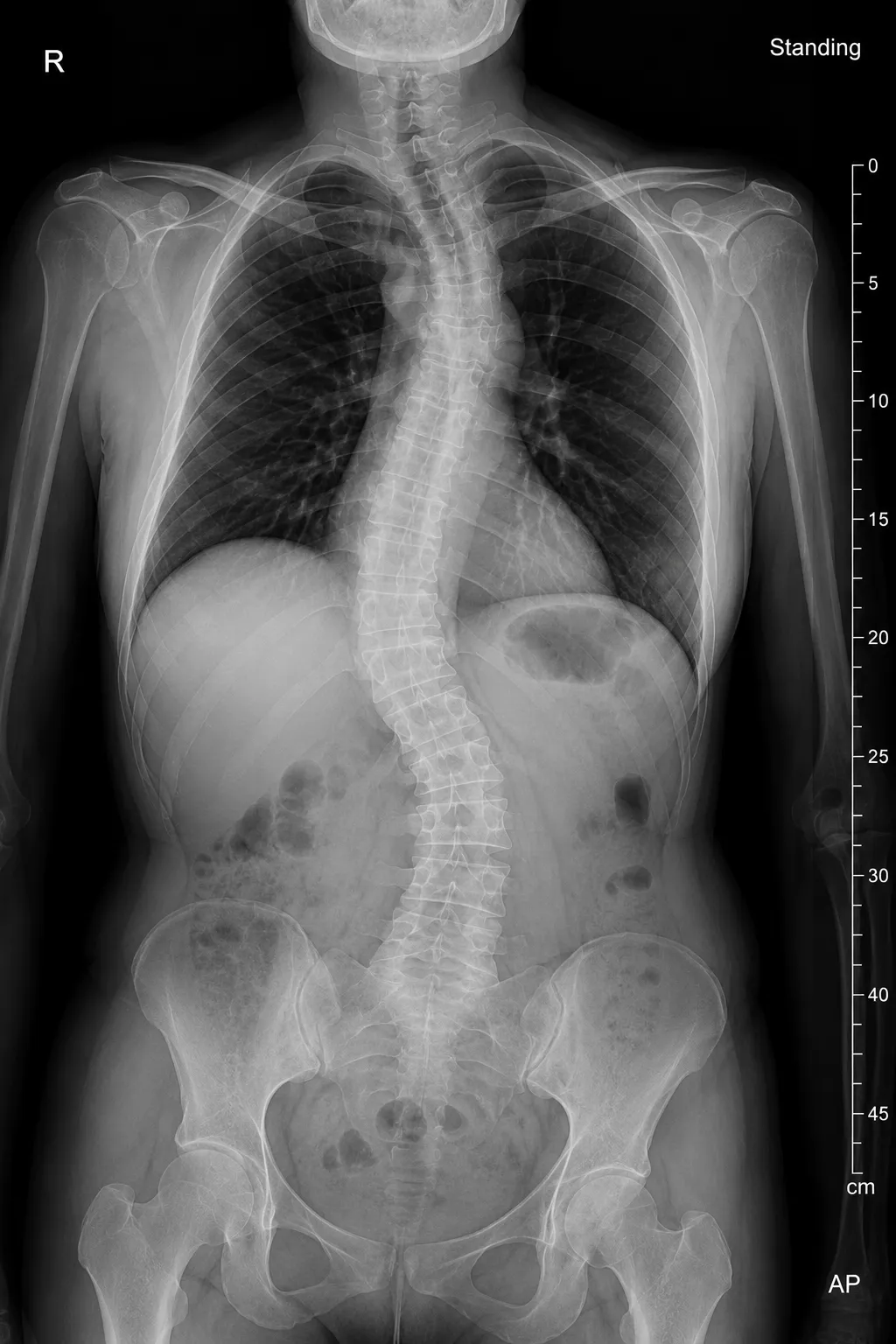
Adult scoliosis is a condition in which the spine develops an abnormal sideways curvature when viewed from behind. Rather than appearing straight, the spine may curve into an “S” shape or “C” shape and is often accompanied by rotation of the vertebrae.
Although it is commonly diagnosed during adolescence, abnormal spinal curvature can affect adults in several different ways. Some individuals continue to experience progression of curves that first developed during childhood, while others develop the condition later in life as a result of age-related changes affecting the discs, joints, and supporting structures of the back.
The condition forms part of a broader group of disorders known as spinal deformities, which also include kyphosis, sagittal imbalance, and flat back syndrome.
This disorder is more than simply a curvature visible on an X-ray. Changes in alignment can place abnormal stress on discs, joints, muscles, and nerves, leading to pain, stiffness, fatigue, reduced mobility, and neurological symptoms.
The impact varies considerably between individuals. Some people remain relatively symptom-free, while others experience progressive disability that affects daily activities, work, exercise, and overall quality of life.
Maintaining balanced posture and alignment is important because even moderate curvature can alter walking mechanics and the body’s centre of gravity over time.
Types of Adult Scoliosis
Adult scoliosis is not a single condition. Several different forms can affect adults, each with distinct causes, progression patterns, and treatment considerations.
Degenerative Scoliosis
Degenerative scoliosis is the most common form encountered in adult spine practice. It develops as age-related wear and tear affects the discs, facet joints, and supporting ligaments of the spine.
As these structures deteriorate, the spine may gradually lose its normal alignment and begin to curve. This condition often develops alongside disorders such as spinal stenosis, arthritis, and nerve compression.
People with degenerative scoliosis frequently experience back pain, leg pain, sciatica, difficulty walking, and progressive postural imbalance.
Idiopathic Adult Scoliosis
Idiopathic scoliosis refers to a spinal curvature that develops without a clearly identifiable cause. Many adults with this condition were first diagnosed during adolescence and continue to experience gradual progression later in life.
Although some curves remain stable for many years, others may worsen with age as degenerative changes develop within the spine. Progression is more likely when larger curves are present or when significant degeneration occurs.
Adults with longstanding curves may develop pain, stiffness, imbalance, and symptoms related to nerve compression as they get older.
Post-Surgical Scoliosis
Some individuals develop scoliosis or worsening curvature following previous spine surgery. Changes in spinal mechanics, adjacent segment degeneration, or progression of existing deformity can occasionally contribute to new alignment problems over time.
These cases are often complex and require detailed assessment by a specialist experienced in deformity correction and revision spine surgery.
Neuromuscular Scoliosis
Neuromuscular scoliosis develops as a result of conditions affecting the muscles or nervous system. Disorders such as cerebral palsy, muscular dystrophy, and spinal muscular atrophy can alter muscle balance and contribute to progressive curvature.
Although this form is less common than degenerative or idiopathic scoliosis, it can lead to significant functional limitations and may require specialist management.
Regardless of the underlying cause, understanding the specific type of scoliosis is essential because treatment recommendations vary considerably depending on the severity of the curve, overall alignment, neurological involvement, and the individual’s symptoms and goals.
Symptoms of Adult Scoliosis
Symptoms can vary considerably depending on the size of the curve, its location, the degree of imbalance, and whether nearby nerves become compressed. Some people experience only mild discomfort, while others develop significant pain and mobility limitations that affect everyday life.
Many individuals initially notice subtle changes in posture before more obvious symptoms develop. As the condition progresses, pain, fatigue, and difficulty maintaining an upright posture often become increasingly problematic.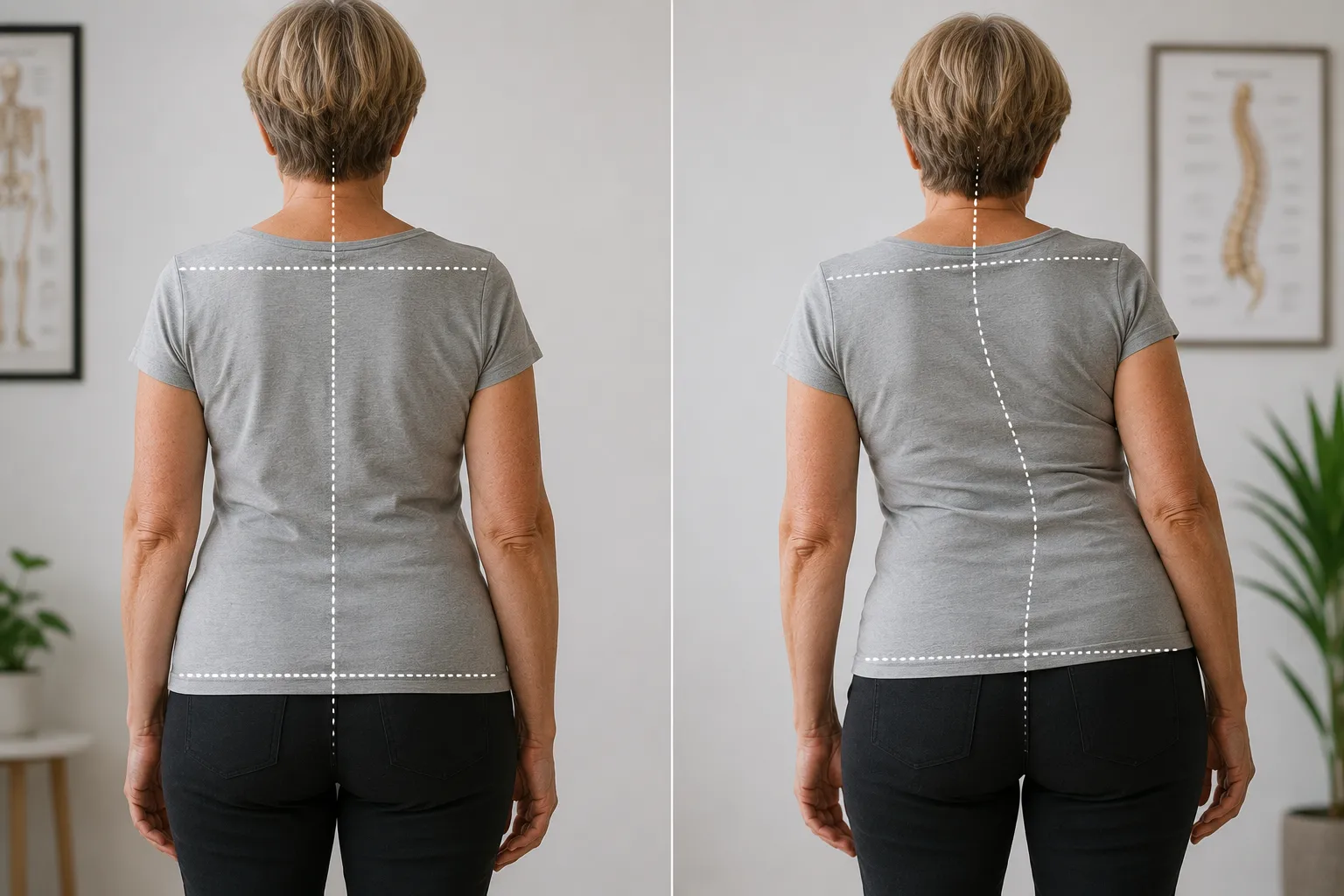
Back Pain
Persistent back pain is one of the most common symptoms of adult scoliosis. The abnormal curvature places uneven stress on the discs, joints, ligaments, and muscles, which can lead to chronic discomfort.
Pain may affect the lower back, middle back, or multiple regions depending on the location and severity of the curve.
Related condition:
Back Pain
Postural Changes
Many people notice visible changes in posture as scoliosis progresses. These changes may develop gradually over several years and often become more noticeable when comparing photographs taken over time.
Common postural changes include:
- Uneven shoulders
- Uneven hips
- Leaning to one side
- Prominent ribs
- Loss of overall balance
- Changes in standing posture
Leg Pain and Sciatica
Adult scoliosis frequently occurs alongside degeneration of the discs and joints. As these structures change, the spaces surrounding the spinal nerves can narrow, resulting in nerve compression.
Symptoms may include:
- Leg pain
- Sciatica
- Numbness
- Tingling sensations
- Weakness in the legs
- Difficulty walking longer distances
Related condition:
Sciatica
Difficulty Standing or Walking
As spinal alignment deteriorates, maintaining an upright posture may become increasingly difficult. Many people report feeling tired after standing for prolonged periods and may notice that walking longer distances becomes more challenging.
Some individuals develop a forward stooping posture or begin leaning to one side while walking as the body attempts to compensate for imbalance.
Fatigue and Reduced Endurance
The muscles surrounding the spine often work harder to compensate for abnormal alignment. Over time, this increased muscular effort can contribute to fatigue, reduced endurance, and discomfort during daily activities.
Many individuals find they can no longer participate in activities they previously enjoyed because of pain, fatigue, or reduced mobility.
Reduced Quality of Life
This condition can affect much more than the spine itself. Everyday activities such as shopping, travelling, exercising, gardening, or spending time with family may become increasingly difficult as symptoms progress.
Early assessment and appropriate treatment can often help improve symptoms and prevent further deterioration in function and quality of life.
What Causes Adult Scoliosis?
Adult scoliosis may develop for several different reasons. Understanding the underlying cause is important because treatment recommendations often vary depending on how the curvature developed and whether other spinal conditions are present.
In many cases, multiple factors contribute to the development and progression of scoliosis.
Age-Related Degeneration
Degenerative changes are among the most common causes of this problem in adults. As the discs and joints gradually wear down over time, the spine may lose its normal alignment and begin to curve.
Degeneration can affect:
- Intervertebral discs
- Facet joints
- Supporting ligaments
- Paraspinal muscles
These changes may eventually lead to degenerative scoliosis and other forms of adult spinal deformity.
Adolescent Scoliosis That Progresses in Adulthood
Many adults with scoliosis were originally diagnosed during adolescence. Although some curves remain stable for decades, others continue to progress gradually throughout adult life.
The risk of progression often increases when degeneration, arthritis, or osteoporosis develops later in life.
Degenerative Disc Disease
The spinal discs act as cushions between the vertebrae. As discs lose height and hydration with age, uneven loading can develop across the spine.
This imbalance may contribute to curvature progression, loss of alignment, and increasing symptoms.
Osteoporosis
Osteoporosis weakens the bones and increases the risk of vertebral compression fractures. These fractures can alter spinal alignment and contribute to worsening curvature, particularly in older adults.
Maintaining good bone health is an important part of preventing progression and improving long-term outcomes.
Previous Spine Surgery
Some people develop scoliosis or worsening alignment following previous spinal procedures. Although modern spine surgery is highly successful, changes in spinal mechanics over time can occasionally contribute to new curvature or imbalance.
Examples include:
- Adjacent segment degeneration
- Post-fusion imbalance
- Loss of lumbar lordosis
- Junctional kyphosis
Neuromuscular Conditions
Certain neurological and muscular disorders can affect posture, balance, and spinal stability, increasing the likelihood of curvature developing over time.
Examples include:
- Cerebral palsy
- Muscular dystrophy
- Parkinson’s disease
- Spinal muscular atrophy
Regardless of the underlying cause, early assessment can help identify progression and guide appropriate treatment before symptoms become more severe.
When Should You See a Specialist?
Many people live with scoliosis for years before seeking specialist assessment. Because the condition often develops gradually, symptoms may be dismissed as a normal part of ageing until mobility and quality of life become significantly affected.
You should consider specialist assessment if you experience:
- Persistent back pain
- Progressive changes in posture
- Uneven shoulders or hips
- Difficulty standing upright
- Leg pain or sciatica
- Numbness or weakness
- Increasing difficulty walking
- Symptoms that continue despite physiotherapy or medication
Early assessment can help identify whether symptoms are being caused by scoliosis, nerve compression, spinal stenosis, or other spinal conditions. It can also help determine whether treatment is required and which options are most appropriate.
Mr Bhaskar Thakur provides specialist assessment for adults with scoliosis throughout London and the surrounding regions. Every patient undergoes a detailed clinical evaluation that considers symptoms, spinal alignment, neurological function, imaging findings, lifestyle factors, and personal treatment goals.
The earlier significant progression is identified, the greater the opportunity to implement effective management strategies before symptoms become more severe.
How Is Adult Scoliosis Diagnosed?
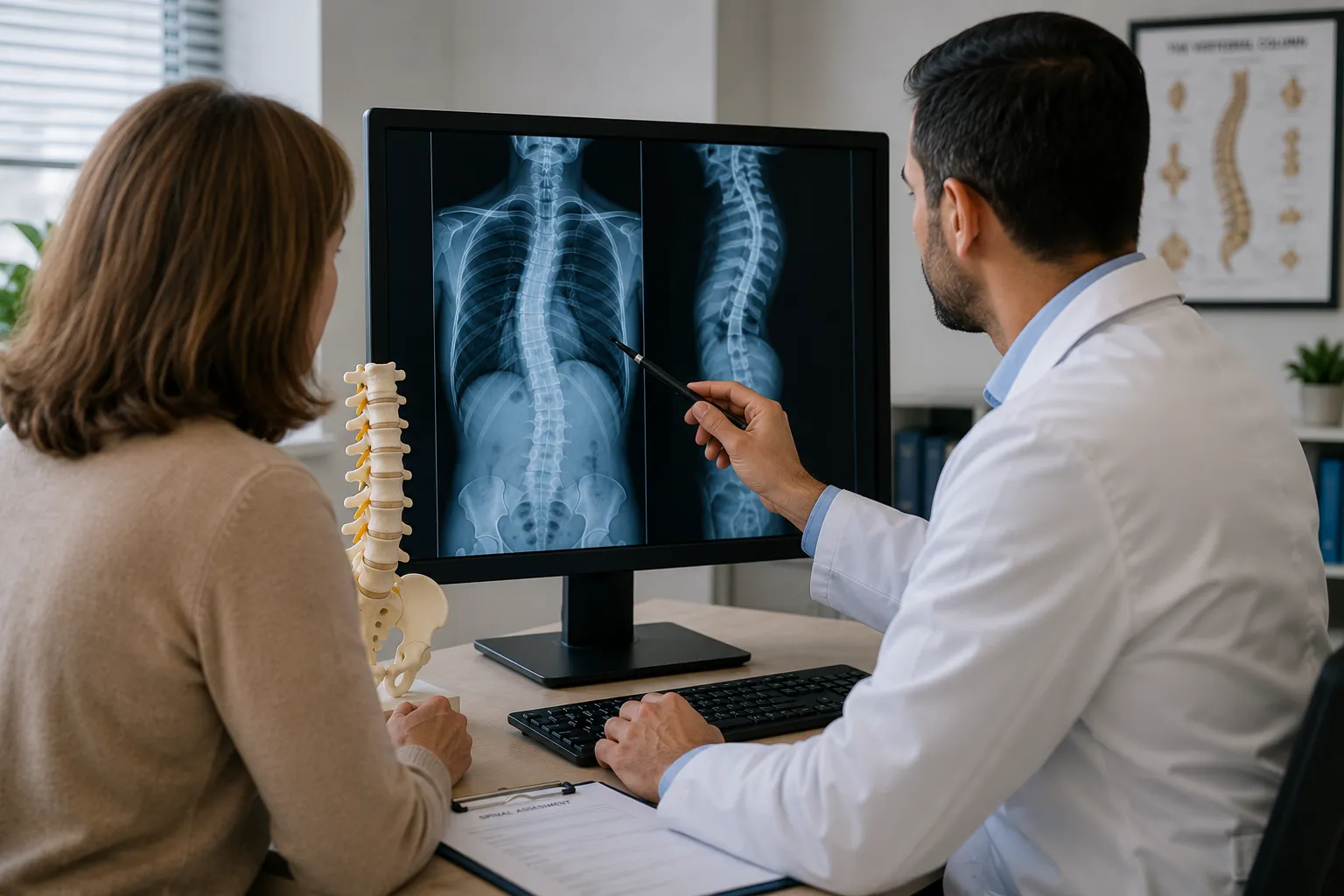
Accurate diagnosis is essential when planning treatment for adult scoliosis. Patients seeking assessment for adult scoliosis in London often undergo a detailed clinical examination together with advanced imaging studies to determine the severity of the condition and identify the most appropriate treatment options. While X-rays often reveal the presence of a spinal curve, treatment decisions are based on much more than imaging alone. The severity of symptoms, overall alignment, neurological function, mobility, and quality of life are all important considerations.
Mr Bhaskar Thakur takes a comprehensive approach when assessing adults with scoliosis. The goal is not only to identify the curvature itself but also to understand how the condition is affecting the individual’s daily activities, posture, balance, and long-term spinal health.
Medical History and Symptom Assessment
The assessment begins with a detailed discussion regarding symptoms, medical history, previous treatments, and any factors that may be contributing to progression.
Particular attention is given to:
- Back pain severity and location
- Changes in posture
- Walking ability
- Leg pain or sciatica
- Numbness or weakness
- Previous spinal surgery
- Impact on daily activities
Understanding how symptoms affect everyday life is often just as important as measuring the size of the spinal curve.
Physical Examination
A detailed physical examination helps evaluate posture, balance, flexibility, walking mechanics, and neurological function.
During the assessment, attention may be paid to:
- Shoulder and pelvic alignment
- Overall posture
- Forward bending assessment
- Muscle strength
- Reflexes
- Sensation in the legs
- Walking pattern and balance
Many individuals with adult scoliosis develop compensatory changes elsewhere in the body, including the hips, knees, and pelvis, which can contribute to symptoms.
X-Rays
Standing X-rays are typically the most important imaging study used to evaluate adult scoliosis. Unlike scans performed while lying down, standing X-rays demonstrate how the spine behaves under normal weight-bearing conditions.
These images allow assessment of:
- Curve magnitude
- Spinal balance
- Pelvic alignment
- Sagittal alignment
- Progression over time
Full-length standing X-rays are particularly valuable because they provide a complete picture of overall spinal alignment.
MRI Scans
MRI scans are frequently used when nerve compression is suspected. They provide detailed images of the discs, nerves, spinal canal, and surrounding soft tissues.
MRI is particularly useful for evaluating:
- Spinal stenosis
- Disc degeneration
- Nerve compression
- Sciatica symptoms
- Neurological problems
CT Scans
CT scans provide detailed information regarding bony anatomy and may be used when planning complex surgery or assessing previous spinal procedures.
In selected cases, CT imaging helps surgeons understand spinal anatomy in greater detail and assists with pre-operative planning.
Developing an Individualised Treatment Plan
Following assessment, Mr Thakur develops a personalised management strategy based on the individual’s symptoms, diagnosis, lifestyle, overall health, and treatment goals.
Not every person with adult scoliosis requires surgery. Many individuals achieve excellent outcomes with non-surgical treatment and ongoing monitoring. When surgery is appropriate, careful planning helps ensure the most effective approach is selected.
Non-Surgical Treatment for Adult Scoliosis
Many adults with scoliosis can achieve significant symptom improvement without surgery. Non-surgical management is often the first step and may help reduce pain, improve mobility, maintain independence, and enhance overall quality of life.
Many individuals seeking adult scoliosis treatment in London are able to manage their symptoms successfully through physiotherapy, rehabilitation, pain management strategies, and specialist-led conservative care.
The most appropriate treatment depends on the severity of symptoms, curve progression, neurological involvement, age, activity level, and overall health.
Physiotherapy and Rehabilitation
Physiotherapy is one of the most important components of non-surgical scoliosis management. Treatment programmes are designed to improve strength, flexibility, posture, balance, and movement patterns.
Many individuals benefit from:
- Core strengthening exercises
- Postural correction strategies
- Flexibility programmes
- Walking and endurance training
- Balance improvement exercises
- Targeted rehabilitation programmes
Although physiotherapy cannot typically eliminate an established spinal curve, it can often improve function and reduce symptoms.
Pain Management
Pain associated with adult scoliosis may arise from the discs, joints, muscles, ligaments, or compressed nerves.
Conservative management options may include:
- Anti-inflammatory medication
- Pain-relieving medication
- Neuropathic pain medication
- Activity modification
- Lifestyle adjustments
Treatment is always tailored to the individual’s symptoms and overall health profile.
Spinal Injections
For selected patients, spinal injections may provide meaningful relief from symptoms caused by inflammation or nerve compression.
Injections may be considered when:
- Leg pain is significant
- Sciatica is present
- Nerve irritation contributes to symptoms
- Conservative measures have provided insufficient relief
Although injections do not correct the curvature itself, they can help improve comfort and support participation in rehabilitation programmes.
Learn more about spinal injections for pain relief.
Exercise and Activity Modification
Remaining active is often beneficial for adults with scoliosis. Appropriate exercise can help maintain mobility, improve muscular support, and reduce stiffness.
Activities commonly recommended include:
- Walking
- Swimming
- Low-impact cardiovascular exercise
- Supervised strengthening programmes
- Flexibility exercises
Exercise recommendations should always be tailored to the individual’s condition and symptom profile.
Bone Health Optimisation
Maintaining good bone health is particularly important in older adults with scoliosis. Osteoporosis can contribute to progression of deformity and increase the risk of vertebral fractures.
Management may include:
- Bone density assessment
- Vitamin D optimisation
- Calcium supplementation where appropriate
- Osteoporosis treatment when indicated
Can Adult Scoliosis Be Treated Without Surgery?
Yes. Many adults with scoliosis are successfully managed without surgery. Conservative treatment can often provide significant improvements in pain, mobility, and quality of life.
However, surgery may be recommended when symptoms become severe, neurological problems develop, spinal imbalance progresses, or non-surgical treatments fail to provide adequate relief.
The decision to proceed with surgery is always made after careful assessment and discussion of all available treatment options.
For selected spinal conditions, modern minimally invasive spine treatment techniques may also play a role in reducing tissue disruption and supporting recovery where appropriate.
How Mr Bhaskar Thakur Treats Adult Scoliosis
Treatment for adult scoliosis is highly individualised and depends on the severity of symptoms, spinal alignment, neurological involvement, overall health, and personal goals.
Mr Bhaskar Thakur begins with a detailed assessment that includes a clinical examination, evaluation of posture and balance, and review of imaging studies such as X-rays, MRI scans, and CT scans where appropriate.
Many individuals can be successfully managed without surgery using physiotherapy, rehabilitation, activity modification, pain management strategies, and targeted spinal injections.
When symptoms continue despite conservative treatment, Mr Thakur may recommend surgical intervention to relieve nerve compression, restore alignment, improve posture, and enhance overall quality of life.
Where appropriate, advanced technologies including navigation systems, robotic-assisted surgery, and minimally invasive techniques are incorporated into treatment planning to maximise accuracy and support optimal outcomes.
Every treatment plan is tailored to the individual, ensuring that recommendations are based on symptoms, imaging findings, lifestyle requirements, and long-term goals.
For selected patients experiencing nerve compression, minimally invasive procedures, including endoscopic keyhole spine surgery, may form part of an overall treatment strategy.
When Is Surgery Needed for Adult Scoliosis?
Not every adult with scoliosis requires surgery. Many individuals achieve satisfactory symptom control through physiotherapy, rehabilitation, medication, lifestyle modifications, and other non-surgical treatments.
However, surgery may be considered when symptoms become severe, spinal alignment continues to deteriorate, neurological problems develop, or conservative treatments no longer provide adequate relief.
The decision to proceed with surgery is highly individualised and depends on the severity of symptoms, the degree of curvature, overall health, and the impact the condition is having on daily life.
Mr Bhaskar Thakur carefully evaluates each patient to determine whether surgery is likely to provide meaningful improvements in pain, mobility, posture, and quality of life.
Common Reasons Surgery May Be Recommended
- Persistent back pain despite non-surgical treatment
- Progressive curvature or worsening alignment
- Difficulty standing upright
- Significant sagittal imbalance
- Leg pain or sciatica caused by nerve compression
- Numbness or weakness in the legs
- Reduced walking tolerance
- Loss of independence or reduced quality of life
In many cases, the primary goal of surgery is not simply to correct the curve visible on X-rays. Instead, treatment focuses on restoring balance, relieving nerve compression, improving posture, and helping individuals return to normal activities.
Adult Scoliosis Surgery
Adult scoliosis surgery encompasses a range of procedures designed to improve alignment, relieve pressure on the nerves, reduce pain, and restore overall function. The specific procedure performed depends on the underlying diagnosis, severity of symptoms, spinal flexibility, and the individual’s treatment goals.
Patients considering adult scoliosis surgery in London often seek specialist assessment when symptoms begin to affect mobility, independence, and quality of life despite appropriate non-surgical treatment.
Modern scoliosis surgery has evolved significantly over the past two decades. Advances in surgical planning, navigation systems, robotics, imaging technology, and anaesthetic techniques have improved both safety and outcomes.
Many procedures combine several techniques to achieve the best possible result.
Mr Bhaskar Thakur performs adult scoliosis surgery in London using modern surgical techniques, advanced imaging technology, navigation systems, and robotic-assisted platforms where appropriate.
Spinal Decompression
When scoliosis causes narrowing around the nerves or spinal canal, decompression may be performed to relieve pressure.
This can help improve symptoms such as:
- Leg pain
- Sciatica
- Numbness
- Tingling
- Weakness
- Difficulty walking
Decompression is often performed alongside other corrective procedures rather than as a standalone operation.
Correction of Spinal Alignment
One of the primary objectives of scoliosis surgery is improving overall alignment. Correcting imbalance can reduce stress on surrounding structures and help patients stand and walk more comfortably.
The goal is not necessarily to create a perfectly straight spine but to achieve balanced alignment that improves function and quality of life.
Spinal Fusion Surgery
Spinal fusion is one of the most commonly performed procedures for adult scoliosis. During surgery, two or more vertebrae are joined together using specialised implants and bone graft material.
Fusion helps:
- Stabilise the spine
- Prevent progression of the curve
- Improve alignment
- Reduce mechanical pain
- Support long-term correction
Modern spinal fusion surgery often incorporates advanced technologies that improve precision and optimise outcomes.
Learn more about spinal fusion surgery.
Complex Spinal Reconstruction
Some adults develop severe scoliosis associated with significant imbalance, rigid curves, or previous spinal surgery. These cases may require more advanced reconstructive procedures to restore alignment and function.
Complex reconstruction may involve:
- Spinal decompression
- Fusion procedures
- Correction of curvature
- Revision surgery
- Restoration of sagittal balance
- Osteotomy procedures in selected cases
These operations require detailed planning and are typically performed by surgeons with specialist expertise in spinal deformity.
Robotic-Assisted Scoliosis Surgery
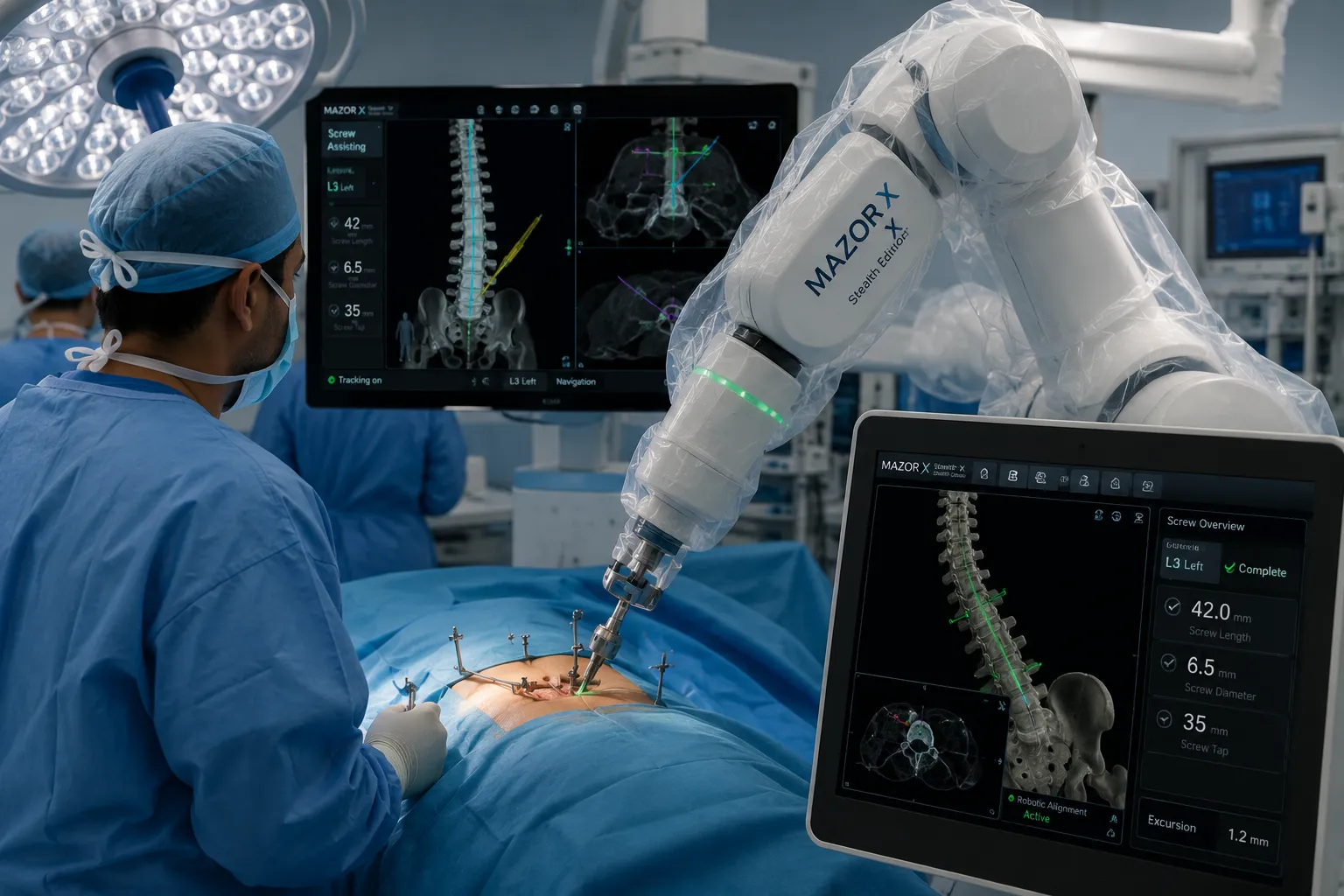
Technological advances have transformed the way complex scoliosis surgery is performed. Robotic-assisted systems now allow surgeons to plan procedures with exceptional precision and improve the accuracy of implant placement.
Mr Bhaskar Thakur utilises advanced robotic spine surgery technology where appropriate to support the treatment of complex spinal conditions.
Robotic technology assists the surgeon throughout the procedure by providing detailed anatomical guidance and supporting precise implant placement.
Potential advantages include:
- Improved surgical accuracy
- Enhanced pre-operative planning
- Greater precision during implant placement
- Improved alignment correction
- Reduced risk of implant malposition
Robotic systems do not replace the surgeon. Instead, they provide sophisticated guidance tools that assist decision-making and execution during complex procedures.
For individuals requiring scoliosis surgery, these technologies form part of a broader strategy designed to maximise safety and optimise outcomes.
Benefits of Adult Scoliosis Surgery
For appropriately selected individuals, surgery can provide substantial improvements in symptoms and quality of life.
Potential benefits include:
- Reduced pain
- Improved posture
- Better balance
- Increased walking tolerance
- Relief of nerve compression
- Improved function and independence
- Prevention of further progression
Many patients report significant improvements in their ability to participate in everyday activities following successful treatment.
Risks of Adult Scoliosis Surgery
As with any major operation, scoliosis surgery carries potential risks and complications. The specific risks vary depending on the complexity of the procedure, the patient’s overall health, and the extent of correction required.
Potential risks may include:
- Infection
- Bleeding
- Nerve injury
- Dural tear
- Implant-related complications
- Failure of fusion
- Adjacent segment degeneration
- Need for further surgery
Mr Thakur discusses the benefits, risks, alternatives, and expected outcomes in detail before any procedure is undertaken. Careful patient selection, modern surgical techniques, and meticulous planning help minimise risk and optimise outcomes.
The decision to proceed with surgery is always based on balancing the potential benefits against the risks while considering the individual’s symptoms, expectations, and quality of life.
Recovery After Adult Scoliosis Surgery
Recovery following adult scoliosis surgery varies depending on the complexity of the procedure, the extent of correction required, the individual’s overall health, and whether additional procedures such as decompression or fusion have been performed.
While every recovery journey is unique, most patients experience gradual improvements in pain, mobility, posture, and overall function over the weeks and months following surgery.
Mr Bhaskar Thakur supports patients throughout their recovery journey, providing ongoing follow-up and rehabilitation guidance after adult scoliosis surgery in London.
The First Few Days After Surgery
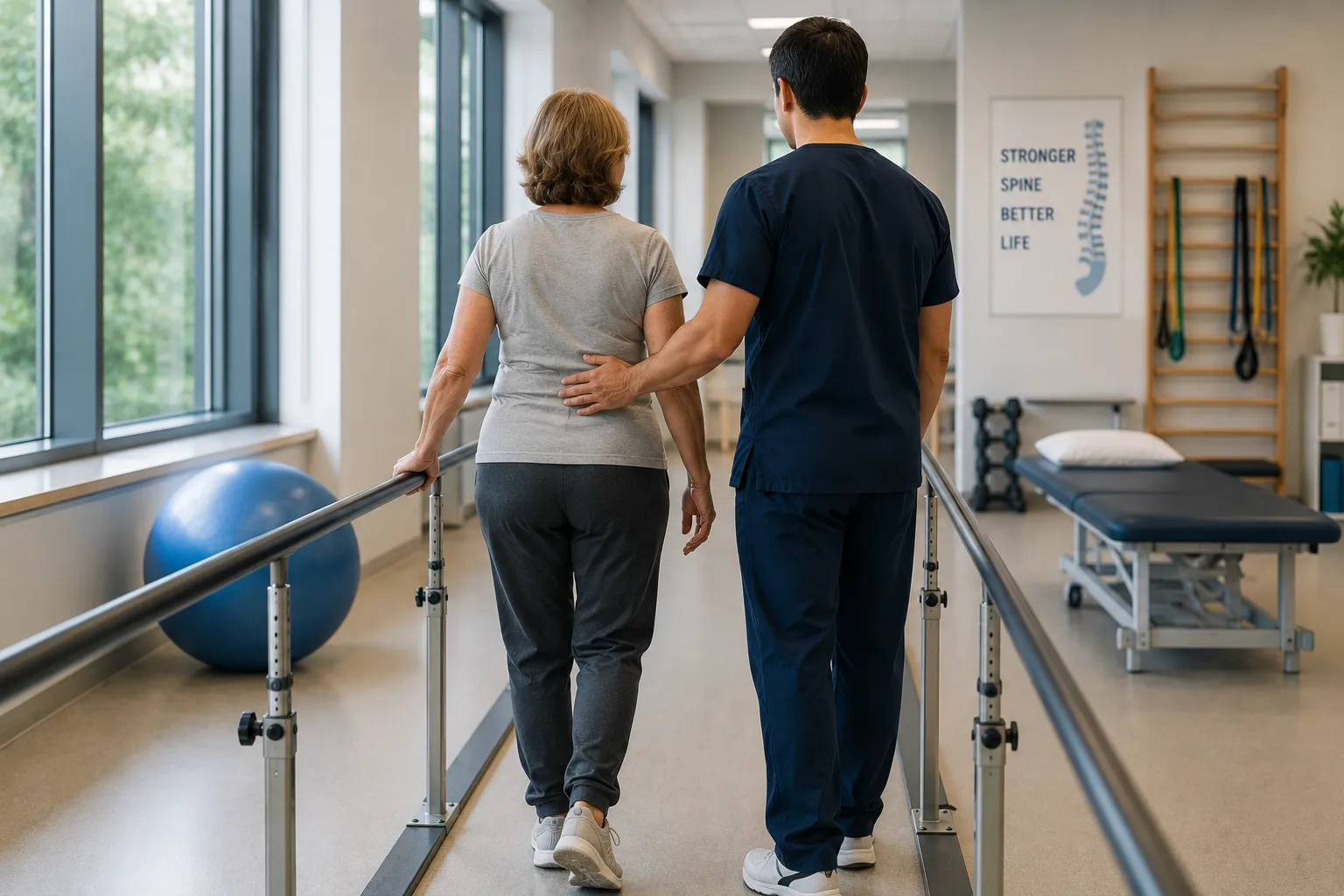
Patients are encouraged to begin mobilisation as soon as it is safe to do so. Early movement helps reduce the risk of complications and supports the recovery process.
During the initial hospital stay, the clinical team focuses on:
- Pain management
- Safe mobilisation
- Wound care
- Physiotherapy support
- Monitoring neurological function
The length of hospital stay varies depending on the procedure performed and the individual’s progress.
The First Few Weeks
During the early recovery period, most individuals gradually increase their daily activity levels while avoiding excessive bending, twisting, or heavy lifting.
Walking is often encouraged because it promotes circulation, improves endurance, and supports rehabilitation.
Many patients notice progressive improvements in posture and mobility during this stage, although some fatigue and discomfort remain common.
Returning to Daily Activities
Recovery is typically gradual rather than immediate. Most individuals return to everyday activities in stages, depending on their occupation, fitness level, and surgical procedure.
Factors influencing recovery include:
- Extent of surgery
- Age and overall health
- Bone quality
- Pre-operative fitness
- Commitment to rehabilitation
Patients receive personalised guidance regarding activity progression, work, driving, exercise, and rehabilitation.
Long-Term Outcomes
For appropriately selected patients, adult scoliosis surgery can provide substantial improvements in posture, mobility, walking tolerance, pain levels, and overall quality of life.
The primary objective is not simply correction of the curve but restoration of balanced alignment that supports long-term function and independence.
Many individuals find they are able to return to activities that had become increasingly difficult before treatment.
Modern techniques, including minimally invasive spine treatment and advanced surgical technologies, continue to improve recovery pathways and patient outcomes.
Adult Scoliosis Specialist in London
Adult scoliosis can affect people in very different ways, ranging from mild postural changes to significant pain, imbalance, and mobility limitations. Choosing an experienced adult scoliosis specialist in London is important to ensure an accurate diagnosis and access to the full range of treatment options.
Mr Bhaskar Thakur provides specialist assessment and treatment for adults with scoliosis, degenerative scoliosis, spinal imbalance, and complex deformity conditions. His practice combines evidence-based treatment, advanced imaging, modern surgical technologies, and personalised care plans designed around the needs of each individual.
Whether treatment involves physiotherapy, spinal injections, rehabilitation, minimally invasive techniques, or complex corrective surgery, the focus remains on improving quality of life and helping patients return to normal activities wherever possible.
Why Choose Mr Bhaskar Thakur for Adult Scoliosis Treatment in London?
Choosing the right specialist is one of the most important decisions when seeking treatment for adult scoliosis. Successful management requires a detailed understanding of spinal alignment, deformity correction, nerve compression, rehabilitation, and the latest surgical technologies.
Mr Bhaskar Thakur is a Consultant Complex Spine Surgeon in London with extensive experience treating adult scoliosis and other complex spinal conditions.
His approach focuses on:
- Comprehensive assessment
- Accurate diagnosis
- Individualised treatment planning
- Evidence-based care
- Advanced surgical techniques
- Patient-centred decision-making
Every patient is different. Treatment recommendations are tailored to the individual’s symptoms, diagnosis, lifestyle, expectations, and long-term goals.
Where appropriate, modern technologies such as computer-assisted navigation and robotic-assisted spine surgery are utilised to support precision and optimise outcomes.
Patients travel from across London and surrounding regions to seek specialist assessment and treatment for adult scoliosis, spinal imbalance, and complex spinal deformities.
About Mr Bhaskar Thakur
Mr Bhaskar Thakur is a highly experienced Consultant Complex Spine Surgeon with expertise in the management of adult spinal deformity, scoliosis, kyphosis, sagittal imbalance, flat back syndrome, and revision spine surgery.
His clinical practice encompasses both non-surgical and surgical treatment of complex spinal conditions, with a particular interest in advanced deformity correction techniques and technology-assisted surgery.
Mr Thakur is committed to delivering personalised care that combines technical excellence with a patient-focused approach. Every treatment plan is developed with the aim of improving quality of life, restoring function, and helping individuals return to the activities that matter most to them.
An Example Adult Scoliosis Patient Journey
A common example is an individual in their 60s who gradually develops worsening back pain, increasing difficulty walking, and a tendency to lean to one side. Imaging may reveal degenerative scoliosis together with narrowing around the nerves.
Following assessment, treatment may initially involve physiotherapy, rehabilitation, and targeted spinal injections. If symptoms continue to progress and walking ability becomes increasingly limited, surgical treatment may be considered to relieve nerve compression and restore balance.
The ultimate goal is to reduce pain, improve mobility, restore alignment, and help individuals return to an active and independent lifestyle.
Many individuals improve with physiotherapy, rehabilitation, and non-surgical management. Others with significant nerve compression, progressive imbalance, or severe symptoms may benefit from surgical intervention.
Further Reading and Research
- Adult Degenerative Scoliosis: Evaluation and Management
- Adult Spinal Deformity: Epidemiology, Evaluation and Management
- Robotic-Assisted Spine Surgery: Current Concepts and Clinical Applications
Book a Consultation with an Adult Scoliosis Specialist in London
If you are looking for an adult scoliosis specialist in London, specialist assessment can help identify the underlying cause of symptoms and determine the most appropriate treatment options.
Mr Bhaskar Thakur provides expert assessment and treatment for adult scoliosis and complex spinal deformities across London and the surrounding regions.
Related Articles
Frequently Asked Questions
What is the most common cause of adult scoliosis?
Degenerative scoliosis is one of the most frequently diagnosed forms of spinal curvature in adults. It develops as age-related changes affect the discs, joints, and supporting structures of the spine.
Can adult scoliosis get worse with age?
Yes. In some individuals, the curve may gradually progress due to degeneration, arthritis, osteoporosis, or worsening postural imbalance.
Does every adult with scoliosis need surgery?
No. Many people achieve significant symptom improvement through physiotherapy, rehabilitation, medication, injections, and other non-surgical treatments.
Can adult scoliosis cause sciatica?
Yes. Curvature and degenerative changes can narrow the spaces surrounding the nerves, leading to leg pain, numbness, tingling, weakness, or sciatica symptoms.
Is walking good for adult scoliosis?
Walking is often recommended because it helps maintain mobility, improve endurance, and support overall musculoskeletal health. Exercise programmes should always be tailored to the individual’s condition and symptoms.
What is the recovery time after scoliosis surgery?
Recovery varies depending on the procedure performed and individual factors. Most patients experience gradual improvements over several months, with recovery continuing for up to a year or longer in some cases.
When should I see a scoliosis specialist?
You should seek specialist assessment if you experience persistent back pain, progressive postural changes, worsening mobility, difficulty standing upright, leg pain, or symptoms that do not improve with conservative treatment.
