 Mr Bhaskar Thakur
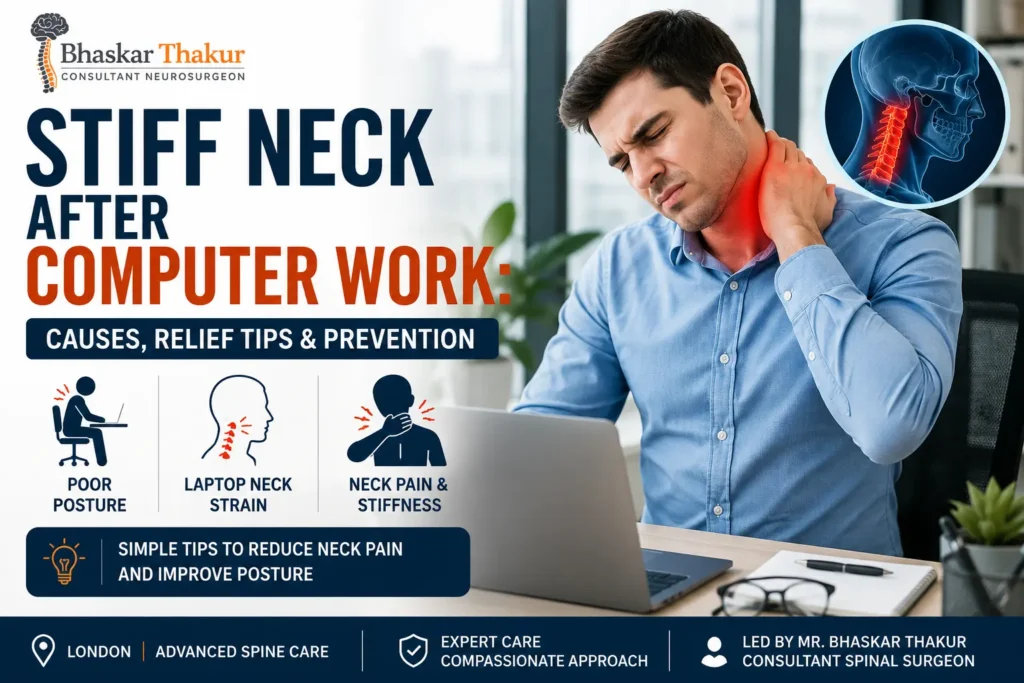
A stiff neck after computer work has become increasingly common among office workers, students, remote professionals, and people spending long hours using digital devices. What may begin as mild cervical spine tightness after a day at the desk can gradually develop into chronic office posture neck pain, shoulder stiffness, headaches, and reduced mobility.
In many modern workplaces across London, prolonged computer use and poor workstation ergonomics contribute significantly to cervical strain. Long periods of sitting, looking down at a laptop screen, and leaning forward toward monitors place excessive stress on the neck muscles and cervical spine.
According to Mr. Bhaskar Thakur, London-based spinal surgeon, posture-related neck pain is becoming increasingly common among younger working professionals due to prolonged screen exposure and poor ergonomic habits. Early posture correction and proper spinal care may help reduce long-term complications associated with laptop neck strain.
Why Does a Stiff Neck Develop After Computer Work?
The human neck is designed to support the head in a balanced position. However, while working on computers or laptops, many people unintentionally move their head forward or downward for extended periods. This creates continuous tension within the muscles, ligaments, and joints of the cervical spine.
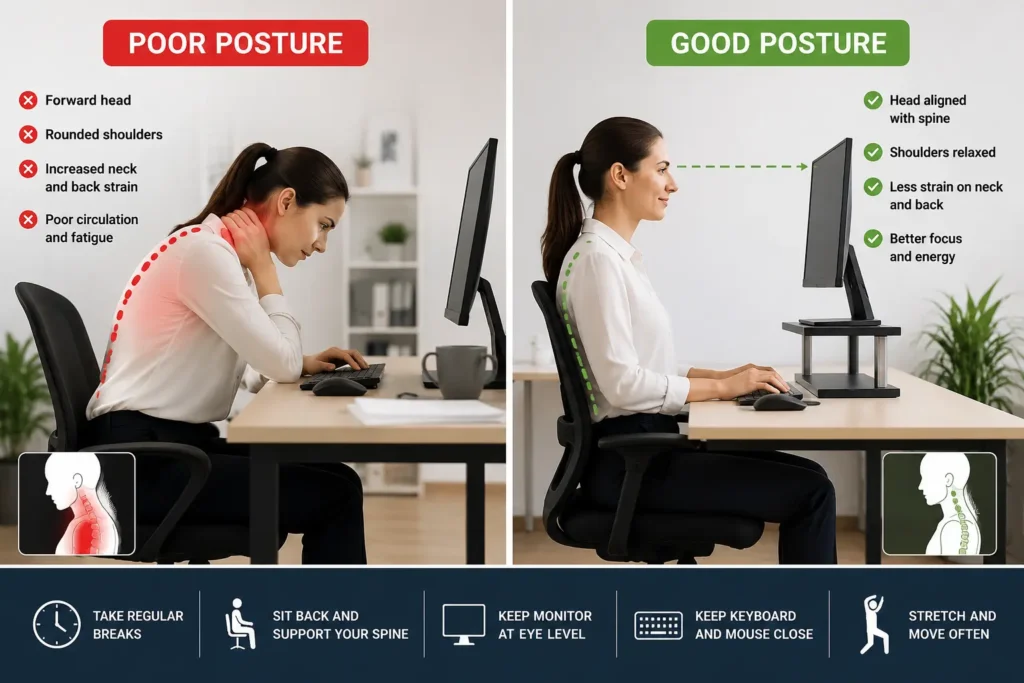
The further the head moves away from its neutral position, the greater the stress placed on the cervical muscles and supporting structures. Over time, this repetitive strain can lead to inflammation, muscle fatigue, stiffness, and chronic discomfort.
Common causes of this after computer work include:
- Poor sitting posture
- Forward head posture
- Looking down at laptop screens
- Improper monitor height
- Lack of movement during work
- Rounded shoulders
- Weak upper back muscles
- Working from beds or couches
- Long working hours without breaks
- Stress-related muscle tightness
How workplace posture discomfort Develops
Poor posture during office work can gradually affect spinal alignment and muscular balance. One of the most common issues seen in office workers is forward head posture, where the head shifts in front of the shoulders instead of remaining aligned with the spine.

This posture significantly increases the workload on the cervical musculature. As the muscles continuously work to support the head, they become fatigued and tight. This often leads to office posture pain that worsens throughout the day.
Rounded shoulders and slouching further increase stress on the upper back and cervical spine. Many individuals also experience muscle imbalances due to weak postural muscles and prolonged sitting habits.
What Is Laptop Neck Strain?
Laptop neck strain refers to pain and stiffness caused by prolonged laptop use, particularly when the screen is positioned too low. Unlike desktop monitors, laptops force users to look downward for extended periods, creating constant neck flexion.
This repetitive downward angle increases pressure on the cervical spine and surrounding muscles. The longer the head remains in a forward-flexed position, the more muscular strain develops.
Laptop neck strain commonly affects:
- Remote workers
- Students
- Office professionals
- Gamers
- People working from home
- Frequent travellers using laptops
Symptoms of Stiff Neck After Computer Work
Symptoms can vary depending on the severity of muscular strain and posture-related stress. Some people experience occasional tightness, while others develop persistent daily discomfort.
Common symptoms include:
- Stiffness after work
- Difficulty turning the head
- Shoulder tightness
- Upper back pain
- Muscle spasms
- Tension headaches
- Pain between the shoulder blades
- Burning sensation in the neck
- Fatigue around the shoulders
- Discomfort worsening by evening
In some cases, prolonged cervical strain may irritate nearby nerves, potentially causing tingling or numbness extending into the arms or hands.
Why Long Hours at a Computer Increase Cervical Spine Stress
The body is not designed to remain in static positions for prolonged periods. Sitting continuously without movement reduces blood circulation and increases muscular fatigue.
When the head moves forward during screen use, the effective weight carried by the neck increases dramatically. Even a small forward tilt can place substantial additional load on the cervical spine.
This explains why many office workers in London experience increasing stiffness and shoulder discomfort after long working hours.
Relief Tips for computer-related musculoskeletal pain
Fortunately, mild to moderate neck stiffness often improves with ergonomic adjustments, posture correction, and regular movement.
Improve Monitor Height
Your screen should remain at eye level to avoid excessive downward bending. Many cases of laptop strain improve simply by raising the screen height and using an external keyboard.
Maintain Better Sitting Posture
Try to sit with:
- Feet flat on the floor
- Back supported
- Shoulders relaxed
- Ears aligned with shoulders
- Elbows comfortably supported
Avoid leaning toward the screen while typing or reading.
Take Regular Movement Breaks
Standing up every 30 to 45 minutes may help reduce muscular tension and stiffness. Gentle stretching and walking can improve circulation and reduce prolonged muscle loading.
Perform Gentle Exercises
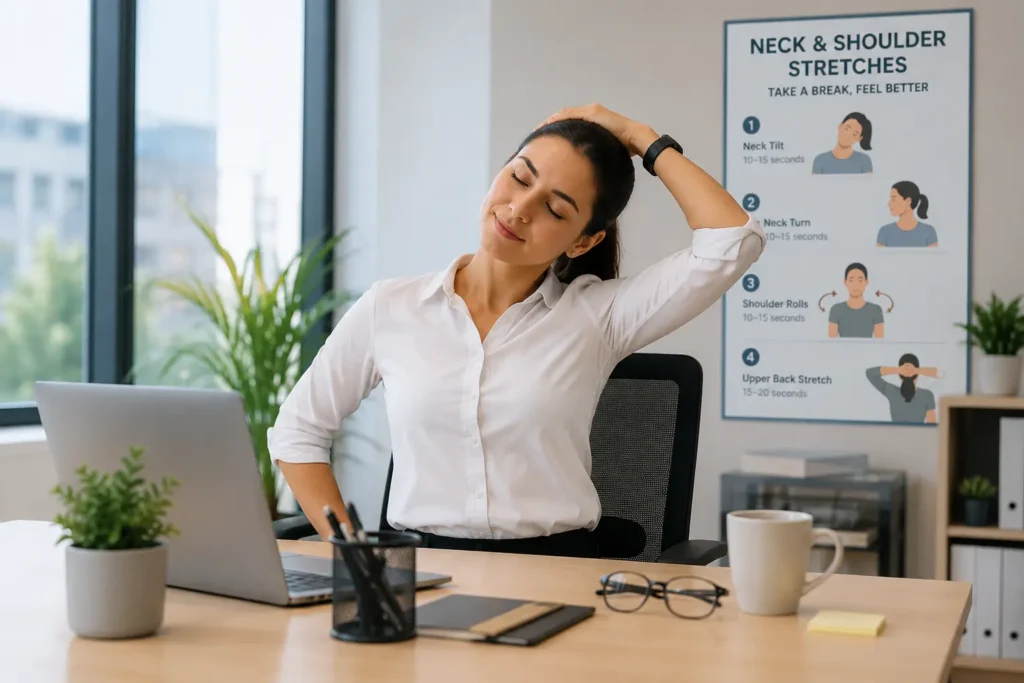
Exercises such as chin tucks, shoulder rolls, and upper trapezius stretches may help relieve office posture pain and improve posture awareness.
Apply Heat Therapy
Warm compresses or heating pads can help relax tight muscles and temporarily reduce stiffness after long workdays.
How to Prevent Laptop Neck Strain
Preventing stiffness is often easier than treating chronic symptoms later. Long-term prevention strategies focus on posture correction, ergonomic improvements, and regular physical activity.
Helpful prevention measures include:
- Using an ergonomic chair
- Keeping monitors at eye level
- Avoiding prolonged laptop use without support
- Using external keyboards and mice
- Improving upper back strength
- Taking frequent breaks
- Reducing unnecessary screen time
- Maintaining regular exercise routines
When to Seek Medical Advice for Neck Pain
While mild stiffness often improves with conservative care, persistent or worsening symptoms should not be ignored.
Medical assessment may be important if you experience:
- Pain lasting several weeks
- Arm weakness
- Numbness or tingling
- Severe headaches
- Dizziness
- Pain affecting sleep
- Loss of coordination
- Symptoms worsening despite rest
Persistent office posture neck disconfort may sometimes indicate underlying cervical disc problems, nerve compression, or degenerative spinal conditions.
Specialist Cervical Spine and Back Care in London
For individuals experiencing chronic pain related to posture, computer work, or spinal conditions, specialist assessment may help identify the underlying cause and guide appropriate treatment.
Mr. Bhaskar Thakur, spinal surgeon in London, specialises in advanced spinal care and minimally invasive techniques for a wide range of spine conditions. Depending on the diagnosis, treatment approaches may include physiotherapy, posture rehabilitation, pain management strategies, minimally invasive procedures, or advanced spinal surgery where appropriate.
Final Thoughts
A stiff neck after computer work is often a warning sign that posture, workstation ergonomics, and movement habits need attention. Ignoring early symptoms may gradually lead to chronic office posture long-term spinal strain.
Simple changes such as improving monitor height, maintaining better posture, taking regular movement breaks, and reducing laptop neck strain can significantly improve daily comfort and spinal health.
If symptoms become persistent or begin interfering with work, sleep, or daily activities, seeking professional spinal assessment in London may help prevent further complications and support long-term recovery.
Frequently Asked Questions
Can computer work cause neck stiffness?
Yes. Prolonged computer use can place continuous strain on the neck muscles and cervical spine, particularly when posture is poor or the screen is positioned too low.
What is posture-related pain from office work?
Posture-related discomfort may develop due to poor sitting habits, forward head posture, rounded shoulders, and extended periods spent working at a desk or computer.
Why do I experience neck pain after using a laptop?
Laptop-related strain commonly occurs because laptop screens encourage a downward viewing angle for prolonged periods, increasing pressure on the cervical spine and surrounding muscles.
How can I relieve stiffness after computer work?
Improving workstation ergonomics, adjusting monitor height, taking regular movement breaks, performing gentle stretches, and maintaining good posture may help reduce symptoms.
When should I seek medical advice for neck pain?
Medical assessment may be important if symptoms become persistent, worsen over time, cause numbness or weakness in the arms, or interfere with sleep and daily activities.
Can poor posture cause long-term spinal problems?
Yes. Chronic postural stress may contribute to muscular imbalances, increased cervical spine strain, disc-related conditions, and ongoing discomfort if left uncorrected.
Who is Bhaskar Thakur?
Mr. Bhaskar Thakur is a London-based spinal surgeon specialising in advanced spinal care, minimally invasive procedures, and the treatment of a wide range of cervical and lumbar spine conditions.

Helpful breakdown of the forward head posture issue. We write about similar desk ergonomics tips at Vatalla if you want to swap notes.
Bhaskar Thakur’s breakdown of laptop neck strain and forward head posture matches what I see in my own setup, especially the part about constant neck flexion from low-screen laptops being a sustained-load problem rather than a posture problem. Bookmarking.