 Mr Bhaskar Thakur
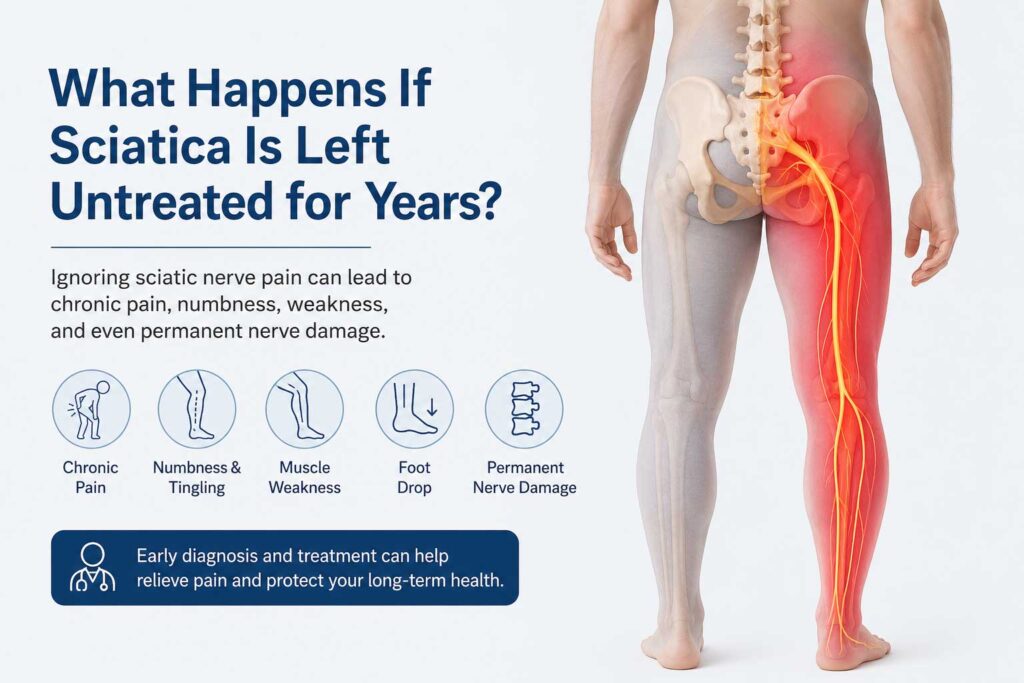
Sciatica often starts as pain that travels from the lower back into the buttock and down one leg. For some people, symptoms improve within a few weeks with rest, exercise and conservative treatment. However, for others, the pain persists for months or even years.
Many people learn to live with sciatica, believing it is simply part of getting older or hoping it will eventually disappear on its own. Unfortunately, persistent compression of the sciatic nerve may lead to chronic pain, muscle weakness, reduced mobility and, in some cases, permanent nerve damage if the underlying cause is not treated.
The good news is that not everyone with long-term sciatica will develop permanent complications. Early diagnosis and appropriate treatment can often relieve nerve compression, improve symptoms and reduce the risk of lasting neurological damage.
In this guide, Consultant Neurosurgeon and Spine Surgeon Mr Bhaskar Thakur explains what can happen when sciatica is left untreated, the warning signs that should never be ignored and when you should seek specialist assessment.
Table of Contents
- What Happens If Sciatica Is Left Untreated?
- How Sciatica Can Progress Over Time
- Why Does Untreated Sciatica Become Worse?
- Long-Term Complications of Untreated Sciatica
- Can Sciatica Cause Permanent Nerve Damage?
- Warning Signs That Need Urgent Medical Attention
- How Long-Term Sciatica Is Diagnosed
- Treatment Options
- Frequently Asked Questions
Quick Answer: What Happens If Sciatica Is Left Untreated?
Untreated sciatica does not always lead to permanent damage, but symptoms that continue for months or years should never be ignored. Persistent compression of the sciatic nerve can result in chronic pain, increasing numbness, muscle weakness, reduced mobility and, in severe cases, permanent nerve dysfunction.
Many patients assume that if they can tolerate the pain, there is no urgency to seek treatment. In reality, pain is only one part of the problem. Ongoing pressure on a spinal nerve can gradually affect its ability to transmit signals between the spine and the muscles of the leg.
The earlier the underlying cause is identified, whether it is a slipped disc, spinal stenosis or another spinal condition, the greater the chance of relieving pressure on the nerve before permanent changes occur.
Key Point
Persistent sciatica lasting longer than six weeks, particularly if accompanied by numbness, weakness or difficulty walking, should be assessed by a spine specialist.
How Sciatica Can Progress Over Time
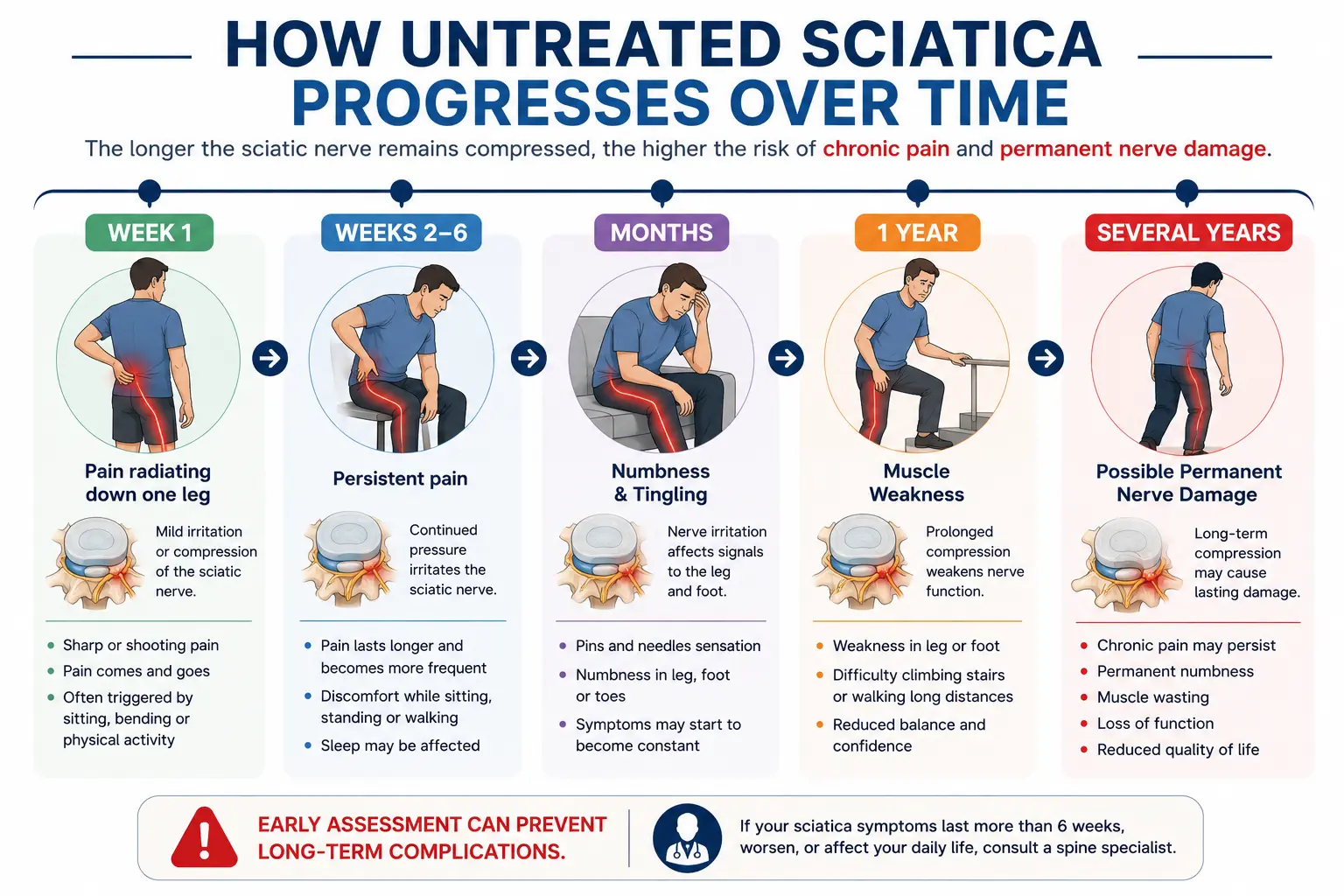
Every patient is different, and the rate at which symptoms progress depends on the underlying cause. Some people experience intermittent flare-ups over many years, while others notice a steady decline in mobility and nerve function.
| Time | What May Happen |
|---|---|
| First Few Weeks | Pain radiating from the lower back into one leg, often improving with rest or conservative treatment. |
| After Several Months | Recurring episodes become more frequent. Sitting, driving and walking long distances may become increasingly uncomfortable. |
| After One Year | Persistent Inflammation around the affected nerve root may lead to numbness, tingling or early muscle weakness. |
| After Several Years | Chronic pain, reduced mobility, muscle wasting and permanent Neurological damage become more likely if Lumbar nerve root compression remains untreated. |
Although this progression does not occur in every patient, delaying assessment increases the risk that symptoms become more difficult to reverse.
Clinical Insight from Mr Bhaskar Thakur
Many Patients with persistent symptoms tell us they gradually adapted their lifestyle around the pain rather than seeking treatment. Unfortunately, by the time weakness or persistent numbness develops, the affected nerve may have been compressed for a considerable period. Early assessment often provides more treatment options and may help prevent long-term neurological complications.
Why Does Untreated Sciatica Become Worse?
Sciatica is not a disease itself. It is a symptom that occurs when the sciatic nerve or one of the spinal nerve roots supplying it becomes irritated or compressed.
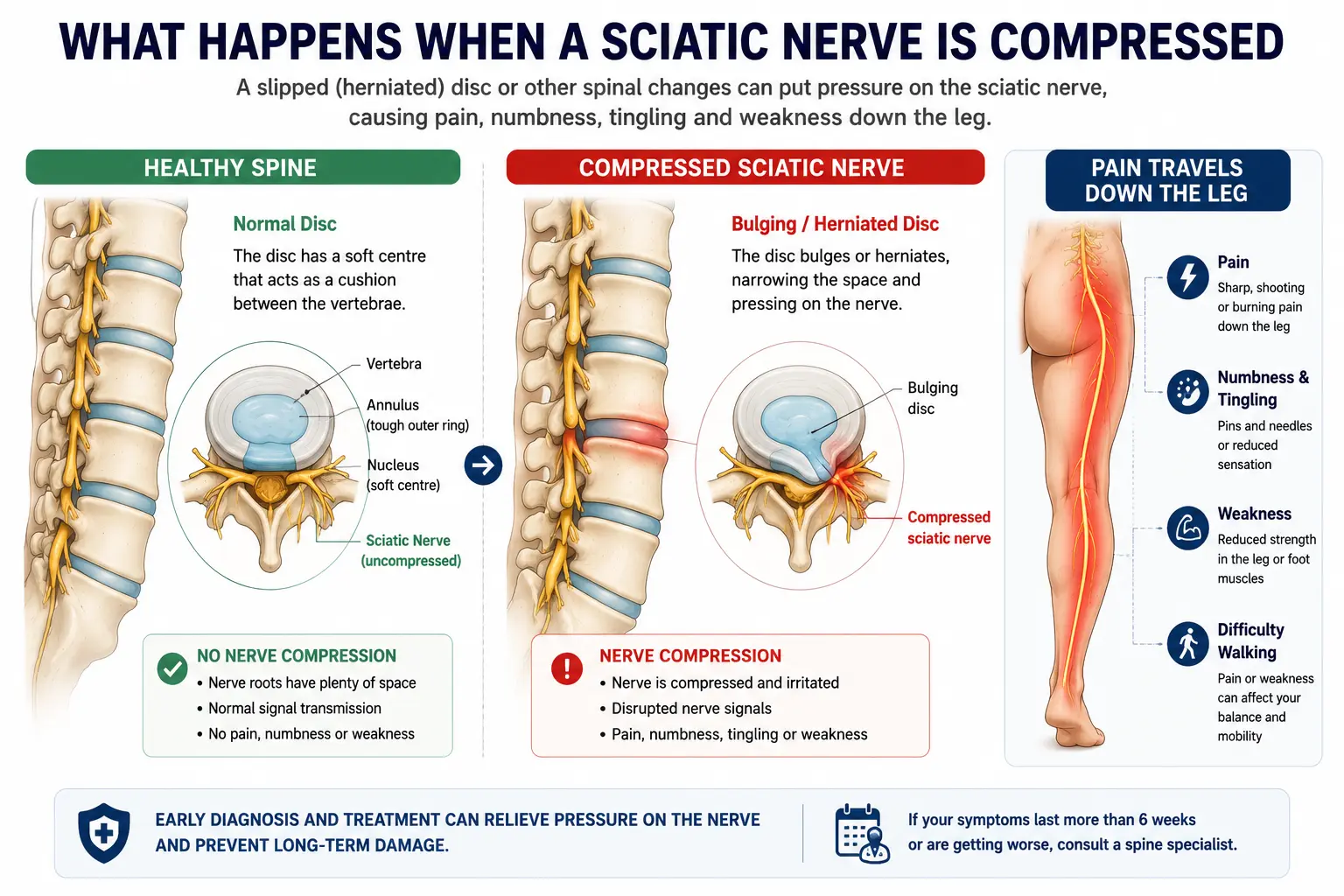
If the underlying cause is not addressed, the nerve may remain under constant pressure. Over time, this ongoing compression can interfere with the nerve’s blood supply and its ability to transmit signals between the brain and the leg.
Common causes of long-term sciatica include:
- Slipped (herniated) disc
- Lumbar spinal stenosis
- Degenerative disc disease
- Spondylolisthesis
- Bone spurs (osteophytes)
- Degenerative changes affecting the lower spine
Some of these conditions gradually worsen with age, meaning symptoms may become progressively more severe if left untreated.
Did You Know?
Many people with chronic sciatica do not require surgery. Physiotherapy, medication, spinal injections and minimally invasive procedures can often provide significant relief when started at the appropriate time.
What Can Happen If Sciatica Is Left Untreated?
Leaving sciatica untreated does not automatically mean permanent disability. However, persistent nerve compression increases the risk of several complications that may affect your daily life, mobility and long-term nerve function.
In the next section, we will explore each complication in detail, including chronic pain, progressive numbness, muscle weakness, foot drop, reduced mobility and permanent Neurological damage, along with the warning signs that indicate you should seek specialist assessment.
Long-Term Complications of Delayed Treatment
Many people with sciatica experience periods where symptoms improve before returning again. Because the pain can fluctuate, it is easy to believe the condition is getting better when the underlying cause remains unchanged.
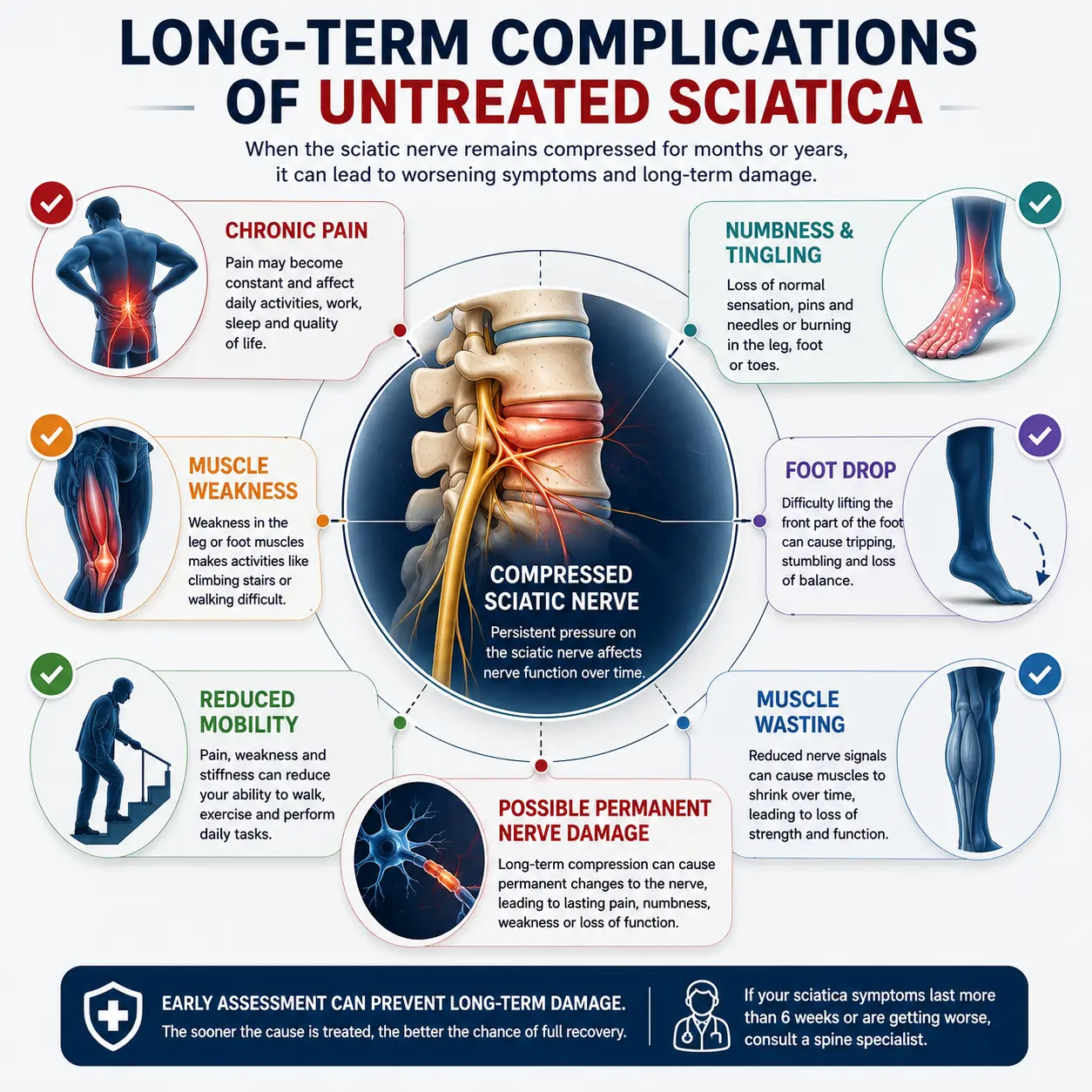
Persistent pressure on the sciatic nerve may gradually affect both sensation and muscle function. The longer the nerve remains compressed, the greater the risk that symptoms become more difficult to reverse.
Below are some of the most common complications that may develop when sciatica is left untreated for months or years.
1. Chronic Sciatic Pain May Become Part of Everyday Life
During the early stages of sciatica, pain often occurs only after prolonged sitting, driving or physical activity. Over time, however, irritation of the nerve may become persistent.
Patients frequently describe:
- Constant pain in the lower back and leg.
- Pain that wakes them during the night.
- Difficulty sitting for work or travelling.
- Reduced enjoyment of hobbies and exercise.
- Pain that no longer responds well to simple painkillers.
Chronic pain affects far more than the spine. It can interfere with sleep, concentration, productivity and overall quality of life.
Clinical Insight
Persistent pain does not always mean the spinal problem has become more severe, but ongoing pain lasting several months should be properly assessed to identify whether the affected nerve remains compressed.
2. Numbness May Gradually Spread
Numbness is often one of the earliest signs that a spinal nerve is becoming increasingly affected.
Initially, patients may notice occasional tingling in the foot or toes. Over time, reduced sensation can spread into the calf or lower leg.
Common symptoms include:
- Pins and needles.
- Burning sensations.
- Reduced feeling in the foot.
- Numb toes.
- Difficulty sensing temperature or touch.
Unlike pain, numbness often develops slowly, making it easy to underestimate its significance.
3. Muscle Weakness Can Develop
The sciatic nerve controls many of the muscles responsible for standing, walking and lifting the foot. When signals to the muscles become disrupted, muscles may gradually lose strength.
You may notice:
- Difficulty climbing stairs.
- Reduced grip of the foot while walking.
- Trouble standing on your toes.
- Leg fatigue after short walks.
- Reduced confidence when walking on uneven ground.
Progressive weakness should never be ignored because it suggests that the nerve is no longer functioning normally.
Clinical Insight from Mr Bhaskar Thakur
Muscle weakness is often a more important finding than pain alone. While pain can fluctuate from day to day, weakness may indicate that prolonged lumbar nerve root compression is beginning to affect muscle function.
4. Foot Drop May Occur
One of the more serious complications of untreated sciatica is foot drop, a condition in which lifting the front part of the foot becomes difficult.
Patients may begin to:
- Drag the foot while walking.
- Trip more frequently.
- Catch the toes on steps.
- Compensate by lifting the knee higher than normal.
Foot drop usually indicates significant nerve dysfunction and should be assessed urgently.
Important
If you notice sudden weakness or difficulty lifting your foot, arrange urgent medical assessment. Early treatment offers the best chance of recovery.
5. Reduced Mobility and Physical Fitness
Living with sciatica often causes people to gradually reduce their activity levels. What begins as avoiding long walks may eventually progress to avoiding exercise altogether.
Reduced physical activity can contribute to:
- Loss of muscle strength.
- Reduced flexibility.
- Weight gain.
- Poor cardiovascular fitness.
- Reduced spinal stability.
This creates a cycle in which worsening fitness contributes to increased spinal strain and persistent pain.
6. Muscle Wasting May Develop
Healthy nerves constantly stimulate muscles to maintain their strength and size. When signals to the muscles are disrupted for prolonged periods, affected muscles may begin to shrink.
This process, known as muscle wasting (atrophy), most commonly affects the calf or muscles controlling the foot.
Although muscle wasting develops gradually, it may indicate longstanding nerve dysfunction requiring specialist assessment.
7. Permanent Neurological damage Becomes More Likely
Perhaps the greatest concern with untreated sciatica is the possibility of permanent injury.
Spinal nerves have an excellent ability to recover once pressure is relieved. However, recovery becomes less predictable when compression continues for a prolonged period.
Persistent pressure on the affected nerve root may result in:
- Permanent numbness.
- Residual muscle weakness.
- Persistent altered sensation.
- Ongoing nerve pain.
- Reduced recovery even after treatment.
Not everyone with chronic sciatica develops permanent damage, but delaying assessment may reduce the likelihood of full neurological recovery.
Can Untreated Sciatica Affect Your Mental Health?
Persistent leg pain affects far more than the spine. Living with chronic pain for months or years can have a profound impact on emotional wellbeing and daily life.
Patients with persistent sciatica commonly report:
- Poor sleep.
- Frustration and irritability.
- Anxiety about movement.
- Reduced confidence.
- Avoiding social activities.
- Difficulty concentrating at work.
Sleep deprivation alone can increase pain sensitivity, making symptoms feel even worse. As activity levels decline, patients may become trapped in a cycle of pain, reduced fitness and further disability.
Seeking treatment early is not only about protecting the nerve—it is also about preserving quality of life.
Can the Effects Become Permanent?
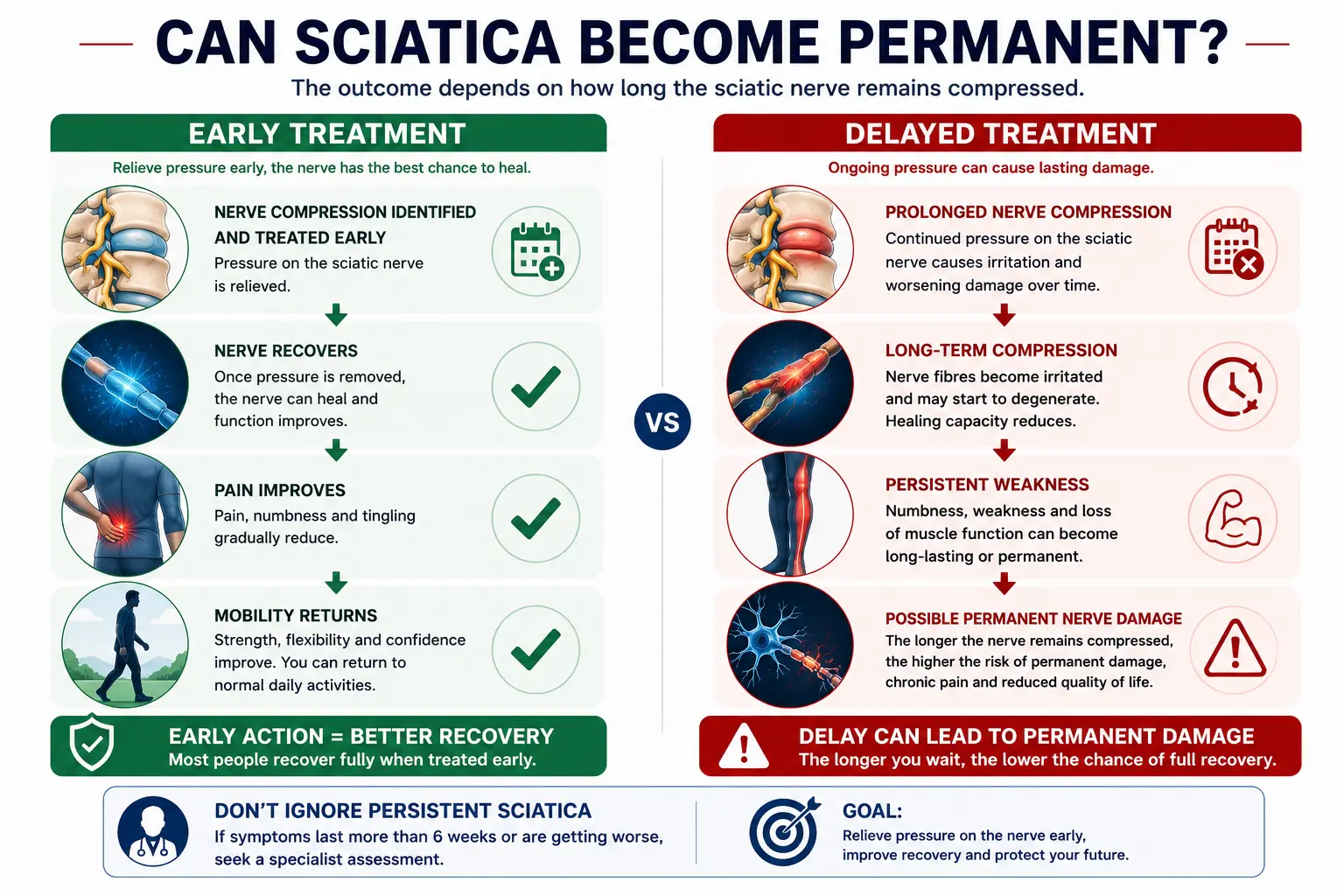
Many patients ask whether sciatica itself can become permanent.
The answer depends on the underlying cause and how long the affected structure remains compressed.
Some patients recover completely following physiotherapy or treatment of the underlying spinal condition. Others may continue to experience occasional flare-ups despite successful treatment.
When significant nerve compression persists for months or years, some neurological symptoms—including numbness or weakness—may not fully recover, even after surgery.
The Good News
Most people with this condition do not develop permanent disability. Early diagnosis, appropriate treatment and relieving pressure on the affected nerve provide the best opportunity for a full recovery.
When Should You Stop Waiting?
If your symptoms are not improving, continuing to “wait and see” may not be the best approach.
You should arrange specialist assessment if you experience:
- Sciatica lasting longer than six weeks.
- Recurring episodes that keep returning.
- Increasing numbness.
- Progressive muscle weakness.
- Difficulty walking.
- Pain that interferes with sleep or work.
- Symptoms despite physiotherapy or medication.
Identifying the underlying cause early often allows more treatment options and may help prevent permanent injury.
Warning Signs That Require Urgent Medical Attention
Most cases of sciatica are not medical emergencies. However, in rare situations, severe nerve compression can affect the nerves controlling the bladder, bowel and legs. These symptoms require immediate medical assessment.
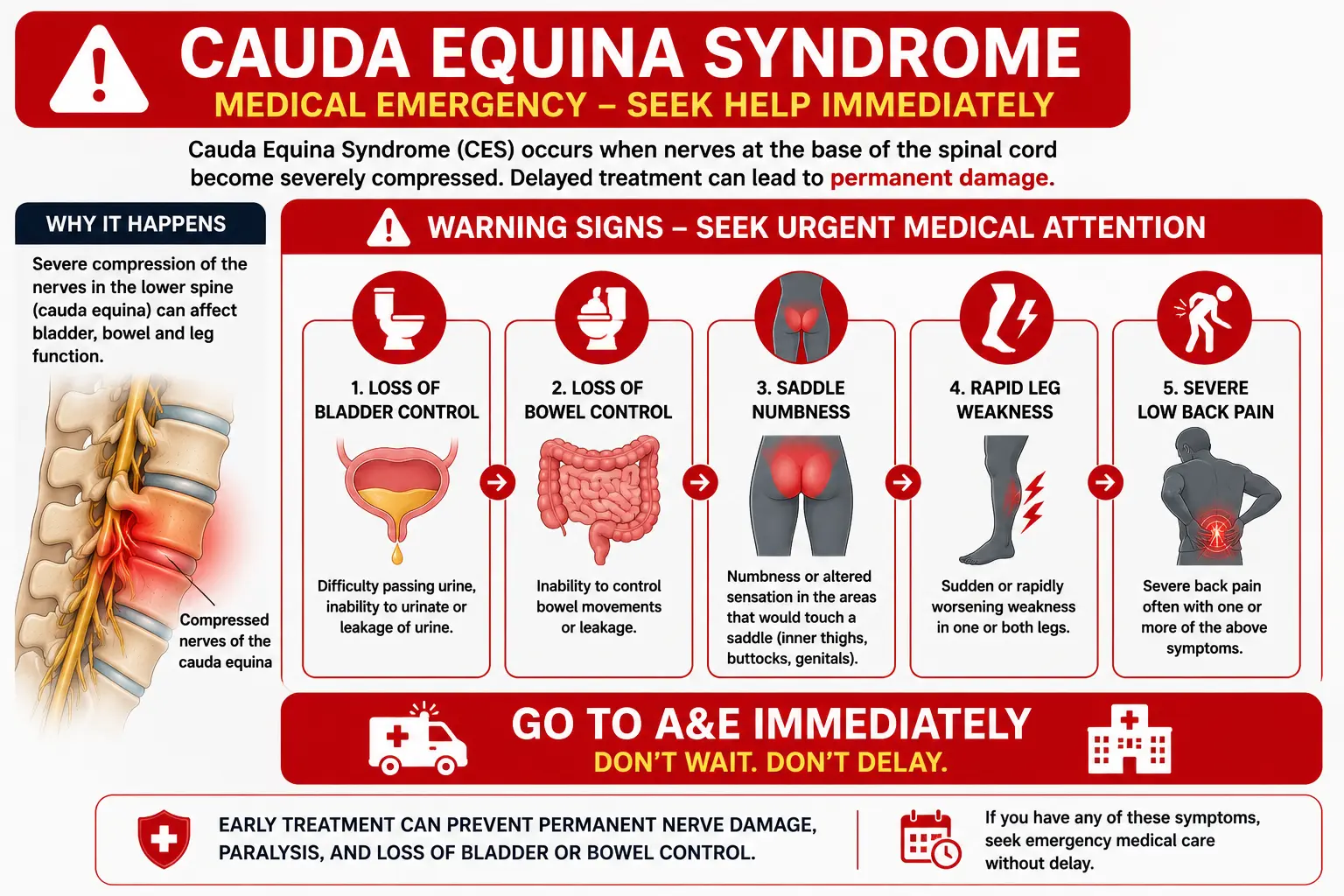
Seek Emergency Medical Attention Immediately If You Experience:
- Loss of bladder control or difficulty passing urine.
- Loss of bowel control.
- Numbness around the buttocks, groin or inner thighs (saddle numbness).
- Rapidly worsening weakness in one or both legs.
- Sudden difficulty walking.
- Severe back pain accompanied by progressive neurological symptoms.
These symptoms may indicate Cauda Equina Syndrome, a rare but serious condition caused by severe compression of the nerves at the base of the spinal cord. Early surgery offers the best chance of preserving bladder, bowel and leg function.
Remember: If you develop bladder or bowel problems together with sciatica, do not wait for a routine appointment—attend your nearest Accident & Emergency department immediately.
How Long-Term Sciatica Is Diagnosed
Persistent sciatica should never be diagnosed from symptoms alone. A detailed clinical assessment helps determine whether your pain is caused by a slipped disc, spinal stenosis, degenerative changes or another spinal condition.
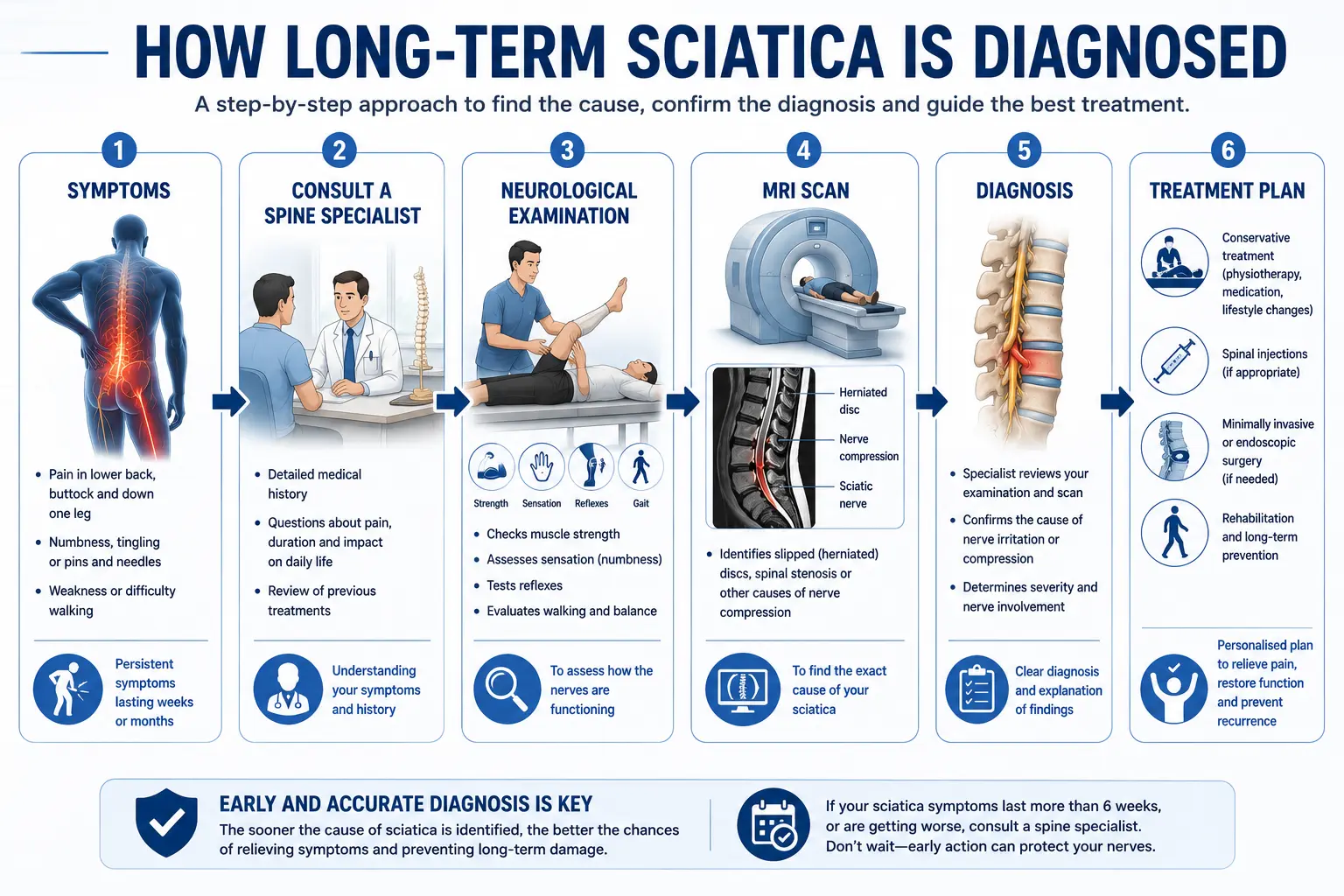
During your consultation, your specialist will ask about the location of your pain, how long symptoms have been present and whether numbness or weakness has developed.
| Assessment | Purpose |
|---|---|
| Medical History | Understand symptom duration, severity and previous treatments. |
| Neurological Examination | Assess muscle strength, reflexes, sensation and walking ability. |
| MRI Scan | Identify slipped discs, spinal stenosis and nerve compression. |
| CT Scan | Useful when MRI is unsuitable or to assess bony structures. |
| EMG / Nerve Conduction Studies | Evaluate how well nerves and muscles are functioning. |
Combining clinical examination with imaging helps identify the exact cause of this condition and guides the most appropriate treatment.
Treatment Options for Persistent Symptoms
Treatment depends on the underlying cause, the severity of symptoms and whether nerve function has been affected.
| Treatment | When It May Help |
|---|---|
| Physiotherapy | Improves flexibility, posture and spinal stability. |
| Medication | Helps control inflammation and pain. |
| Lifestyle Modification | Supports long-term spinal health and reduces recurrence. |
| Spinal Injections | Reduce inflammation around compressed nerve roots. |
| Minimally Invasive Spine Surgery | Relieves nerve compression through smaller incisions. |
| Endoscopic Spine Surgery | Suitable for selected patients with Persistent pressure on the affected nerve root. |
Most people with sciatica improve without surgery. Surgical treatment is generally reserved for patients with persistent symptoms despite conservative treatment or those who develop progressive neurological deficits.
When Is Surgery Considered?
Surgery may be recommended when symptoms continue to significantly affect daily life or when nerve function is deteriorating.
Your specialist may discuss surgery if you have:
- Sciatica lasting several months despite appropriate treatment.
- Progressive muscle weakness.
- Persistent numbness.
- Significant nerve compression visible on MRI.
- Reduced quality of life.
- Recurrent episodes affecting work or mobility.
Modern minimally invasive techniques, including endoscopic spine surgery, are designed to relieve pressure on the affected area while minimising disruption to surrounding muscles and soft tissues.
Expert Assessment for Persistent Leg Pain in London
Mr Bhaskar Thakur is a Consultant Neurosurgeon and Spine Surgeon with extensive experience diagnosing and treating conditions affecting the spine and peripheral nerves.
Patients with persistent sciatica often attend after months—or even years—of managing symptoms with painkillers, activity modification or physiotherapy alone. A specialist assessment helps determine whether the affected area is recovering, remains compressed or requires further investigation.
Following a detailed neurological examination and review of MRI findings, treatment recommendations are tailored to the individual. Many patients benefit from conservative treatment, while others may be suitable candidates for spinal injections or minimally invasive surgical procedures.
The aim is always to relieve nerve compression where appropriate, preserve neurological function and help patients return to normal daily activities with confidence.
Key Takeaways
- Sciatica that persists for months or years should not be ignored.
- Long-term nerve compression may lead to chronic pain, numbness, muscle weakness and reduced mobility.
- Early diagnosis improves the chances of preventing permanent Neurological damage.
- Most patients improve with non-surgical treatment, although surgery may be appropriate in selected cases.
- Bladder or bowel dysfunction, saddle numbness or rapidly worsening weakness require immediate emergency assessment.
References
- National Institute for Health and Care Excellence (NICE). Low Back Pain and Sciatica in Over 16s: Assessment and Management.
- NHS. Sciatica.
- NHS. Cauda Equina Syndrome.
- British Association of Spine Surgeons (BASS).
- American Association of Neurological Surgeons (AANS).
- PubMed. Lumbar Disc Herniation and Sciatica – Current Evidence.
- PubMed. Long-Term Outcomes Following Lumbar Nerve Root Compression.
Frequently Asked Questions
Can untreated sciatica become permanent?
Yes. Persistent pressure on the affected nerve root may lead to permanent numbness or weakness if treatment is delayed for too long.
Can sciatica cause permanent nerve damage?
It can in some cases. Early diagnosis and treatment reduce the risk of long-term nerve injury.
How long is too long to have sciatica?
If symptoms last longer than six weeks or continue to worsen, you should seek specialist assessment.
Can sciatica cause muscle weakness?
Yes. Ongoing compression of the sciatic nerve can weaken the muscles controlling the leg and foot.
Can sciatica cause foot drop?
Yes. Severe nerve compression may make it difficult to lift the front of the foot while walking.
Does everyone with chronic sciatica need surgery?
No. Most patients improve with physiotherapy, medication, lifestyle changes or spinal injections. Surgery is reserved for selected cases.
Can walking make sciatica worse?
Gentle walking is beneficial for many people, but symptoms vary depending on the underlying spinal condition.
Can an MRI confirm the cause of sciatica?
Yes. MRI scans are the most effective imaging test for identifying slipped discs, spinal stenosis and nerve compression.
When should I worry about sciatica?
Seek urgent medical attention if you develop bladder or bowel problems, saddle numbness or rapidly worsening weakness.
Can long-term sciatica be treated successfully?
Yes. Many people experience significant improvement once the underlying cause is diagnosed and treated appropriately.

[…] What Happens If Sciatica Is Left Untreated for Years? […]