 Mr Bhaskar Thakur

Experiencing the occasional headache, tingling sensation or episode of dizziness is common and, in many cases, not a cause for concern. However, certain neurological symptoms can be early warning signs of serious conditions affecting the brain, spinal cord or nerves. These symptoms are known as neurological red flags and should never be ignored.
Your nervous system controls virtually every movement, sensation and bodily function. When something disrupts this complex system, your body often provides warning signs before a condition becomes severe. Recognising these symptoms early can allow prompt diagnosis and treatment, potentially preventing permanent nerve damage, paralysis or life-threatening complications.
Neurological red flags may indicate conditions such as spinal cord compression, slipped discs, cervical myelopathy, brain tumours, stroke, cauda equina syndrome, brain aneurysms or other disorders affecting the nervous system. While not every symptom represents an emergency, understanding which warning signs require immediate medical attention can make a significant difference to long-term outcomes.
In this comprehensive guide, Mr Bhaskar Thakur, Consultant Neurosurgeon and Spine Surgeon in London, explains the neurological symptoms you should never ignore, when to seek emergency medical care, and how these conditions are investigated and treated.
Whether you have persistent numbness, weakness, balance problems, severe headaches or unexplained neck and back pain with neurological symptoms, this guide will help you understand what your body may be trying to tell you.
Contents
- What Are Neurological Red Flags?
- Why Early Diagnosis Matters
- How the Brain, Spine and Nerves Work Together
- 10 Neurological Red Flags You Should Never Ignore
- Common Symptoms vs Neurological Emergencies
- When Symptoms May Not Be Serious
- When Should You Go to A&E?
- When Should You See a Neurosurgeon?
- How Neurological Conditions Are Diagnosed
- Treatment Options
- Frequently Asked Questions
What Are Neurological Red Flags?
Neurological red flags are symptoms that suggest there may be a significant problem affecting the brain, spinal cord or peripheral nerves. These warning signs often indicate that the nervous system is not functioning normally and may require urgent medical assessment.
The nervous system is responsible for controlling movement, sensation, balance, coordination, memory, speech and the normal functioning of many organs throughout the body. Because of this, neurological conditions can produce a wide variety of symptoms that sometimes appear unrelated.
For example, weakness in one arm could result from compression of the spinal cord in the neck, while difficulty walking might indicate cervical myelopathy, a brain disorder or another brain related condition. Similarly, bladder dysfunction associated with severe back pain may signal cauda equina syndrome, a rare but serious condition that requires emergency surgery.
Neurological symptoms can develop suddenly over minutes or hours, or they may progress gradually over weeks or months. Some conditions, such as stroke or subarachnoid haemorrhage, require immediate emergency treatment, whereas others, including degenerative spinal disorders, benefit from early specialist assessment before permanent damage occurs.
Understanding neurological red flags does not mean assuming the worst whenever symptoms develop. Instead, it helps patients recognise when symptoms deserve professional medical attention rather than being dismissed as simple muscle strain, stress or ageing.
If brain related symptoms develop suddenly, rapidly worsen, or are accompanied by loss of bladder or bowel control, severe weakness, facial drooping, confusion or a sudden severe headache, you should seek emergency medical attention immediately.
Why Early Diagnosis Matters
Unlike many other tissues in the body, the brain and spinal cord have only a limited ability to recover once significant injury has occurred. Delaying diagnosis can allow ongoing pressure on nerves or the spinal cord, increasing the risk of permanent neurological damage.
Many patients delay seeking medical advice because symptoms initially seem mild. Numb fingers may be blamed on sleeping awkwardly, balance problems may be attributed to ageing, and persistent neck pain is often dismissed as poor posture. While these explanations are sometimes correct, persistent or progressive neurological symptoms should never be ignored.
Early diagnosis allows doctors to identify potentially serious conditions before irreversible damage develops. In many situations, prompt treatment can relieve pressure on nerves, restore function and significantly improve recovery.
Examples include:
- Emergency surgery for cauda equina syndrome to preserve bladder and bowel function.
- Early treatment of cervical spinal cord compression before permanent weakness develops.
- Rapid diagnosis of stroke to improve recovery and reduce disability.
- Prompt identification of brain tumours before neurological function deteriorates.
- Treatment of severe nerve compression before muscles become permanently weak.
Not every neurological symptom requires surgery. Many conditions improve with physiotherapy, medication, lifestyle modification or minimally invasive procedures. However, recognising when symptoms require specialist assessment allows patients to receive the most appropriate treatment at the right time.
Clinical Insight from Mr Bhaskar Thakur
One of the most common reasons patients experience long-term brain related problems is delaying assessment. Symptoms such as progressive weakness, persistent numbness or increasing difficulty walking are often dismissed for months before specialist advice is sought. Early diagnosis frequently provides more treatment options and leads to better outcomes.
How the Brain, Spinal Cord and Nerves Work Together
To understand neurological red flags, it helps to understand how the nervous system functions.
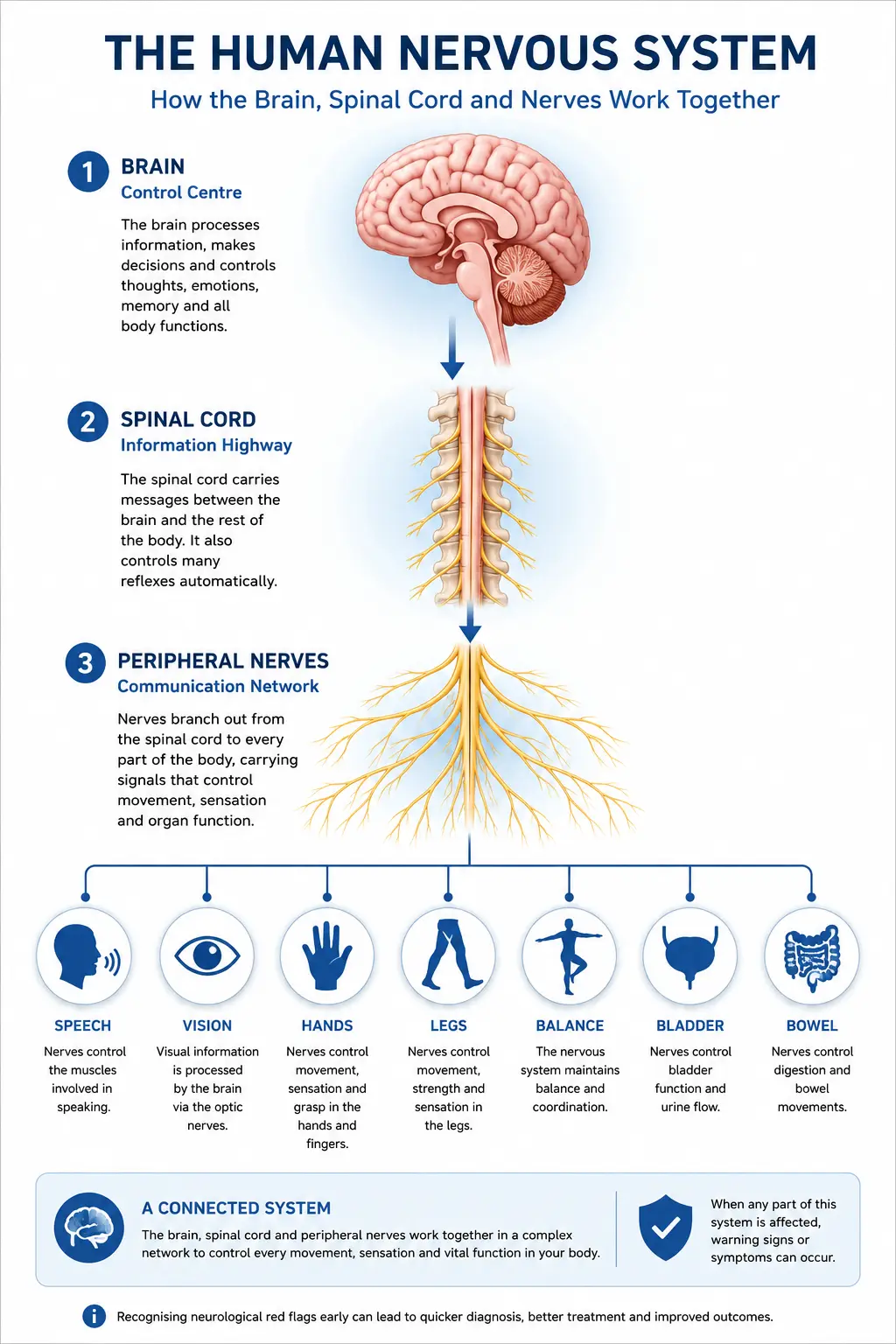
The nervous system is made up of three main components:
- The Brain – the body’s control centre, responsible for thinking, speech, vision, balance, memory and voluntary movement.
- The Spinal Cord – a bundle of nerve tissue running through the spine that carries messages between the brain and the rest of the body.
- Peripheral Nerves – nerves that branch from the spinal cord to supply the arms, legs and internal organs.
These structures work together continuously. When you decide to stand up, pick up a cup, smile or simply feel the warmth of sunlight on your skin, signals travel from your brain through the spinal cord and along the peripheral nerves before returning with sensory information.
If any part of this communication pathway becomes damaged or compressed, symptoms begin to appear.
For example:
| Area Affected | Possible Symptoms |
|---|---|
| Brain | Speech problems, confusion, vision changes, seizures, weakness. |
| Cervical Spine | Neck pain, arm weakness, numb hands, poor balance. |
| Thoracic Spine | Walking difficulties, altered sensation around the chest or abdomen. |
| Lumbar Spine | Sciatica, leg weakness, numbness, bladder or bowel problems. |
| Peripheral Nerves | Tingling, numbness, burning pain and muscle weakness. |
Because many neurological disorders affect similar pathways, different conditions can produce remarkably similar symptoms. This is why a thorough neurological examination, supported by imaging such as MRI scans, is often necessary to identify the underlying cause.
Understanding how these systems work together also explains why symptoms affecting the arms, legs, bladder, balance or vision should never be viewed in isolation. They may all represent different warning signs of a problem within the same nervous system.
A single compressed nerve in the neck can cause pain, numbness, weakness and reduced coordination in the arm, while compression of the spinal cord itself may affect both arms, both legs, balance and even bladder function.
10 Neurological Red Flags You Should Never Ignore
Now that we’ve explored how the nervous system works and why early diagnosis matters, let’s examine the ten neurological warning signs that should never be ignored. Some require immediate emergency care, while others warrant prompt assessment by a Consultant Neurosurgeon or healthcare professional.
Not every headache, episode of dizziness or tingling sensation indicates a serious neurological condition. However, certain symptoms are recognised by doctors as neurological red flags because they may indicate problems affecting the brain, spinal cord or peripheral nerves.
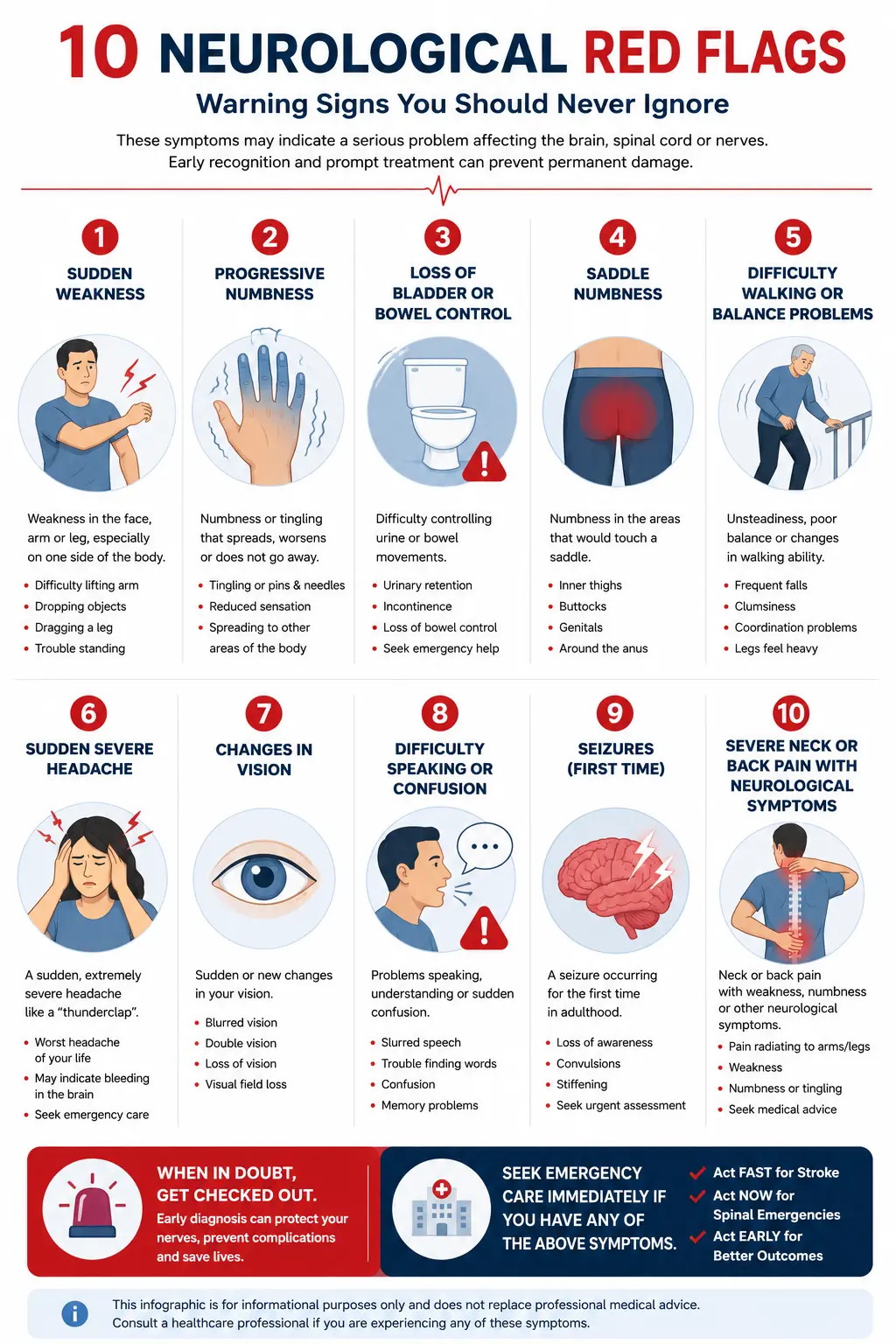
Understanding these warning signs can help you seek medical attention promptly and reduce the risk of permanent damage.
1. Sudden Weakness in the Arm or Leg
Sudden weakness affecting one side of the body is one of the most important neurological warning signs. It may develop over seconds, hours or gradually worsen over several days.
Patients often describe:
- Difficulty lifting an arm.
- Dropping objects unexpectedly.
- A leg giving way while walking.
- Difficulty climbing stairs.
- Dragging one foot.
Possible causes include:
- Stroke
- Brain tumour
- Spinal cord compression
- Cervical myelopathy
- Severe nerve root compression
If weakness develops suddenly, especially when accompanied by facial drooping or speech problems, call emergency services immediately.
Sudden weakness affecting one side of the body should always be treated as a possible stroke until proven otherwise.
2. Progressive Numbness or Loss of Sensation
Temporary pins and needles after sitting awkwardly are common. However, numbness that persists, spreads or becomes progressively worse should never be ignored.
You may notice:
- Numb fingers or hands.
- Reduced sensation in one leg.
- Difficulty feeling heat or cold.
- Numbness spreading into both arms or legs.
- Loss of sensation affecting daily activities.
Persistent numbness may indicate compression of the spinal cord, nerve roots or other neurological conditions requiring further investigation.
Progressive sensory changes should always be assessed by a healthcare professional.
3. Loss of Bladder or Bowel Control
Loss of bladder or bowel function is one of the most serious neurological emergencies seen by spinal surgeons.
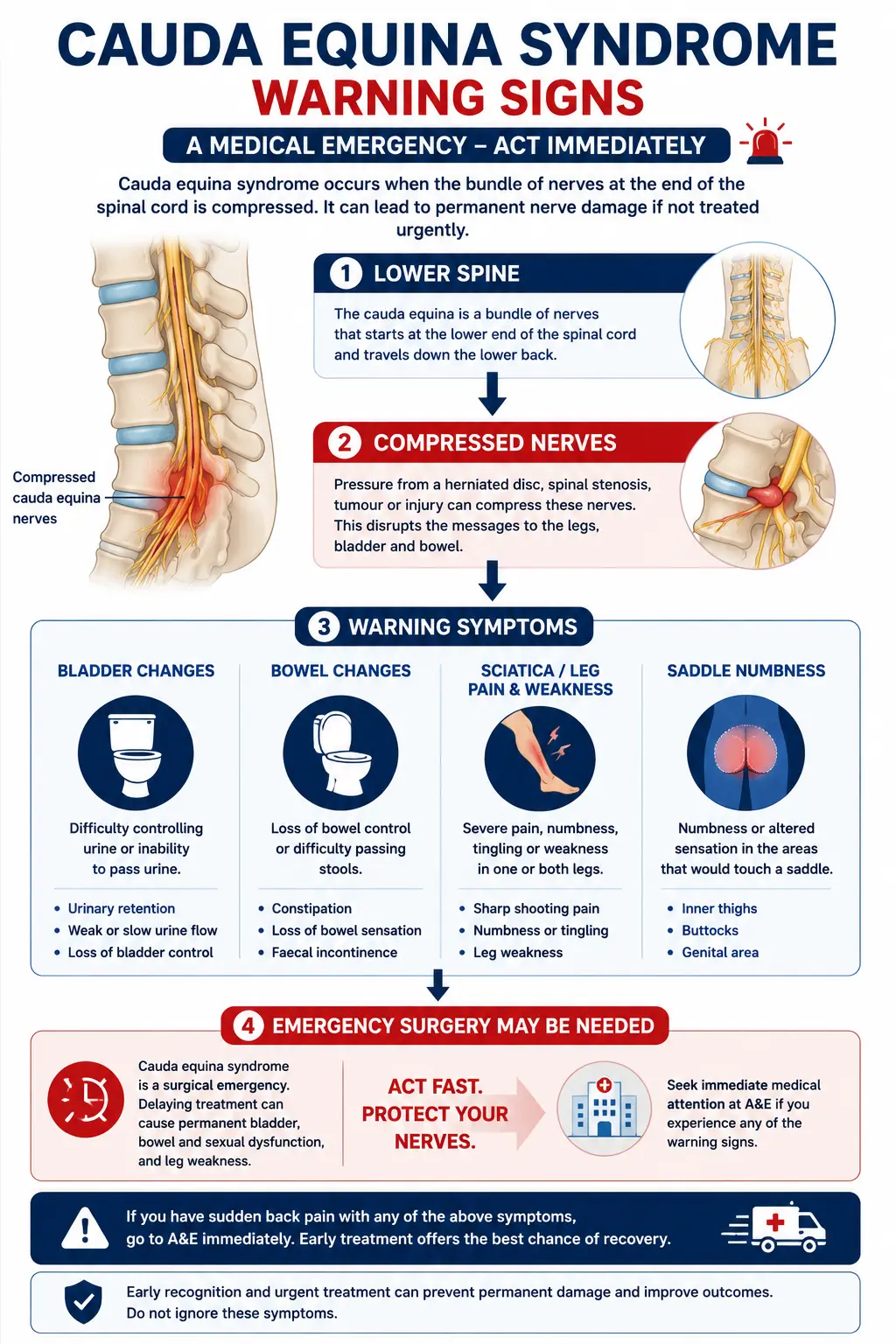
If you suddenly find it difficult to pass urine, lose control of your bladder or bowels, or notice altered sensation when using the toilet, urgent medical assessment is essential.
These symptoms may indicate Cauda Equina Syndrome, a condition where nerves at the base of the spinal cord become severely compressed.
Common symptoms include:
- Urinary retention.
- Urinary incontinence.
- Bowel incontinence.
- Reduced awareness of bladder filling.
- Severe lower back pain.
- Sciatica affecting one or both legs.
Emergency spinal surgery may be required within hours to reduce the risk of permanent bladder, bowel and sexual dysfunction.
4. Saddle Numbness
Saddle numbness describes reduced sensation around the inner thighs, buttocks, genitals and the area around the anus — the part of the body that would touch a horse’s saddle.
This symptom is uncommon but highly significant.
Patients may notice:
- Difficulty feeling toilet tissue.
- Altered sensation while sitting.
- Numbness around the groin.
- Reduced genital sensation.
When combined with bladder symptoms or severe back pain, saddle numbness strongly suggests Cauda Equina Syndrome and requires immediate emergency assessment.
5. Difficulty Walking or Problems with Balance
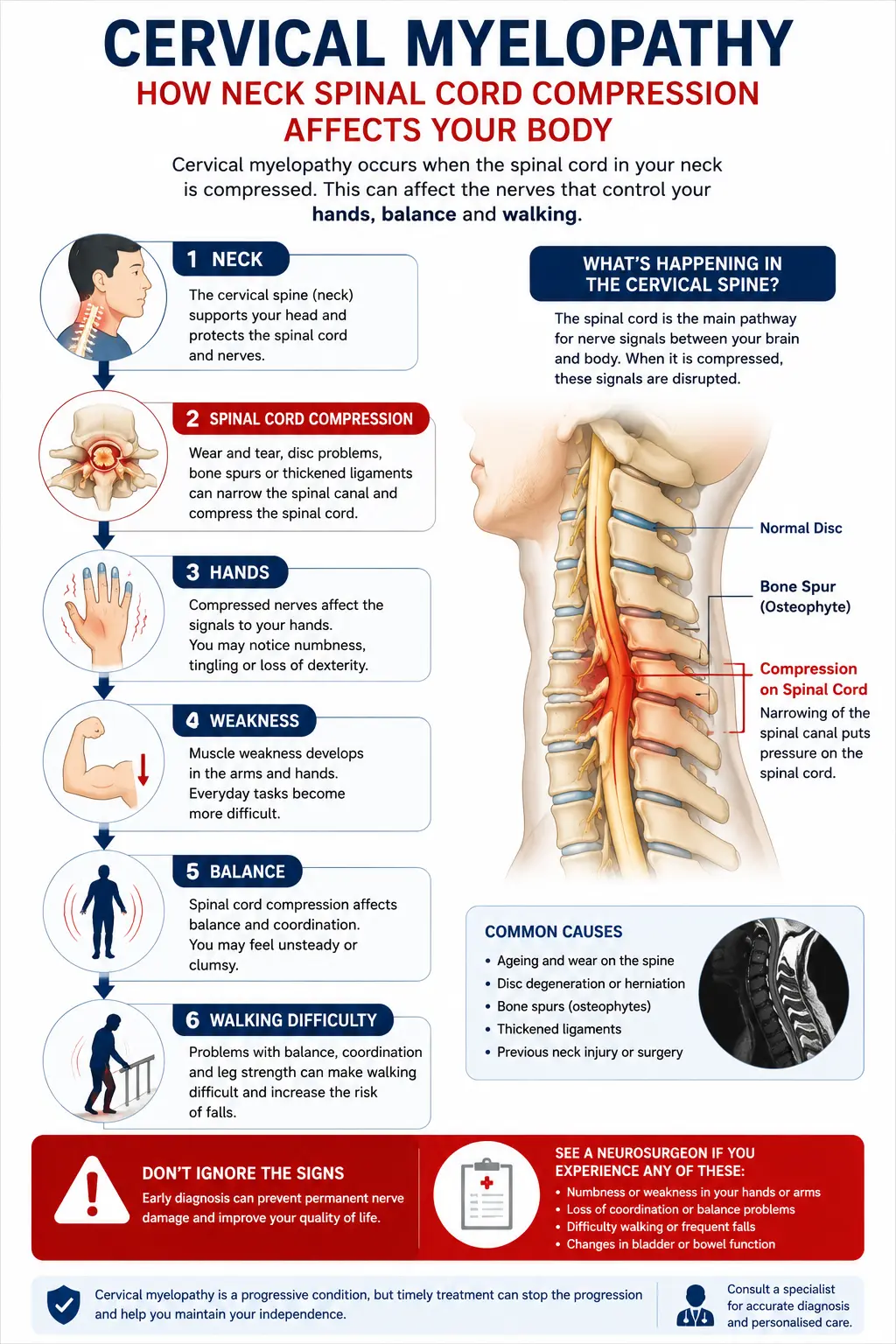
Balance problems are often attributed to ageing, but persistent changes in walking should never be dismissed without assessment.
Patients frequently report:
- Feeling unsteady.
- Walking more slowly.
- Frequent trips or falls.
- Difficulty climbing stairs.
- Needing to hold onto furniture.
- Poor coordination.
These symptoms may develop when the spinal cord becomes compressed, particularly in the neck, a condition known as cervical myelopathy.
Early diagnosis is important because prolonged spinal cord compression may result in permanent neurological impairment.
Clinical Insight
Many patients describe the sensation as “walking on cotton wool” or feeling as though their legs no longer respond as quickly as they once did. These subtle symptoms often develop months before more obvious weakness appears.
6. A Sudden Severe Headache Unlike Any Previous Headache
Most headaches are not dangerous. However, a headache that reaches maximum intensity within seconds or minutes is a neurological emergency.
This is often referred to as a thunderclap headache.
Possible causes include:
- Subarachnoid haemorrhage.
- Brain aneurysm.
- Bleeding around the brain.
- Severe vascular disorders.
If a headache is described as the “worst headache of your life,” seek emergency medical attention immediately.
7. Changes in Vision
The eyes are closely connected to the brain, meaning neurological disorders frequently affect vision.
Symptoms may include:
- Double vision.
- Sudden blurred vision.
- Loss of peripheral vision.
- Temporary vision loss.
- Difficulty focusing.
Vision changes may result from disorders affecting the optic nerves, brainstem or brain itself and should always be assessed promptly.
8. Difficulty Speaking, Understanding or Sudden Confusion
Changes in speech or language often indicate problems affecting the brain.
Examples include:
- Slurred speech.
- Difficulty finding words.
- Speaking nonsensical sentences.
- Confusion.
- Memory problems.
- Personality changes.
These symptoms may occur in stroke, brain tumours, infections or other neurological disorders.
Sudden speech difficulties should always be treated as a medical emergency.
9. Seizures Occurring for the First Time
A seizure occurring for the first time during adulthood requires urgent medical assessment.
Possible causes include:
- Epilepsy.
- Brain tumours.
- Stroke.
- Brain infections.
- Metabolic disorders.
Doctors will often arrange brain imaging such as an MRI scan together with blood tests to determine the underlying cause.
10. Severe Neck or Back Pain with Neurological Symptoms
Back pain is extremely common and is usually caused by muscle strain or age-related changes. However, back or neck pain associated with neurological symptoms requires specialist assessment.
Concerning symptoms include:
- Weakness in the arms or legs.
- Progressive numbness.
- Loss of coordination.
- Difficulty walking.
- Loss of bladder or bowel control.
- Pain radiating into the limbs.
These symptoms may indicate:
- Large slipped disc.
- Spinal stenosis.
- Cervical myelopathy.
- Spinal infection.
- Spinal tumour.
- Spinal cord compression.
Although not every patient requires surgery, early specialist assessment helps determine the most appropriate treatment before neurological function deteriorates.
Common Symptoms vs Neurological Red Flags
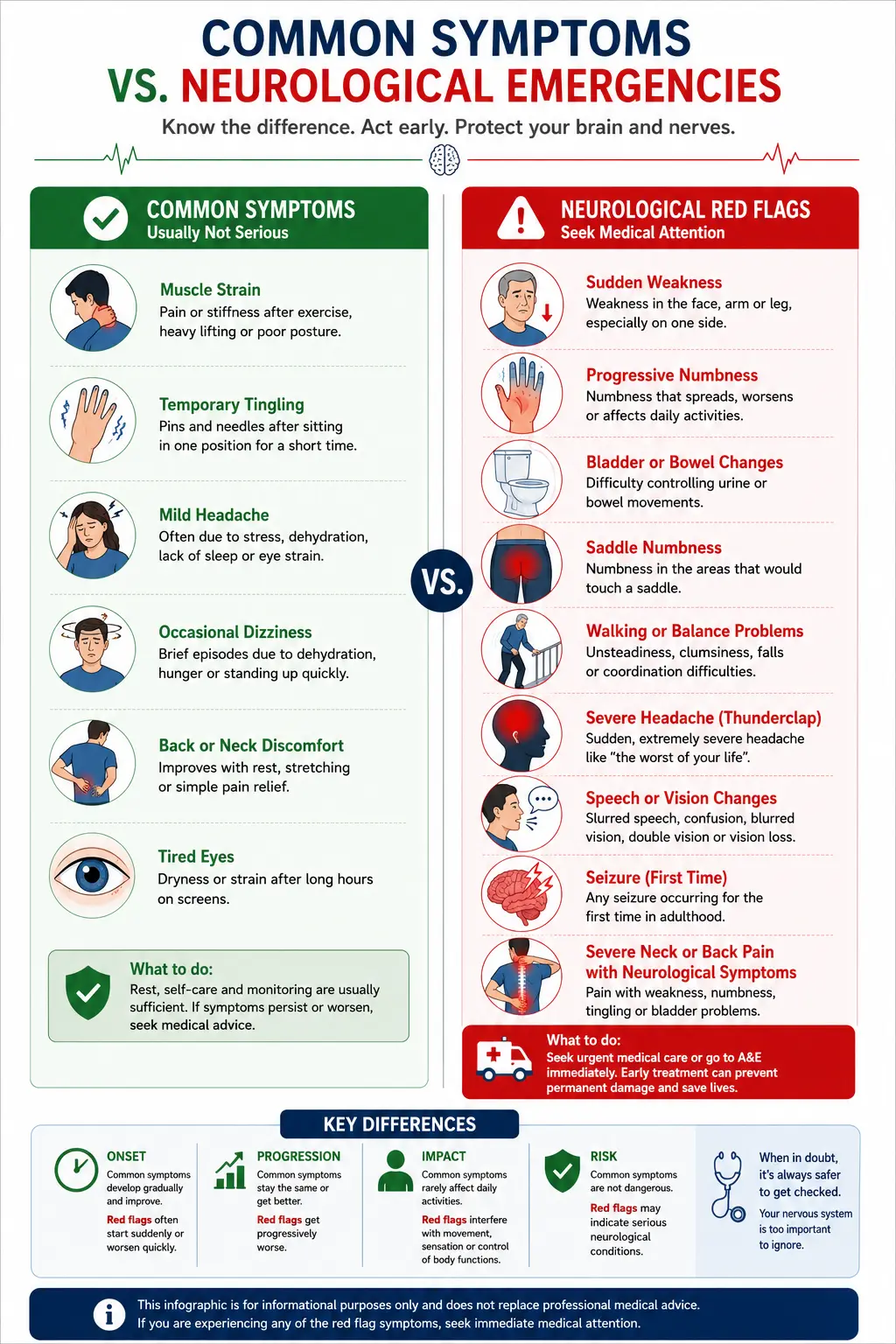
| Symptom | Usually Less Concerning | Possible Neurological Red Flag |
|---|---|---|
| Tingling | Temporary after sitting awkwardly. | Persistent, spreading or associated with weakness. |
| Back Pain | Muscle strain after lifting. | Back pain with bladder changes or leg weakness. |
| Headache | Tension headache. | Sudden thunderclap headache. |
| Dizziness | Dehydration. | Difficulty walking or poor coordination. |
| Neck Pain | Muscle stiffness. | Neck pain with numbness or arm weakness. |
| Vision Changes | Tired eyes. | Sudden double vision or vision loss. |
Recognising the difference between common everyday symptoms and genuine neurological warning signs allows patients to seek the right level of medical care without unnecessary delay.
When Neurological Symptoms May Not Be Serious
Not every episode of tingling, headache or back pain indicates a serious neurological condition. Many everyday symptoms are caused by temporary muscle strain, poor posture, dehydration or minor nerve irritation and improve without specialist treatment.
Examples include:
- Temporary pins and needles after sitting or sleeping in one position.
- Mild tension headaches after a stressful day.
- Muscle soreness following exercise.
- Occasional dizziness caused by dehydration.
- Short-lived numbness that resolves completely within a few minutes.
However, symptoms should never be ignored if they:
- Become progressively worse.
- Keep returning.
- Spread to other parts of the body.
- Are associated with weakness.
- Cause difficulty walking or using your hands.
- Affect bladder or bowel function.
When symptoms are persistent or progressive, seeking medical advice is always the safest approach.
When Should You Go to A&E Immediately?
Certain neurological symptoms require immediate emergency medical assessment because delaying treatment may result in permanent damage or become life-threatening.
Seek Emergency Medical Attention Immediately If You Experience:
- Sudden weakness affecting one side of the body.
- Facial drooping.
- Difficulty speaking or understanding speech.
- Loss of bladder or bowel control.
- Saddle numbness.
- Sudden inability to walk.
- A seizure occurring for the first time.
- The worst headache of your life.
- Sudden vision loss.
- Loss of consciousness.
These symptoms may indicate conditions such as stroke, spinal cord compression, cauda equina syndrome, brain haemorrhage or other brain related emergencies requiring urgent treatment.
When Should You See a Consultant Neurosurgeon?
Not every neurological condition requires surgery. In fact, many patients improve with medication, physiotherapy or other non-surgical treatments.
However, you should consider seeing a Consultant Neurosurgeon if you have:
- Persistent numbness lasting several weeks.
- Progressive weakness.
- Difficulty walking.
- Loss of hand coordination.
- Persistent neck pain with arm symptoms.
- Persistent back pain with leg weakness.
- MRI evidence of spinal cord or nerve compression.
- Symptoms that continue despite conservative treatment.
Early specialist assessment allows the underlying cause to be identified before permanent neurological damage develops. It also helps determine whether surgery is necessary or whether less invasive treatment options are appropriate.
Clinical Insight from Mr Bhaskar Thakur
Many spinal conditions can be treated successfully without surgery, particularly when diagnosed early. The aim is always to recommend the least invasive treatment capable of relieving symptoms and protecting neurological function.
How Neurological Conditions Are Diagnosed
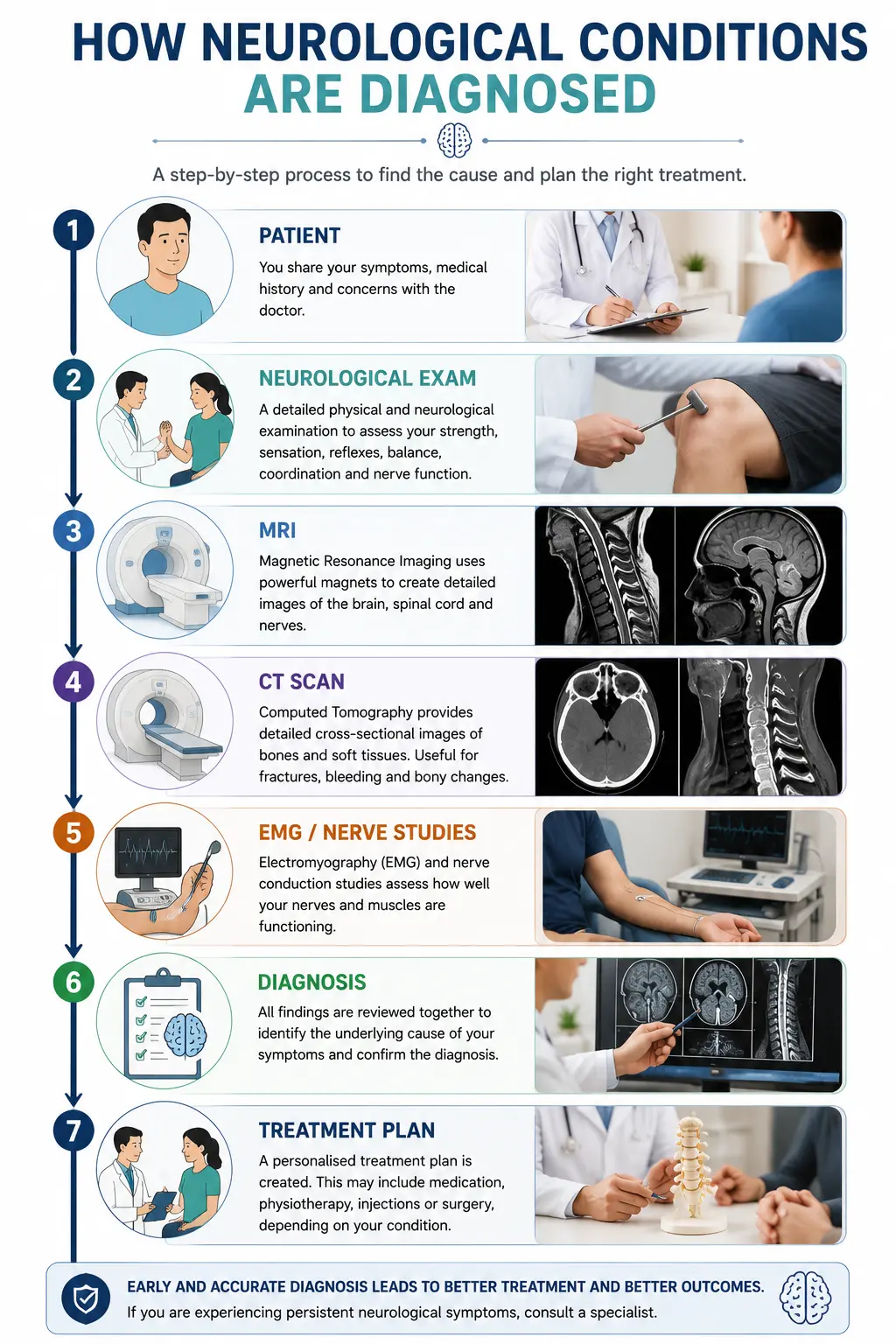
Diagnosing neurological conditions involves much more than reviewing MRI scans. A detailed medical history and neurological examination often provide valuable clues about where the problem originates.
Your assessment may include:
| Investigation | Purpose |
|---|---|
| Neurological Examination | Assesses strength, sensation, reflexes, coordination and balance. |
| MRI Scan | Provides detailed images of the brain, spinal cord and nerves. |
| CT Scan | Useful for identifying bleeding, fractures and certain brain conditions. |
| X-rays | Evaluate spinal alignment and bone abnormalities. |
| Blood Tests | Identify infections, inflammation or metabolic disorders. |
| Nerve Conduction Studies / EMG | Assess peripheral nerve and muscle function. |
These investigations allow your specialist to determine whether symptoms arise from the brain, spinal cord, peripheral nerves or another medical condition.
Treatment Options for Neurological Conditions
Treatment depends entirely on the underlying diagnosis. Some neurological conditions require emergency surgery, while others respond well to conservative treatment.
| Condition | Possible Treatment |
|---|---|
| Slipped Disc | Medication, physiotherapy, spinal injections or surgery. |
| Cervical Myelopathy | Spinal decompression surgery. |
| Spinal Stenosis | Physiotherapy, pain management or decompression surgery. |
| Cauda Equina Syndrome | Emergency spinal surgery. |
| Brain Tumours | Surgery, radiotherapy and multidisciplinary care. |
| Peripheral Nerve Compression | Medication, injections or nerve decompression. |
The objective is always to preserve neurological function, relieve symptoms and help patients return to their normal daily activities whenever possible.
Expert Assessment for Neurological Symptoms in London
Mr Bhaskar Thakur is a Consultant Neurosurgeon and Spine Surgeon with extensive experience diagnosing and treating conditions affecting the brain, spine and nervous system.
His clinical practice includes the assessment and treatment of:
- Slipped discs
- Spinal stenosis
- Cervical myelopathy
- Spinal cord compression
- Brain tumours
- Sciatica
- Degenerative spinal disorders
- Complex spinal conditions
If you are experiencing persistent neurological symptoms, progressive weakness, numbness or balance problems, obtaining specialist assessment can help identify the underlying cause and ensure appropriate treatment is provided as early as possible.
Key Takeaways
- Neurological red flags are warning signs that may indicate serious conditions affecting the brain, spinal cord or nerves.
- Symptoms such as weakness, persistent numbness, bladder dysfunction, balance problems and sudden severe headaches should never be ignored.
- Some symptoms require immediate emergency assessment.
- Early diagnosis often improves treatment options and long-term outcomes.
- Persistent symptoms should always be assessed by an experienced healthcare professional.
References
- National Institute for Health and Care Excellence (NICE). Suspected neurological conditions: recognition and referral.
- NICE. Low Back Pain and Sciatica in Over 16s.
- NHS. Stroke Symptoms.
- NHS. Cauda Equina Syndrome.
- American Association of Neurological Surgeons (AANS).
- PubMed. Cervical Myelopathy: Diagnosis and Management.
- PubMed. Degenerative Cervical Spinal Cord Compression.
Frequently Asked Questions
What are neurological red flags?
Neurological red flags are symptoms that may indicate a serious condition affecting the brain, spinal cord or nerves. Examples include weakness, numbness, balance problems, speech difficulties and bladder dysfunction.
When should numbness be investigated?
Numbness should be assessed if it persists, spreads, becomes progressively worse or is accompanied by weakness, walking difficulties or bladder symptoms.
Can a slipped disc cause neurological symptoms?
Yes. A slipped disc can compress nearby nerves, causing pain, numbness, tingling or weakness in the arms or legs. Severe cases may require surgery.
What is the difference between a trapped nerve and spinal cord compression?
A trapped nerve usually affects a single nerve root and causes symptoms in one arm or leg. Spinal cord compression can affect balance, coordination, bladder function and both sides of the body.
Can neck pain cause numbness in the hands?
Yes. Conditions affecting the cervical spine can compress nerves supplying the arms and hands, leading to pain, numbness or weakness.
What symptoms suggest spinal cord compression?
Common symptoms include progressive weakness, numbness, difficulty walking, poor balance, reduced hand coordination and bladder dysfunction.
When should I see a neurosurgeon?
You should seek specialist assessment if neurological symptoms are progressive, persistent or associated with MRI findings showing spinal cord or nerve compression.
Can neurological symptoms come and go?
Yes. Some neurological disorders cause intermittent symptoms initially before becoming persistent. Recurrent symptoms should always be assessed.
Which symptoms require emergency treatment?
Sudden weakness, facial drooping, loss of bladder or bowel control, saddle numbness, seizures, severe headache and sudden vision loss all require immediate medical attention.
Can neurological problems be treated without surgery?
Yes. Many neurological and spinal conditions improve with medication, physiotherapy, pain management or minimally invasive procedures. Surgery is recommended only when appropriate.
