 Mr Bhaskar Thakur

Sciatica can be frustrating, particularly when the pain improves for a few weeks or months and then returns. You may experience sharp or burning pain travelling from your lower back into your buttock and leg, sometimes accompanied by tingling, numbness or weakness.
Sciatica can keep coming back when the underlying cause persists, a nerve remains irritated, or certain activities repeatedly aggravate your symptoms. However, recurring sciatica does not automatically mean that your condition is getting worse or that you need surgery.
Understanding why sciatica returns can help you recognise potential triggers, explore appropriate treatment options and know when to seek further medical assessment.
Why does sciatica keep coming back?
Recurrent sciatica may be associated with:
- A persistent or recurring disc herniation
- Spinal stenosis or other causes of nerve compression
- Repeated aggravation from certain activities or positions
- Ongoing sensitivity of an affected nerve
- Changes in the spine that continue to affect a nerve root
Table of Contents
- Why Does Sciatica Keep Coming Back?
- Common Causes of Recurrent Sciatica
- What Can Trigger a Sciatica Flare-Up?
- Does Recurring Sciatica Mean Nerve Damage?
- How Can You Reduce the Risk of Recurrence?
- Treatment Options for Recurrent Sciatica
- When Should You See a Spine Specialist?
- Frequently Asked Questions
1. Why Does Sciatica Keep Coming Back?
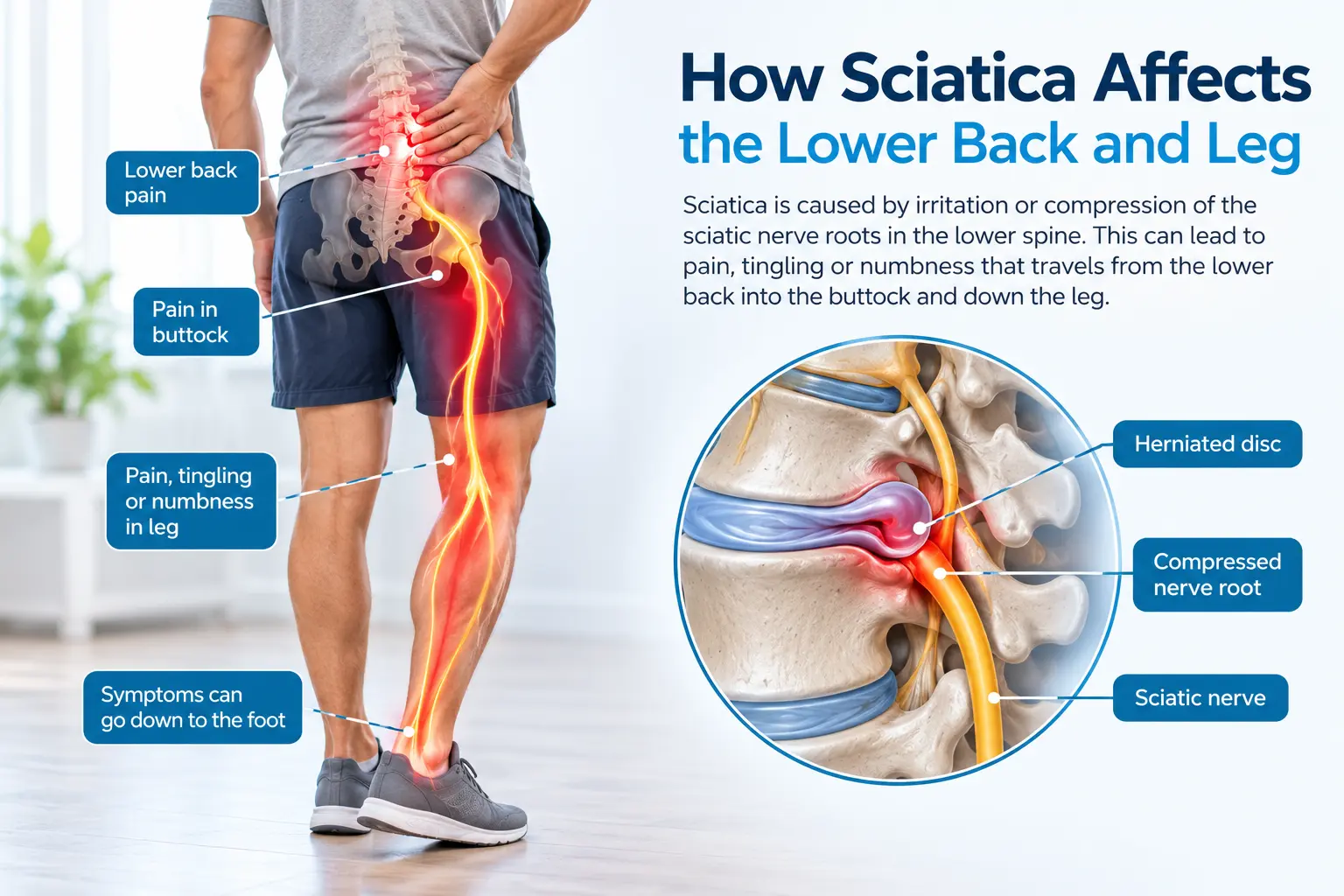
Sciatica describes pain caused by irritation or compression of nerve roots in the lower spine that contribute to the sciatic nerve. It is a symptom of an underlying problem rather than a diagnosis in itself.
Symptoms may improve when inflammation settles, pressure on a nerve decreases, or the body gradually recovers. However, if the underlying problem persists or the nerve becomes irritated again, the pain may return.
Several factors can contribute to recurring symptoms:
- A persistent spinal problem: A herniated disc or narrowing of the spinal canal may continue to affect a nerve.
- Repeated aggravating activities: Certain movements, prolonged positions or heavy lifting may provoke symptoms.
- Incomplete recovery: Pain may settle before the underlying problem has fully resolved.
- Reduced physical conditioning: Reduced strength or activity tolerance may make everyday physical demands more difficult.
- Changes in the spine: Some degenerative conditions can continue to develop over time.
The reason for recurring sciatica varies from person to person. A clinical assessment can help determine whether the pain is related to the original problem or a different condition.
2. Common Causes of Recurrent Sciatica

A. Herniated or Slipped Disc
A herniated disc occurs when material inside an intervertebral disc pushes through its outer layer. If it irritates or compresses a nearby nerve root, pain may travel from the lower back into the buttock and leg.
Symptoms can improve as inflammation settles and the affected disc changes over time. However, further irritation of the nerve root can cause another episode.
For information about patient guide and recovery options, visit our Sciatica patient guide page.
B. Spinal Stenosis
Spinal stenosis refers to narrowing of the spaces within the spine. When this affects the nerves in the lower back, it may cause pain, tingling, numbness or weakness in the buttocks and legs.
Some people find that symptoms worsen when standing or walking for extended periods and improve when sitting or leaning forward. Repeated symptoms during walking or standing may warrant an assessment for spinal stenosis.
C. Degenerative Changes in the Spine
As spinal discs and joints change over time, they may contribute to reduced disc height, bone spurs or narrowing around nerve roots.
These changes do not always cause pain. However, when they affect a nerve, they may contribute to recurring symptoms. An MRI finding alone does not establish the cause of pain; it must be interpreted alongside your symptoms and clinical examination.
D. Repeated Irritation of a Sensitive Nerve
After an episode of sciatica, a nerve may remain sensitive for some time. Certain movements, prolonged positions or sudden increases in physical activity may aggravate symptoms.
This does not necessarily mean that you have caused new damage. However, recurring or progressively worsening pain should not automatically be dismissed as a temporary flare-up.
E. A Change in the Underlying Condition
Sometimes, recurring leg pain results from a problem different from the original episode. New nerve compression or another musculoskeletal condition can produce similar symptoms.
A reassessment is particularly important if the pain changes location, becomes more severe, or is accompanied by new numbness or weakness.
3. What Can Trigger a Sciatica Flare-Up?
Certain activities and positions may aggravate sciatic nerve symptoms, although triggers vary between individuals.
Prolonged Sitting
Sitting for long periods may aggravate symptoms in some people, particularly when a position increases irritation around a lumbar nerve root.
Taking regular movement breaks and varying your position may help if sitting consistently makes your symptoms worse.
Related reading: Sciatica and Sitting
If your leg pain becomes worse when you sit, read our guide explaining possible causes and ways to manage position-related symptoms.
Heavy Lifting and Repeated Bending
Lifting heavy objects, especially with repeated bending or twisting, may provoke symptoms in some people. This does not mean that all lifting is harmful or that you should avoid bending permanently.
Instead, adjust activities to your current tolerance, use controlled movements and gradually rebuild your capacity as symptoms allow.
Sudden Increases in Activity
Returning too quickly to strenuous exercise, long walks or physically demanding work after a painful episode may trigger a flare-up.
A gradual increase in activity is generally more sustainable than alternating between complete rest and sudden bursts of strenuous activity.
Prolonged Inactivity
Avoiding movement for long periods may reduce physical conditioning and make returning to normal activities more difficult.
Unless a clinician advises otherwise for a specific reason, gentle movement and a gradual return to normal activities are generally preferable to prolonged bed rest.
4. Does Recurring Sciatica Mean Nerve Damage?
Not necessarily. Sciatica can return without causing permanent nerve damage.
Some episodes involve temporary nerve irritation, while more persistent or severe compression can sometimes lead to lasting neurological problems. The risk depends on the underlying cause, the severity of nerve involvement and the symptoms present.
Warning signs that require particular attention include:
- New or worsening weakness in the leg or foot
- Increasing numbness or loss of sensation
- Difficulty walking because of weakness
- Symptoms that progressively worsen rather than settle
When Is Sciatica an Emergency?
Seek emergency medical assessment if you develop:
- New difficulty passing urine or an inability to urinate
- Loss of bladder or bowel control
- Numbness around the genitals, buttocks or anus
- Severe or rapidly worsening weakness, particularly in both legs
These symptoms may indicate cauda equina syndrome or another serious neurological problem requiring urgent assessment. Do not wait for a routine appointment.
For more information about the possible consequences of persistent symptoms, read What Happens If Sciatica Is Left Untreated for Years?
5. How Can You Reduce the Risk of Sciatica Coming Back?
There is no guaranteed way to prevent every recurrence of sciatica. However, appropriate treatment and a gradual return to activity may help reduce flare-ups and improve your ability to manage symptoms.

Stay Physically Active
Choose activities that you can tolerate, such as walking or other gentle exercise. Increase duration and intensity gradually rather than pushing through significant or worsening leg pain.
A physiotherapist or clinician can recommend an exercise programme based on the underlying cause and your functional ability.
Strengthen Supporting Muscles
An appropriately designed exercise programme may include exercises for the trunk, hips and lower limbs. The aim is to improve strength, movement control and tolerance for daily activities.
No single exercise is suitable for everyone with sciatica. Seek advice if an exercise causes substantial worsening of radiating pain, new numbness or weakness.
Vary Your Sitting Position
If sitting aggravates your symptoms, avoid remaining in one position for prolonged periods. Take regular movement breaks and adjust your workstation to make comfortable positions easier to maintain.
There is no single perfect sitting posture for everyone. The goal is to find positions that you can sustain without repeatedly aggravating your symptoms.
Return to Activities Gradually
After a flare-up, build up your usual activities in manageable stages. Avoid both prolonged inactivity and sudden increases in workload.
A gradual approach can help restore confidence and physical capacity while making it easier to identify activities that consistently aggravate your symptoms.
Address the Underlying Cause
Long-term management is more effective when it considers why the nerve is being irritated.
Depending on the diagnosis, treatment may involve physiotherapy, medication, targeted injections or, in selected cases, surgery. Lifestyle changes can support recovery, but they cannot correct every structural cause of nerve compression.
6. Treatment Options for Recurrent Sciatica
The most appropriate treatment depends on the cause, severity and duration of symptoms, as well as whether there is any neurological weakness.
Conservative Treatment
Many episodes of sciatica improve without surgery. Treatment may include maintaining tolerable activity, physiotherapy, exercise-based rehabilitation and medication when appropriate.
Medication should be discussed with a healthcare professional because benefits and risks vary, and some commonly used pain medicines may offer limited benefit for sciatica.
Targeted Injections
In selected cases, an epidural steroid injection or another targeted injection may be considered to help manage symptoms associated with nerve root irritation.
The potential benefit depends on the underlying condition and individual circumstances. Injections do not remove every cause of nerve compression, and their effects may be temporary.
Surgery
Surgery may be considered when clinical findings and imaging identify a problem that can be treated surgically, symptoms remain disabling despite appropriate non-surgical care, or significant neurological deficits require intervention.
Procedures such as discectomy or spinal decompression may be appropriate for selected patients. Surgery is not necessary simply because sciatica has returned; the decision should follow a specialist assessment.
Looking for specialist sciatica treatment?
Understanding the underlying cause is an important step in choosing appropriate treatment. Assessment may help determine whether conservative care, injections or surgery should be considered.
7. When Should You See a Spine Specialist?
Consider a specialist assessment if:
- Sciatica repeatedly returns and interferes with work, sleep or daily activities.
- Pain persists despite an appropriate period of conservative treatment.
- Symptoms increasingly affect your ability to walk, sit or stand.
- You develop persistent numbness or new weakness.
- Previous treatment has not provided sufficient relief.
- You are unsure whether the recurring pain is caused by a disc problem, spinal stenosis or another condition.
Assessment may include a review of your symptoms, medical history and neurological examination. An MRI may be recommended when clinically appropriate, particularly if symptoms persist, neurological deficits are present, or surgery is being considered.
The aim is to establish whether your symptoms match an identifiable spinal problem and to choose treatment accordingly.
Visit our Sciatica condition treatment in london page to learn more about the condition and available specialist care.
8. Frequently Asked Questions
Why does my sciatica keep coming back in the same leg?
Recurring symptoms in the same leg may indicate that the original nerve root remains irritated or that the underlying spinal condition continues to affect it. A clinical assessment can help identify the cause, particularly if the pain is becoming more severe or is accompanied by weakness or numbness.
Can sciatica come back after months or years?
Yes. Sciatica can recur after a period of improvement. A new episode may involve the original problem or a different cause. The timing alone does not establish whether the condition has progressed.
Does recurring sciatica mean I need surgery?
No. Many people with recurrent sciatica can be managed without surgery. An operation may be considered when there is a surgically treatable cause, persistent disabling symptoms despite appropriate treatment, or a neurological problem requiring intervention.
Can walking help prevent sciatica from returning?
Walking may help maintain mobility and physical conditioning, provided the activity is tolerated. Start at a manageable level and increase gradually. If walking consistently causes worsening leg pain, weakness or numbness, seek clinical advice.
How long does a recurrent sciatica flare-up last?
The duration varies according to the underlying cause and severity. Some episodes settle over days or weeks, while others persist longer. Symptoms that are not improving, repeatedly interfere with daily life, or are accompanied by neurological changes warrant assessment.
When is recurring sciatica an emergency?
Seek emergency care for new bladder or bowel dysfunction, numbness around the genitals or anus, or severe progressive weakness, particularly when both legs are affected. These symptoms can indicate serious nerve compression that needs urgent evaluation.
Key Takeaway
Sciatica can keep coming back because of persistent nerve irritation, an underlying spinal condition, repeated aggravating activities or changes in the spine over time. Recurrence does not automatically mean permanent nerve damage or that surgery is required.
The most useful next step is to understand what is causing the symptoms, remain active within your limits and seek appropriate assessment when episodes persist or change. New bladder or bowel problems, saddle numbness or severe progressive weakness require emergency assessment.
With an accurate diagnosis and an individualised treatment plan, many people can improve their symptoms and return to everyday activities.

[…] Why Does Sciatica Keep Coming Back? Causes, Treatment and Prevention […]