 Mr Bhaskar Thakur
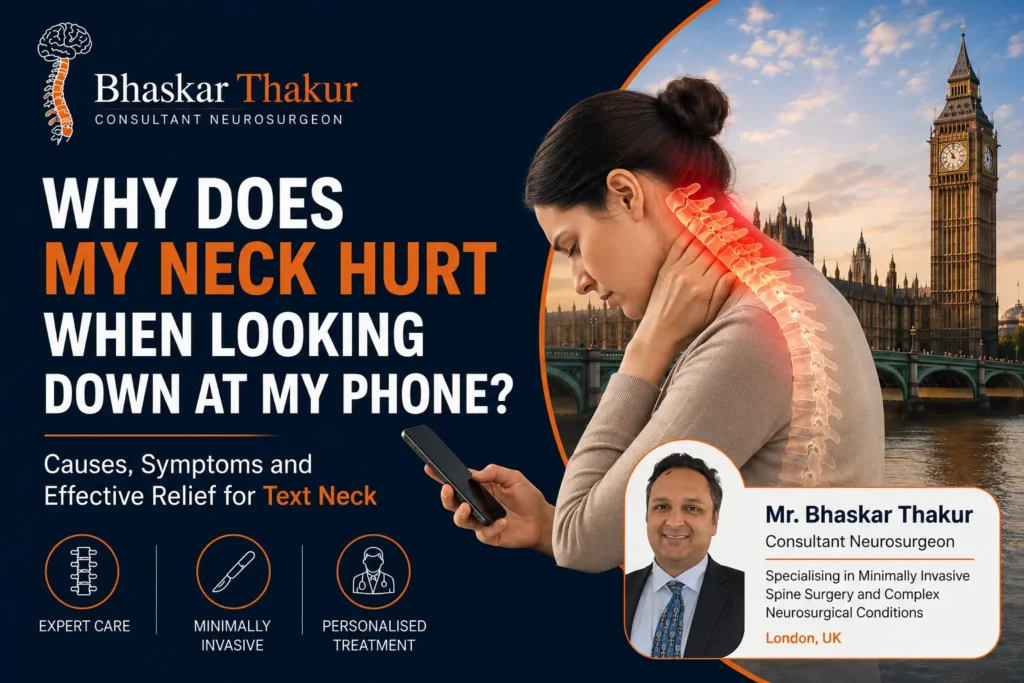
Neck hurts while looking down at your phone has become increasingly common in recent years. Prolonged smartphone use places significant strain on the cervical spine and surrounding muscles, often leading to stiffness, discomfort and headaches. This condition is commonly referred to as text neck.
Many people spend several hours each day looking down at mobile devices for work, messaging, browsing or social media. Over time, poor phone posture can place excessive stress on the muscles, ligaments and joints of the upper spine.
Persistent symptoms may sometimes require specialist assessment, particularly if pain becomes chronic or begins radiating into the shoulders or arms. Mr Bhaskar Thakur is a London-based Consultant Neurosurgeon and Spine Surgeon specialising in neck and spinal conditions.
If you are experiencing ongoing symptoms, you can learn more about neck pain treatment here.
What Is Text Neck?
Text neck is a repetitive strain condition caused by prolonged forward bending of the upper spine while using smartphones, tablets or laptops. When the head moves forward and downward for extended periods, the cervical spine experiences significantly increased mechanical stress.
The average human head weighs around 4 to 5 kilograms in a neutral position. However, as the head bends forward, the effective load on the cervical spine increases substantially. This can lead to:
- Neck stiffness
- Muscle fatigue
- Upper trapezius tightness
- Pain between the shoulder blades
- Tension headaches
- Reduced neck mobility
Text neck is particularly common among office workers, students and individuals who spend long hours on mobile devices.
Why Looking Down at Your Phone Causes Neck Pain
Looking down at your phone for prolonged periods forces the head into a flexed posture. This places continuous strain on the cervical muscles, discs and supporting ligaments.

Over time, poor smartphone posture may contribute to:
- Forward head posture
- Muscle imbalance
- Cervical spine stress
- Upper back tightness
- Shoulder tension
- Posture-related headaches
The upper trapezius and levator scapulae muscles often become overworked while supporting the head in a forward position. This may cause persistent tightness around the upper spine and shoulders.
Repeated strain may also irritate cervical joints and discs, especially in individuals with pre-existing degenerative changes.
Common Symptoms of Text Neck
Symptoms can range from mild discomfort to persistent pain and stiffness affecting daily activities.
Common symptoms include:
- Neck pain after phone use
- Stiffness at the base of the neck
- Upper trapezius pain
- Headaches caused by muscle tightness and poor posture
- Pain between the shoulder blades
- Reduced range of motion
- Burning sensation around the shoulders
- Posture-related fatigue
Some individuals may also experience tingling or discomfort radiating into the shoulders or arms if cervical nerves become irritated.
Can Text Neck Cause Long-Term Problems?
In many cases, text neck improves with posture correction and activity modification. However, prolonged poor posture over months or years may contribute to chronic cervical strain.
Persistent abnormal loading of the cervical spine may accelerate:
- Muscle imbalance
- Joint irritation
- Disc degeneration
- Postural abnormalities
- Cervical nerve irritation
Individuals with underlying cervical disc disease or arthritis may notice worsening symptoms with prolonged phone use.
If pain becomes persistent, severe or associated with neurological symptoms, specialist assessment may be recommended.
How to Relieve Neck Pain From Phone Use
Several simple adjustments may help reduce strain on the neck during smartphone use.
1. Raise Your Phone to Eye Level
Keeping the screen higher reduces forward neck bending and decreases stress on the cervical spine.
2. Take Frequent Breaks
Avoid holding the same posture for long periods. Short movement breaks every 20 to 30 minutes may help reduce muscle fatigue.
3. Improve Sitting Posture
Maintain good posture with relaxed shoulders and proper back support, particularly during desk work.
4. Perform Gentle cervical region Stretches
Stretching exercises may help improve flexibility and reduce muscle tightness around the shoulders and upper back.
5. Strengthen Postural Muscles
Strengthening exercises for the upper back and neck may improve long-term posture control.
6. Reduce Screen Time When Possible
Limiting prolonged smartphone use may help prevent recurring symptoms.
When Should You See a Spine Specialist?
Medical evaluation may be advisable if symptoms persist despite conservative measures or if neurological symptoms develop.
Seek professional assessment if you experience:
- Persistent or worsening pain
- Pain radiating into the arm or shoulder blade
- Tingling or numbness in the fingers
- Weakness in the arms or hands
- Severe headaches
- Balance problems or dizziness
If symptoms continue despite posture correction and conservative treatment, specialist assessment may help identify underlying cervical spine conditions. Mr Bhaskar Thakur is a Consultant Neurosurgeon and Spine Surgeon in London, UK, with expertise in diagnosing and treating cervical spine conditions, disc problems and minimally invasive spinal conditions.
You can read more about neck pain treatment here.
Conclusion
Neck pain from looking down at your phone is increasingly common due to prolonged smartphone use and poor posture. Although symptoms are often related to muscular strain and posture imbalance, persistent or worsening pain may indicate underlying cervical spine problems.
Early posture correction, ergonomic adjustments and appropriate treatment may help prevent chronic symptoms and improve overall spine health.
If you are experiencing persistent pain, headaches, tingling or posture-related cervical symptoms, expert assessment may help identify the underlying cause. Mr Bhaskar Thakur is a London-based Consultant Neurosurgeon and Spine Surgeon specialising in spinal conditions, including minimally invasive treatment options.
Frequently Asked Questions
Can looking down at your phone damage your neck?
Prolonged poor posture may place excessive strain on the cervical spine and surrounding muscles, potentially contributing to chronic pain and stiffness over time.
Can text neck cause headaches?
Yes. Tightness in the cervical and upper trapezius muscles may contribute to tension-type headaches.
How long does text neck take to improve?
Mild cases may improve within days to weeks with posture correction, stretching exercises and reduced smartphone use.
Can poor phone posture cause shoulder pain?
Yes. Muscle tension associated with forward head posture can affect the upper trapezius muscles and shoulder region, leading to discomfort and stiffness.
What is the best posture while using a phone?
Holding the phone closer to eye level while keeping the shoulders relaxed and maintaining good sitting posture may help reduce strain on the cervical spine.
