 Mr Bhaskar Thakur

Sagittal imbalance is a spinal condition in which the body’s natural alignment shifts forwards, making it increasingly difficult to stand upright without bending at the hips or knees. Many people describe the feeling as constantly leaning forwards while standing or walking, often accompanied by back pain, muscle fatigue, and reduced walking endurance.
Normal spinal alignment allows the head, shoulders, pelvis, hips, knees, and ankles to remain balanced with minimal muscular effort. When this balance is lost, the muscles of the back and legs must work much harder to keep the body upright. Over time, this increased effort can lead to pain, reduced mobility, loss of independence, and a significantly lower quality of life.
Sagittal imbalance most commonly affects older adults as a result of age-related degeneration, spinal arthritis, osteoporosis, previous spinal surgery, or other forms of spinal deformity. It may also develop alongside conditions such as adult scoliosis, degenerative scoliosis, and kyphosis.
Mr Bhaskar Thakur is a Consultant Complex Spine Surgeon in London with extensive experience in diagnosing and treating sagittal imbalance and other complex spinal deformities. Treatment ranges from specialist physiotherapy and rehabilitation to advanced spinal reconstruction using modern surgical techniques where appropriate.
This guide explains the symptoms, causes, diagnosis, treatment options, and when surgery may be recommended for sagittal imbalance.
Specialist Sagittal Imbalance Treatment in London
People seeking treatment for sagittal imbalance in London often report difficulty standing upright, progressive forward stooping, reduced walking distance, and increasing back pain. Although these symptoms are sometimes attributed to normal ageing, they frequently result from an underlying spinal alignment problem that can be assessed and treated.
Mr Bhaskar Thakur provides comprehensive assessment for sagittal imbalance using detailed clinical examination together with standing spinal X-rays and advanced imaging where required. Every patient receives an individualised treatment plan designed to improve spinal alignment, reduce pain, restore mobility, and improve long-term quality of life.
Many patients improve with physiotherapy, rehabilitation, posture correction, and pain management. When conservative treatment is no longer effective, surgery may be considered to restore spinal balance and improve overall function.
Table of Contents
What Is Sagittal Imbalance?
Sagittal imbalance is a loss of normal spinal alignment when viewed from the side. In a healthy spine, the head sits comfortably over the pelvis, allowing the body to remain upright with minimal muscular effort. When this balance is disrupted, the upper body gradually shifts forwards, forcing the muscles of the back, hips, and legs to work much harder to maintain posture.
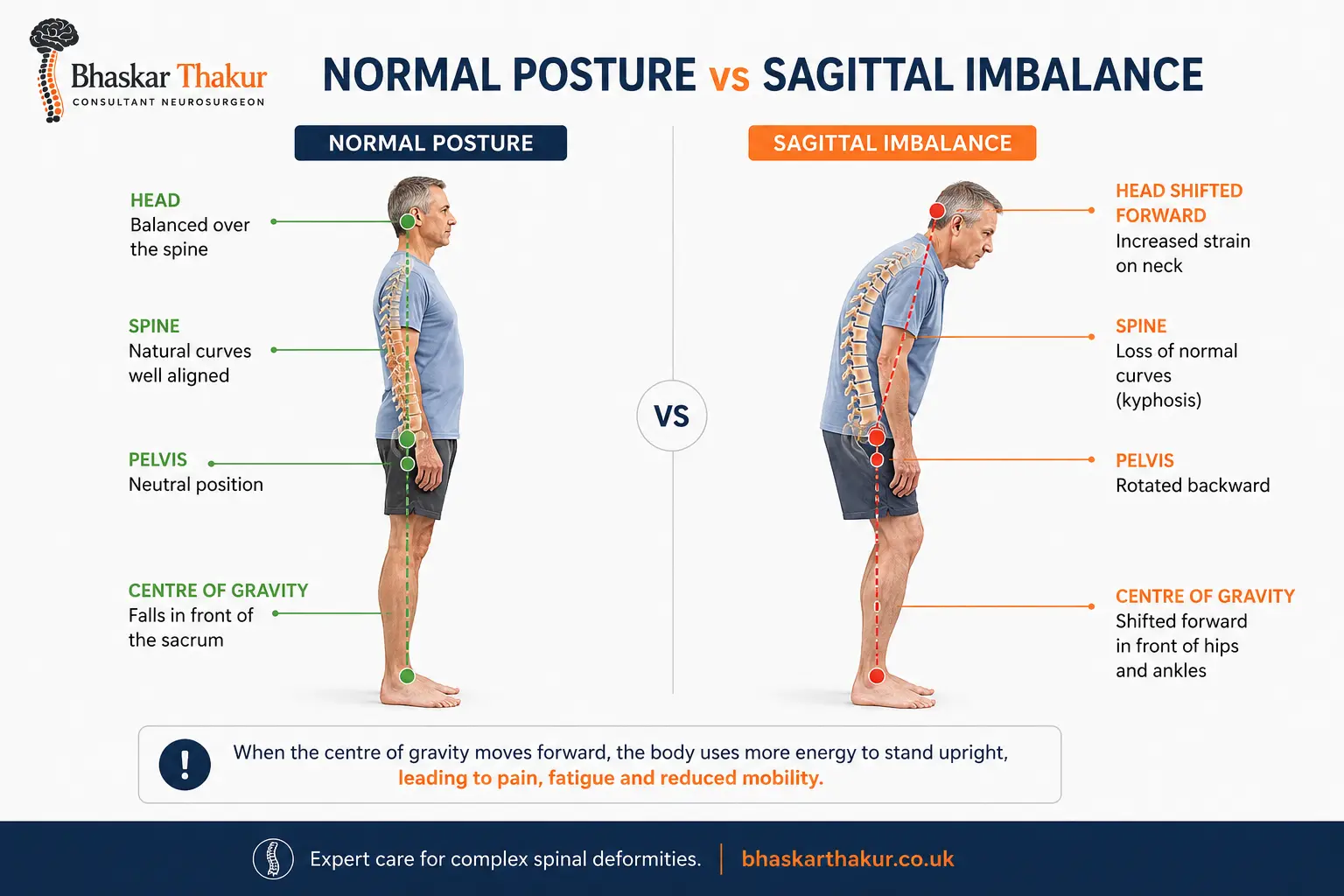
Many patients describe the condition as feeling as though they are constantly leaning forwards. Some compensate by bending their knees, extending their hips, or looking upwards in an attempt to remain upright. While these adjustments may temporarily improve balance, they often lead to increasing fatigue and discomfort throughout the day.
Sagittal imbalance is not a disease itself but a feature of several spinal disorders. It commonly develops as part of adult spinal deformity and frequently occurs alongside scoliosis, kyphosis, flat back syndrome, or advanced degenerative changes affecting the spine.
Causes of Sagittal Imbalance
Sagittal imbalance develops when the normal alignment of the spine gradually changes, shifting the body’s centre of gravity forwards. In most adults, this occurs because of age-related degeneration affecting the discs, joints, ligaments, and supporting muscles of the spine. As these structures deteriorate, maintaining an upright posture becomes increasingly difficult.
Several conditions can contribute to sagittal imbalance, including:
- Degenerative disc disease
- Age-related arthritis affecting the spine
- Adult scoliosis and degenerative scoliosis
- Kyphosis causing excessive forward curvature
- Flat back syndrome
- Previous spinal fusion surgery
- Osteoporosis and vertebral compression fractures
- Weakness of the muscles supporting the spine
In many patients, several of these factors occur together, gradually reducing the spine’s ability to maintain proper balance.
Symptoms of Sagittal Imbalance
Symptoms usually develop gradually and often worsen over several years. Many people initially believe their posture is simply changing with age before recognising that walking and standing are becoming increasingly difficult.

Difficulty Standing Upright
One of the most common symptoms is the inability to stand comfortably in an upright position. Many individuals naturally lean forwards and find themselves bending their hips or knees to compensate.
Forward Stooped Posture
As spinal alignment changes, the body gradually shifts forwards, producing a noticeable stooped appearance that may worsen throughout the day.
Back Pain
Persistent lower back pain is common because the muscles and joints work harder to compensate for the altered posture.
Muscle Fatigue
Maintaining balance requires increased muscular effort, leading to fatigue in the back, buttocks, and legs, particularly after prolonged standing or walking.
Reduced Walking Distance
Many patients notice they can no longer walk as far as they once could without stopping to rest or leaning forwards for support, such as when using a shopping trolley.
Loss of Independence
As symptoms progress, everyday activities such as shopping, cooking, travelling, and household tasks may become increasingly difficult.
Diagnosis
Diagnosing sagittal imbalance requires careful assessment of both spinal alignment and overall posture. Because several spinal conditions can produce similar symptoms, accurate diagnosis is essential before treatment begins.
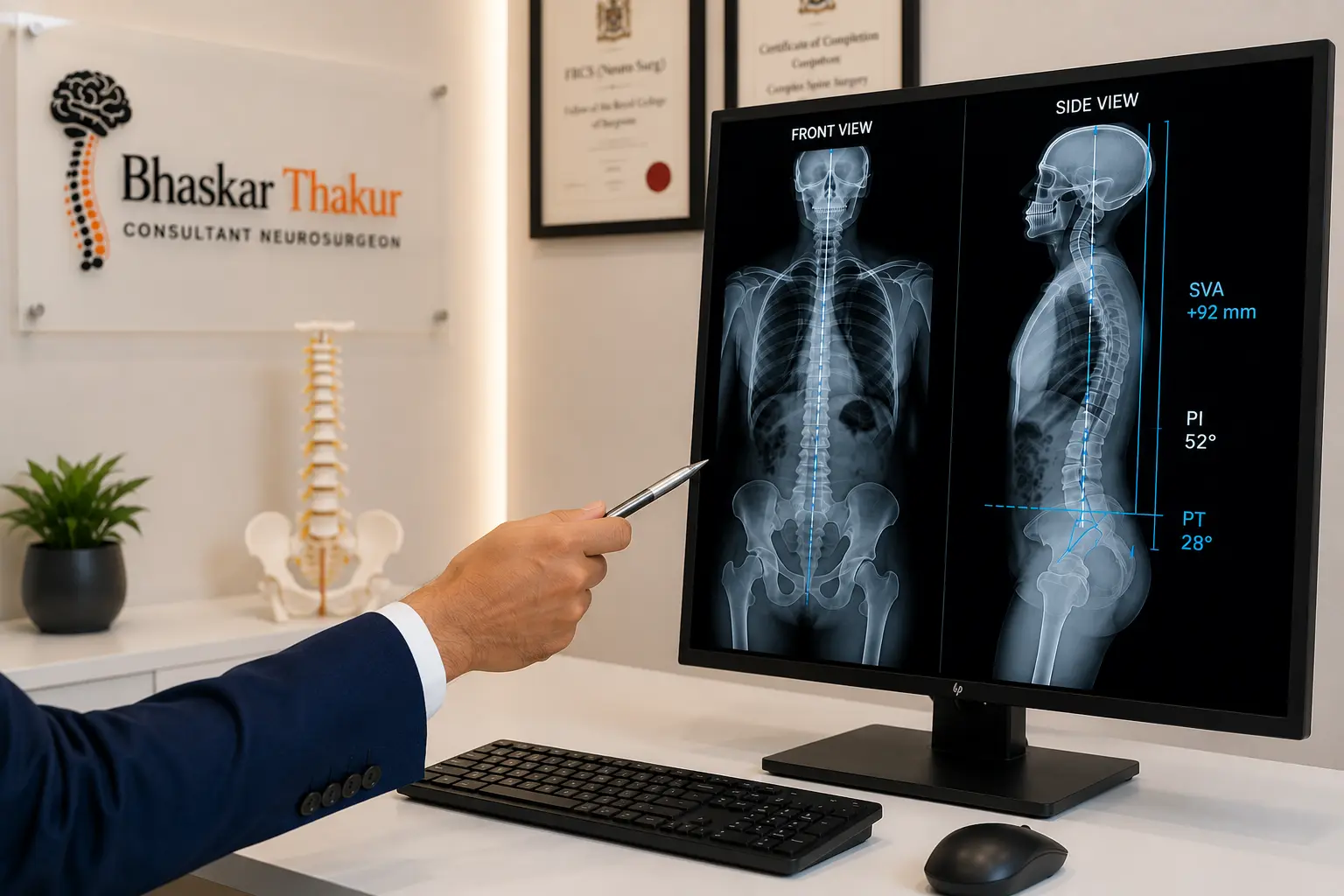
Clinical Assessment
Mr Bhaskar Thakur performs a detailed examination assessing posture, spinal flexibility, walking pattern, muscle strength, neurological function, and overall balance.
Standing Full-Length X-rays
Standing X-rays are the most important investigation because they show how the entire spine and pelvis align while the patient is standing. These images allow sagittal balance to be accurately measured and help guide treatment planning.
MRI Scan
MRI may be recommended when nerve compression, spinal stenosis, or disc degeneration is suspected. It provides detailed information about the spinal cord, discs, nerves, and surrounding soft tissues.
Treatment Options
Treatment depends on the severity of the spinal imbalance, the underlying cause, the patient’s symptoms, and their overall health. Many people improve without surgery, particularly when treatment begins before the deformity becomes severe.
Non-Surgical Treatment
Conservative treatment may include:
- Specialist physiotherapy
- Postural rehabilitation
- Core strengthening exercises
- Pain-relieving medication
- Spinal injections where appropriate
- Osteoporosis management
- Lifestyle advice and activity modification
These treatments aim to reduce pain, improve mobility, strengthen the supporting muscles of the spine, and slow progression wherever possible.
For many patients, early specialist assessment allows conservative treatment to be started before symptoms become significantly disabling.
When Is Surgery Needed?
Although many people achieve good symptom control through physiotherapy and rehabilitation, surgery may be recommended when sagittal imbalance significantly affects daily life or continues to progress despite appropriate conservative treatment.
Surgery may be considered if patients experience:
- Persistent back pain despite non-surgical treatment
- Difficulty standing upright
- Progressive forward stooping
- Severely reduced walking distance
- Spinal deformity affecting balance and mobility
- Neurological symptoms caused by nerve compression
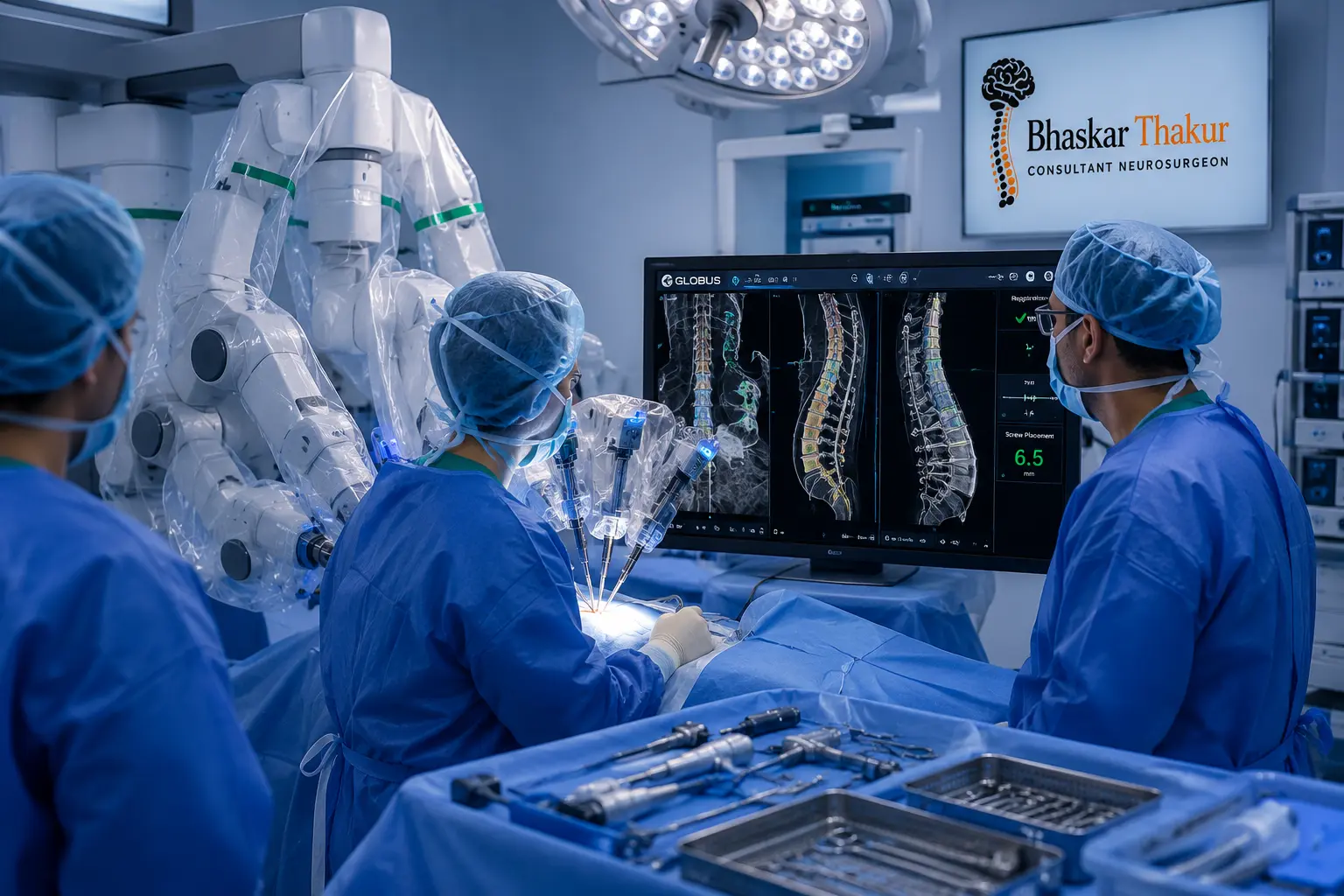
The primary aim of surgery is to restore spinal alignment, improve posture, relieve pain, and help patients regain mobility and independence.
Depending on the underlying cause, surgery may involve spinal decompression, spinal fusion, correction of spinal deformity, and advanced reconstructive techniques. Where appropriate, Mr Bhaskar Thakur also utilises robotic-assisted spine surgery to enhance surgical precision.
Recovery After Treatment
Recovery varies depending on whether treatment is non-surgical or surgical. Patients managed conservatively often notice gradual improvements in posture, strength, and walking ability through physiotherapy and rehabilitation.

Following surgery, recovery is progressive. Walking usually begins shortly after the procedure under the guidance of the healthcare team, with activity levels gradually increasing over the following weeks and months.
Most patients continue improving for several months as posture, spinal alignment, and muscle strength recover. Individual rehabilitation programmes help maximise long-term outcomes and support a return to normal daily activities.
Sagittal Imbalance Specialist in London
Sagittal imbalance is a complex spinal condition that often develops alongside other forms of adult spinal deformity. Accurate diagnosis is essential because successful treatment depends on identifying the underlying cause of the spinal imbalance rather than simply treating the symptoms.
Mr Bhaskar Thakur is a Consultant Complex Spine Surgeon in London with extensive experience in treating sagittal imbalance, adult scoliosis, kyphosis, degenerative spinal disorders, and complex spinal deformities. His personalised approach combines detailed clinical assessment with advanced imaging and evidence-based treatment to help patients regain spinal balance and improve their quality of life.
References
- Adult Spinal Deformity: Epidemiology, Evaluation and Management
- Sagittal Balance of the Spine – Review of Current Concepts
- Robotic-Assisted Spine Surgery: Current Concepts and Clinical Applications
Book a Consultation for Sagittal Imbalance Treatment in London
If you are finding it increasingly difficult to stand upright, experiencing persistent back pain, or noticing progressive changes in your posture, early specialist assessment can help identify the underlying cause and determine the most appropriate treatment.
Mr Bhaskar Thakur provides expert assessment and treatment for sagittal imbalance and complex spinal deformities across London and the surrounding regions.
Related Articles
- Spinal Deformity: Types, Causes, Symptoms and Treatment in London
- Adult Scoliosis: Symptoms, Causes, Treatment & Surgery in London
- Degenerative Scoliosis: Symptoms, Causes, Treatment & Surgery in London
- Kyphosis: Symptoms, Causes, Treatment & Surgery in London
Frequently Asked Questions
What is sagittal imbalance?
Sagittal imbalance is a condition in which the body’s natural alignment shifts forwards, making it difficult to stand upright comfortably. It commonly develops as part of adult spinal deformity.
What causes sagittal imbalance?
Common causes include age-related degeneration, degenerative disc disease, kyphosis, scoliosis, osteoporosis, previous spinal surgery, and other spinal deformities.
Can sagittal imbalance be treated without surgery?
Yes. Many patients improve with physiotherapy, rehabilitation, posture correction, medication, and other conservative treatments. Surgery is generally reserved for more severe cases.
When is surgery recommended?
Surgery may be recommended when symptoms continue to worsen despite conservative treatment or when spinal imbalance significantly limits mobility, posture, and quality of life.
Can sagittal imbalance affect walking?
Yes. Many people develop reduced walking endurance, muscle fatigue, and a forward stooped posture that makes walking increasingly difficult.
When should I see a spine specialist?
You should seek specialist assessment if you experience progressive forward stooping, difficulty standing upright, persistent back pain, reduced walking tolerance, or symptoms that continue to worsen over time.
