 Mr Bhaskar Thakur
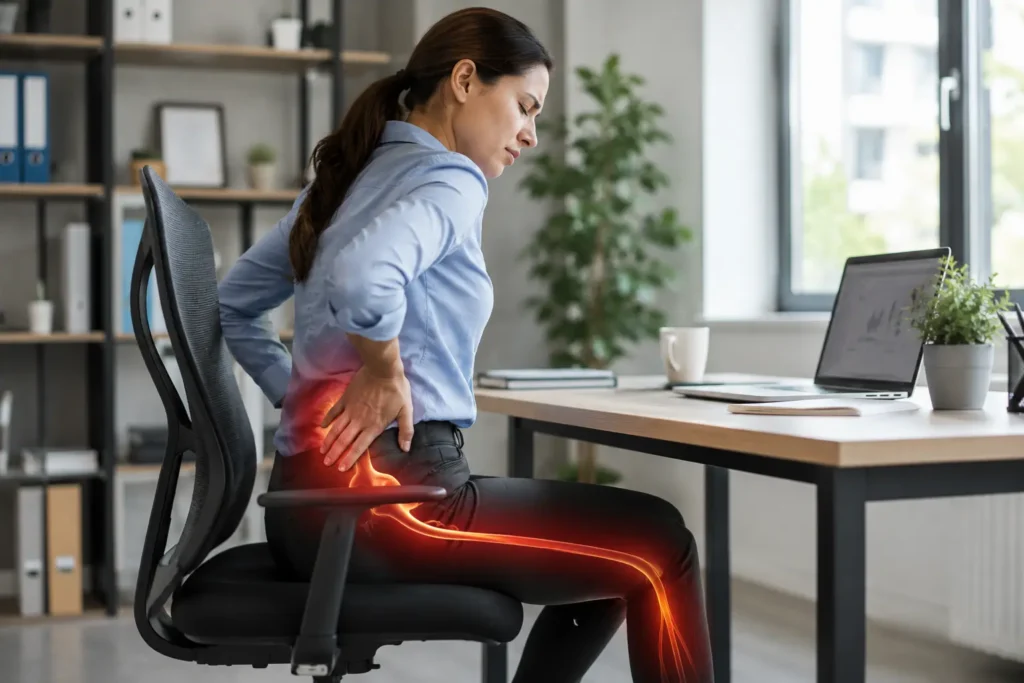
Why does sciatica get worse when sitting? Sitting increases pressure on irritated lumbar nerve roots, especially when you slouch or sit for long periods. If you have a herniated disc or nerve root compression, sitting flexes the lower spine and hips, which can aggravate buttock and leg pain, tingling, and numbness.
While sitting affects everyone differently — some people with spinal stenosis actually feel better sitting — understanding your pain pattern can help you modify posture and know when to seek specialist advice.
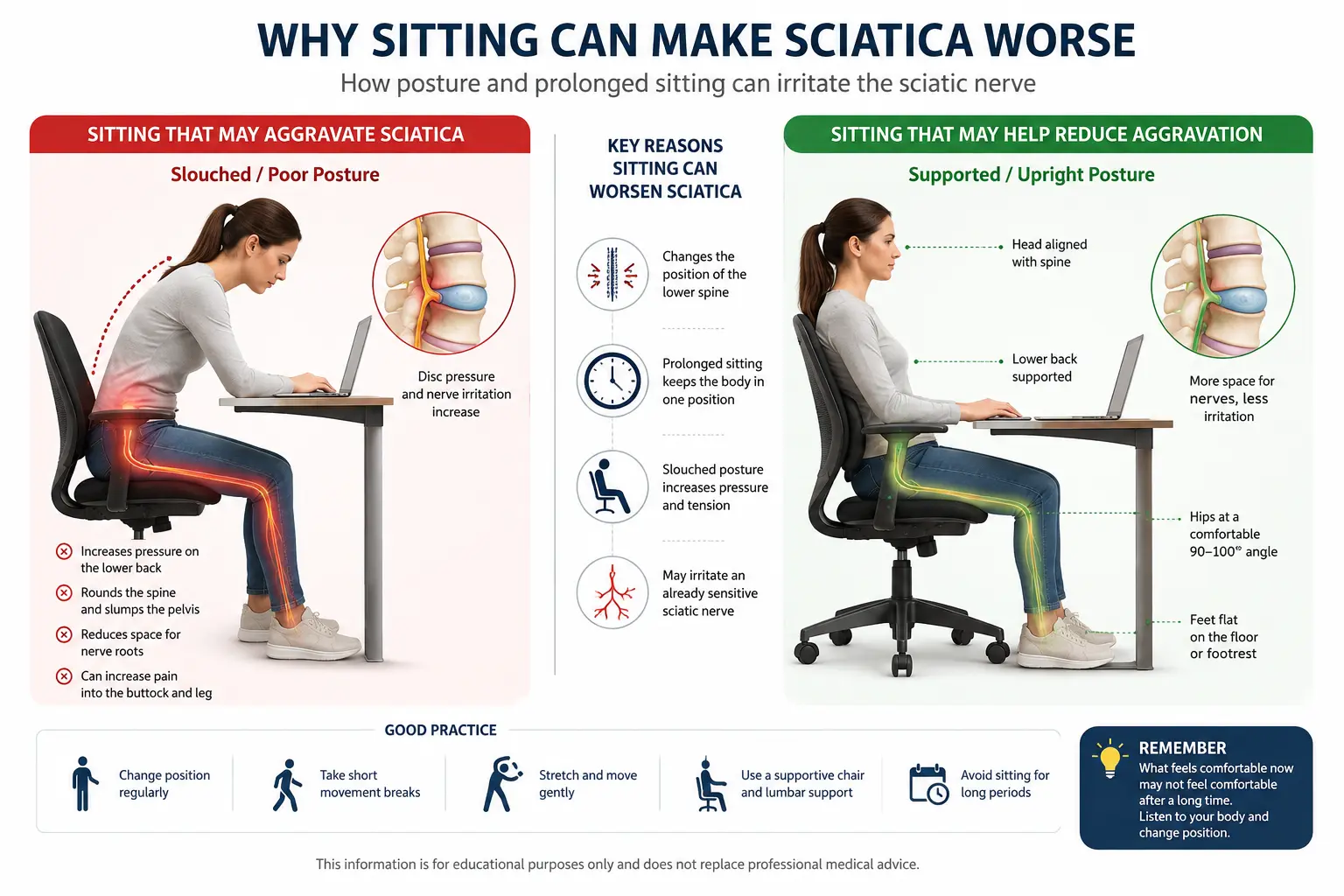
Understanding why sitting aggravates your symptoms can help you modify your daily activities without unnecessarily avoiding movement.
Table of Contents
- What Is Sciatica?
- Why Does Sciatica Get Worse When Sitting?
- Why Does Sciatica Hurt More After Sitting for a Long Time?
- Why Does My Leg Hurt More Than My Back When I Sit?
- Why Is Sciatica Worse When Driving?
- How Should You Sit If You Have Sciatica?
- How Long Should You Sit With Sciatica?
- Is Sitting Bad for Sciatica?
- What Can You Do When Sitting Makes Sciatica Worse?
- Should You Stretch If Sitting Makes Your Sciatica Worse?
- Can Sitting Make Sciatica Permanently Worse?
- When Should You See a Spine Specialist?
- When Is Sciatica an Emergency?
- Does Sciatica Always Need Surgery?
- The Bottom Line
- Frequently Asked Questions
What Is Sciatica?
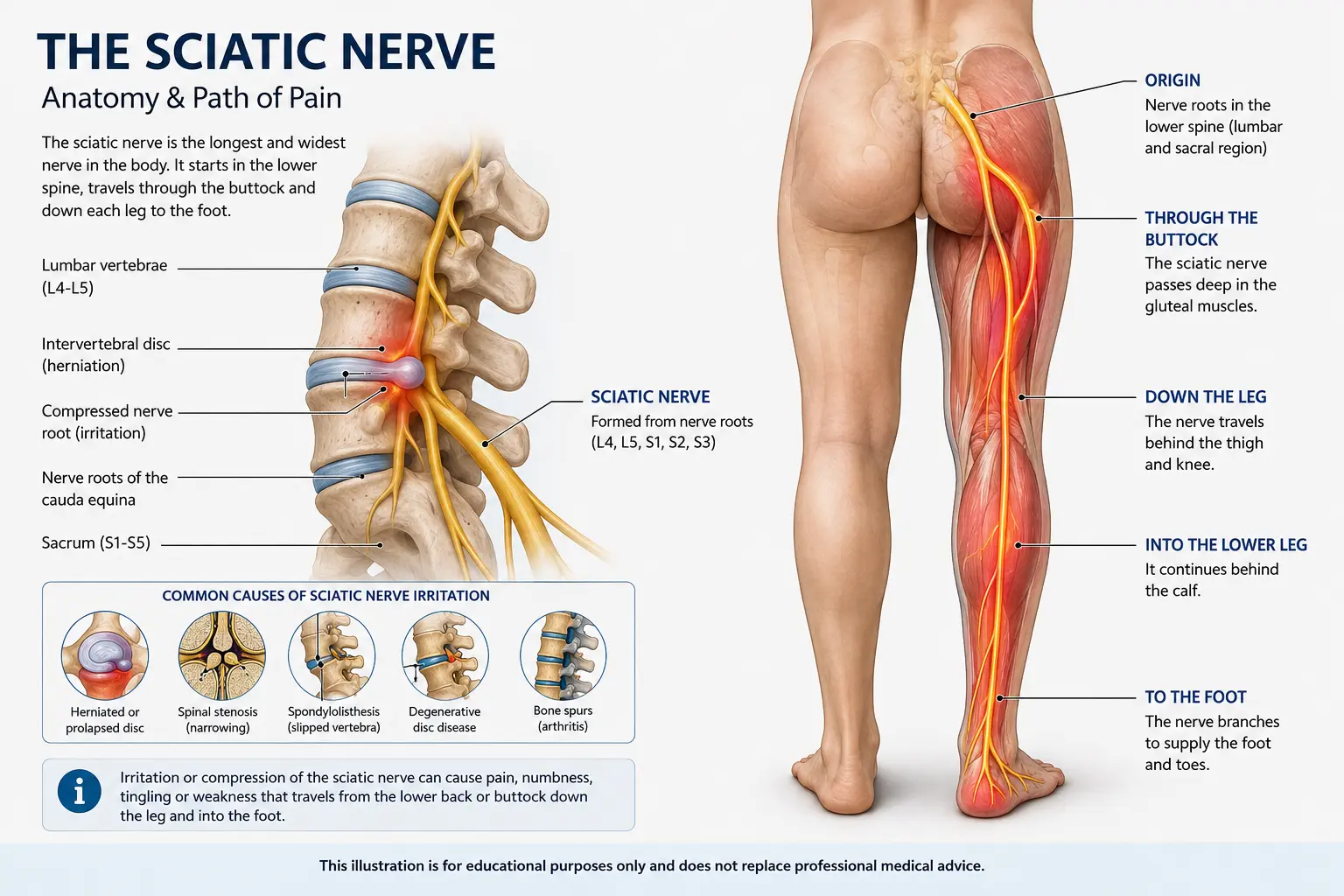
Sciatica describes pain and other symptoms that follow the path of the sciatic nerve. The sciatic nerve is formed from several nerve roots originating in the lower spine and travels through the buttocks and into the leg.
Sciatica is usually caused by irritation or compression of one or more lumbar or sacral nerve roots.
Common causes include:
- A herniated or prolapsed disc
- Degenerative changes in the lumbar spine
- Narrowing of the spinal canal or nerve openings
- Spondylolisthesis
- Bone spurs associated with arthritis
- Less commonly, other conditions affecting the spine or nerves
Symptoms can vary considerably. Some people mainly experience pain, while others may have numbness, pins and needles or weakness.
Not every episode of lower back or leg pain is sciatica. A clinical assessment may be needed to determine whether symptoms are actually coming from a spinal nerve.
For a more detailed overview, see our guide to sciatica, including its causes, symptoms and treatment.
Why Does Sciatica Get Worse When Sitting?
Sitting can aggravate sciatica for several reasons, but there is no single explanation that applies to everyone.
Sitting Changes the Position of the Lower Spine
When you sit, particularly when you slump or lean forward, the position of the lumbar spine changes.
For someone with an already irritated nerve root, this altered position may increase symptoms. Certain spinal conditions are more sensitive to flexion, while others may be aggravated by extension. This is why the posture that feels comfortable can differ significantly from one person to another.
If a particular sitting position repeatedly causes pain to travel further down the leg, it may be worth discussing this pattern with a healthcare professional.
Prolonged Sitting Keeps the Body in One Position
The problem is not necessarily sitting itself. Remaining in the same position for a long time can be the bigger issue.
When you sit for an extended period, there is less movement through the lower back, hips and legs. Muscles and joints may become stiff, and an already sensitive nerve may become increasingly uncomfortable.
This is why someone might initially feel fine when sitting but develop increasing buttock or leg pain after 30 minutes, an hour or longer.
Changing position and taking regular movement breaks can help some people manage these symptoms.
A Slouched Posture May Aggravate Symptoms
Many people naturally slide forward in a chair as they become tired.
This can result in:
- Rounding of the lower back
- Forward movement of the head and shoulders
- Increased hip flexion
- Reduced variation in spinal movement
A slouched position does not automatically cause sciatica, but it may aggravate symptoms in someone who already has a spinal or nerve-related problem.
The goal is therefore not to maintain a rigid “perfect posture” all day. It is generally more useful to avoid staying in one uncomfortable position for too long.
The Underlying Cause of Sciatica Matters
The reason sitting hurts can depend on what is causing the nerve symptoms.
For example, a person with a lumbar disc herniation may find prolonged sitting particularly uncomfortable. Someone with lumbar spinal stenosis may experience a different pattern, with symptoms sometimes becoming more noticeable during standing or walking and improving when sitting or leaning forward.
This difference is important. There is no universal sitting position or activity restriction that works for every person with sciatica.
Why Does Sciatica Hurt More After Sitting for a Long Time?
“I can sit for a while, but after some time my leg starts hurting.”
This is a common experience among people with nerve-related leg pain.
Remaining in the same position for an extended period can allow symptoms to build gradually. The irritated nerve and surrounding structures may become increasingly sensitive to the particular position and mechanical stresses involved.
Some people describe:
- Increasing buttock pain
- Burning or aching down the leg
- Pins and needles
- Numbness
- A feeling of tightness
- Pain when first standing up
In some cases, walking for a few minutes after sitting can reduce the symptoms. In others, walking may make them worse.
That difference can provide useful information about the underlying condition and should be considered alongside the rest of the clinical history.
Why Does My Leg Hurt More Than My Back When I Sit?
Sciatica is a nerve-related condition, so the most noticeable symptom does not always have to be in the lower back.
A person may have relatively mild back pain but significant symptoms in the:
- Buttock
- Thigh
- Calf
- Foot
Pain may feel sharp, burning, electric or shooting. Numbness and tingling can also occur.
In some cases, the leg symptoms become more important than the back pain because the affected nerve is particularly sensitive.
If leg pain is persistent, worsening or associated with weakness or significant numbness, it is sensible to seek medical assessment rather than simply changing your chair or posture.
Why Is Sciatica Worse When Driving?
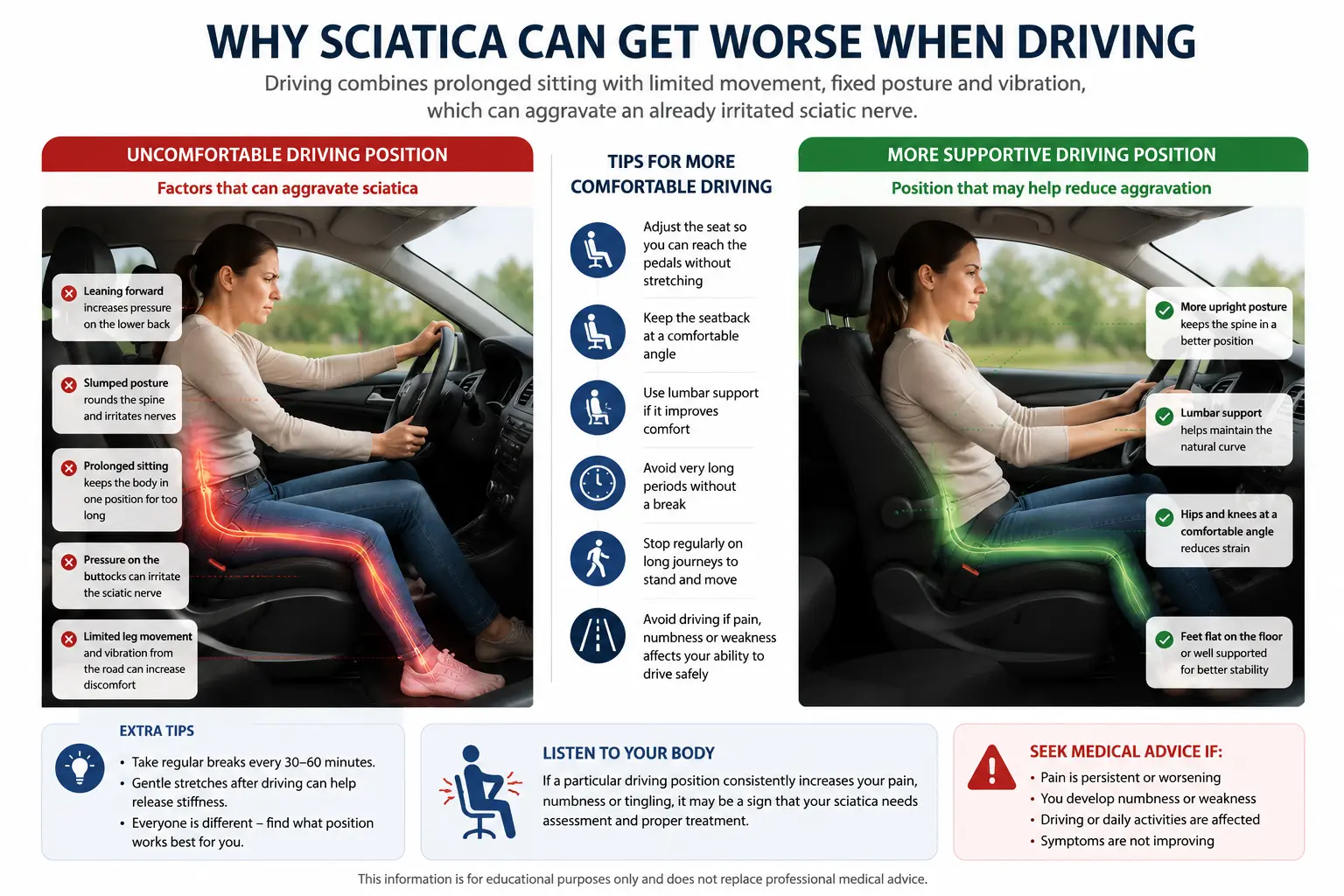
Driving can be particularly challenging for people with sciatica because it combines several factors.
- Sitting for a prolonged period
- Keeping the hips and knees bent
- Maintaining relatively little movement
- Reaching forward toward the steering wheel
- Exposure to vibration from the road
- Limited ability to change position
Long journeys can therefore aggravate symptoms even if ordinary sitting at home is manageable.
Tips for Driving With Sciatica
If driving aggravates your symptoms, consider:
- Adjusting the seat so you can reach the pedals without stretching
- Keeping the seatback at a comfortable angle
- Using appropriate lumbar support if it improves comfort
- Avoiding very long periods without a break
- Stopping periodically on longer journeys to stand and move around
- Avoiding driving if pain, numbness or weakness affects your ability to control the vehicle safely
The best seat position is the one that allows you to drive safely without consistently provoking your symptoms.
How Should You Sit If You Have Sciatica?
There is no single “perfect” sitting posture for everyone with sciatica.
Instead, aim for a position that feels comfortable and allows you to change posture regularly.
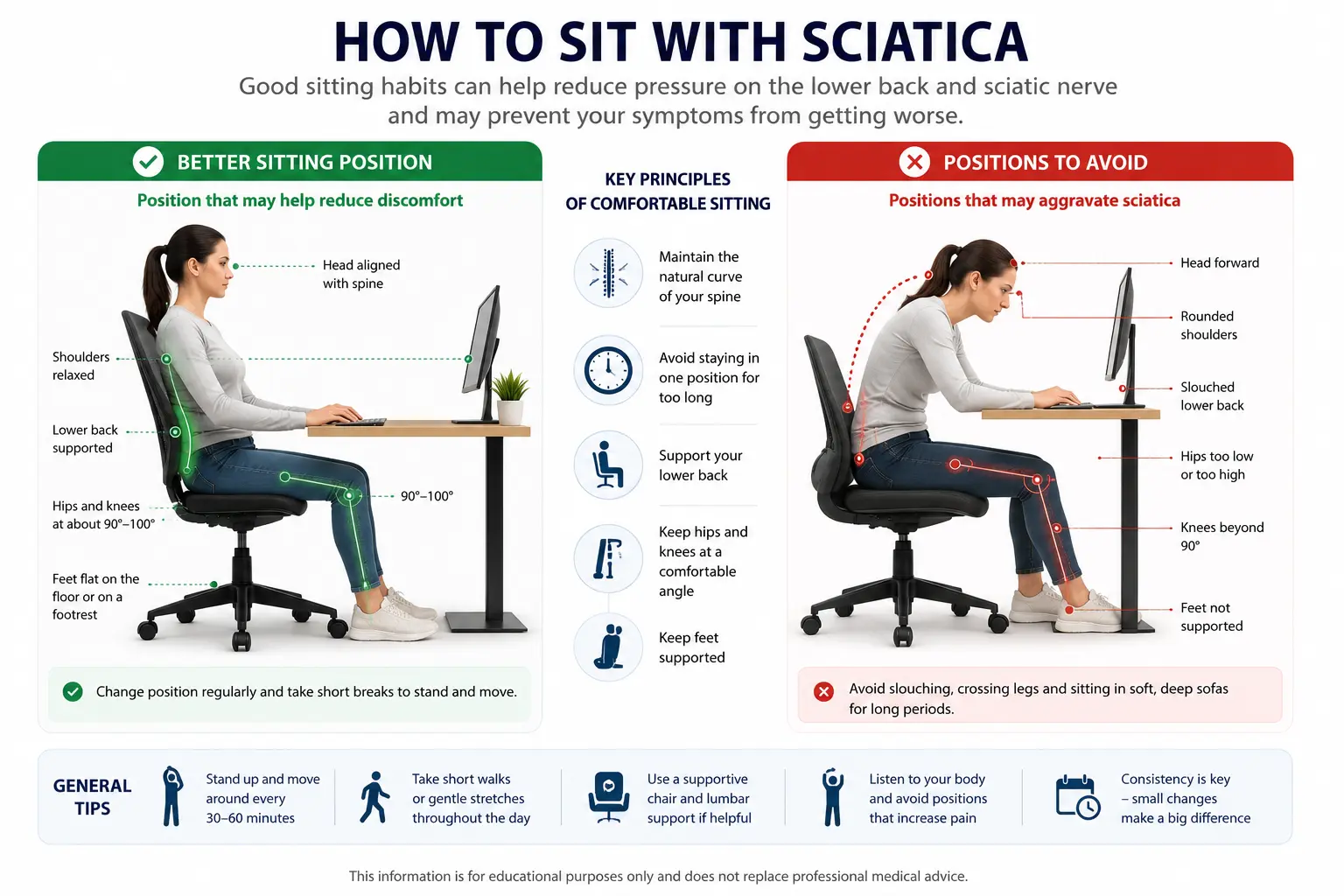
Keep Your Feet Supported
Your feet should generally rest comfortably on the floor rather than hanging unsupported.
Avoid Sinking Deeply Into a Sofa
Very soft or deep seating can make it difficult to maintain a comfortable position and may encourage slumping.
Support Your Lower Back If It Helps
A small cushion or lumbar support may be useful for some people.
Keep the Chair at a Suitable Height
You should be able to sit without your knees being positioned excessively high relative to your hips.
Change Position Regularly
Even a comfortable posture can become uncomfortable when maintained for too long.
Most importantly, don’t become overly focused on maintaining a rigid posture. Movement and variation are often more useful than trying to hold one ideal position throughout the day.
How Long Should You Sit With Sciatica?
There is no universal number of minutes that every person with sciatica should be allowed to sit.
Your symptoms and underlying condition matter.
If sitting consistently causes symptoms to build up, try changing position before they become severe. You could:
- Stand up
- Walk around briefly
- Perform comfortable movements
- Change your chair position
- Resume sitting when symptoms settle
The objective is not to avoid sitting completely. It is to prevent prolonged, symptom-provoking inactivity while gradually returning to normal activities.
Is Sitting Bad for Sciatica?
Sitting is not inherently bad for everyone with sciatica.
Some people find sitting particularly aggravating, while others are more comfortable sitting than standing or walking.
What matters is the relationship between the activity and your symptoms.
If sitting produces mild, temporary discomfort that settles when you change position, the issue may be quite different from pain that becomes progressively worse, travels further down the leg or is accompanied by neurological symptoms.
Avoiding all sitting or movement because you are worried about damaging your spine can sometimes lead to unnecessary fear and inactivity.
A more useful approach is to understand your symptoms and identify which activities aggravate them.
What Can You Do When Sitting Makes Sciatica Worse?
Change Position Frequently
Avoid remaining in exactly the same position for prolonged periods. Small changes in posture can reduce the amount of time a particular part of the spine is exposed to the same mechanical load.
Take Short Movement Breaks
Standing and walking briefly can help some people. You don’t necessarily need an intense exercise session. Regular movement throughout the day may be more practical than remaining seated for hours and then attempting a large amount of activity later.
Consider Your Chair
A chair that is excessively soft, deep or low may be uncomfortable. Try a supportive chair that allows your feet to rest comfortably and your hips and knees to remain in a relaxed position.
Avoid Prolonged Bed Rest
If you have sciatica, it can be tempting to stay in bed because movement hurts. However, prolonged inactivity is generally not the solution for most people. Remaining as active as your symptoms reasonably allow is usually preferable, unless your clinician has advised otherwise.
Consider Physiotherapy
A physiotherapist can assess movement, strength, flexibility and functional limitations and develop an exercise programme appropriate for your condition.
The exercises should be individualised rather than based solely on a generic list of stretches found online.
Should You Stretch If Sitting Makes Your Sciatica Worse?
Stretching can be helpful for some people, but it is not universally appropriate.
A stretch that feels relieving to one person may aggravate symptoms in another.
If a movement causes pain to travel further down the leg, increases numbness or produces other neurological symptoms, stop the movement and seek professional advice.
A proper assessment can help determine which movements are appropriate for your particular problem.
Can Sitting Make Sciatica Permanently Worse?
Usually, a period of sitting that temporarily aggravates sciatica does not mean that you have permanently damaged the nerve.
Symptoms can fluctuate depending on posture, activity and the underlying condition.
However, persistent nerve compression can sometimes cause neurological problems, particularly when significant weakness or progressive neurological symptoms develop.
This is why it is important to distinguish between temporary symptom aggravation and signs of ongoing nerve dysfunction.
If you are experiencing persistent or worsening weakness, significant numbness or changes in bladder or bowel function, you should seek medical attention promptly.
When Should You See a Spine Specialist for Sciatica?
Many episodes of sciatica improve with conservative treatment, but persistent or troublesome symptoms deserve assessment.
Consider seeing a doctor or spine specialist if:
- Pain continues despite appropriate self-care
- Symptoms are significantly affecting sleep or daily activities
- Leg pain is persistent or worsening
- Numbness is developing or increasing
- You notice weakness in the leg or foot
- Walking is becoming difficult
- Symptoms repeatedly return
- Conservative treatment has not provided sufficient improvement
An assessment can help establish whether the symptoms are coming from a disc problem, spinal stenosis, another spinal condition or a different cause altogether.
Imaging such as an MRI may be appropriate in selected patients, particularly when symptoms are persistent, severe or associated with neurological findings.
Why Choose Mr Bhaskar Thakur for Sciatica Assessment?
When sciatica persists or begins to interfere with walking, work, sleep or everyday activities, identifying the underlying cause becomes important. A spine specialist can assess the pattern of pain, neurological symptoms and clinical findings and determine whether further investigation or treatment is appropriate.
Mr Bhaskar Thakur is a consultant spinal neurosurgeon in London with expertise in the assessment and treatment of spinal conditions, including sciatica and other conditions affecting the spinal nerves.
His approach is focused on understanding the underlying cause of symptoms and considering appropriate treatment options, including non-surgical management where suitable.
If your symptoms are persistent, worsening or affecting your quality of life, a specialist assessment can help clarify the cause and the next steps.
Learn more about sciatica assessment and treatment with Mr Bhaskar Thakur.
When Is Sciatica an Emergency?
Most cases of sciatica are not medical emergencies.
However, certain symptoms require urgent medical assessment.
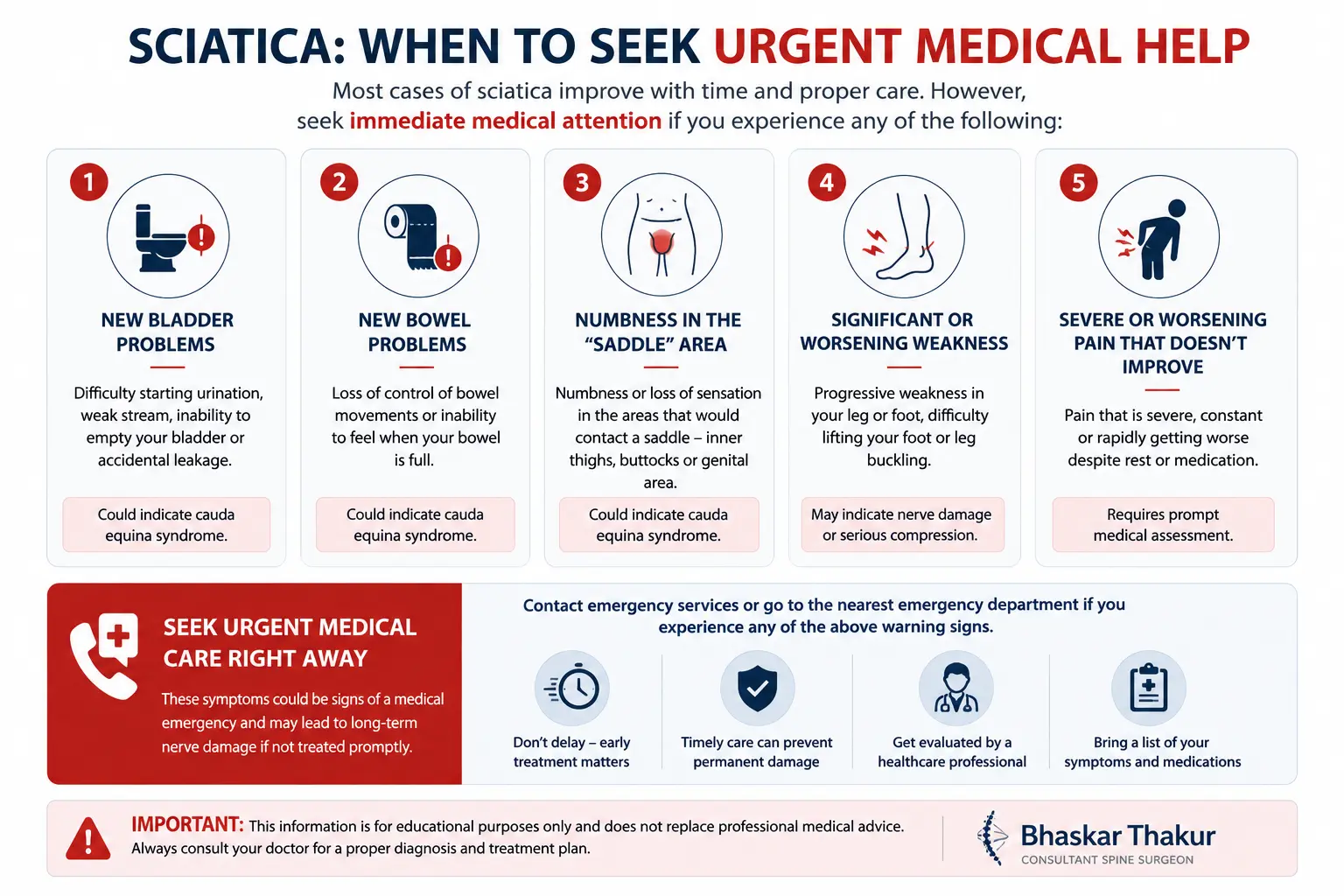
Seek urgent medical attention if you develop new:
- Difficulty controlling your bladder
- Difficulty controlling your bowel movements
- Numbness around the genitals, anus or inner thighs
- Significant or rapidly worsening weakness in one or both legs
These symptoms can indicate serious compression of the nerves in the lower spinal canal, including cauda equina syndrome, which requires urgent assessment.
Don’t wait for routine sciatica treatment if these warning signs develop.
Does Sciatica Always Need Surgery?
No.
Many people with sciatica improve without surgery, particularly when symptoms are caused by conditions that respond to conservative management.
Treatment may include:
- Maintaining appropriate activity
- Physiotherapy
- Exercise
- Pain-relieving medication where appropriate
- Modification of aggravating activities
- Management of the underlying spinal condition
Surgery may be considered when there is significant or progressive neurological deficit, persistent disabling symptoms despite appropriate non-surgical treatment, or a clearly identified structural problem that is suitable for surgical treatment.
The decision should be based on the individual’s symptoms, examination findings, imaging and overall circumstances.
Why Does Sciatica Improve When I Stand Up or Walk?
This depends on the underlying cause.
Some people experience relief when they stand or walk because movement changes the position of the spine and reduces the irritation associated with prolonged sitting.
Others may experience the opposite: standing and walking may increase their symptoms, while sitting or leaning forward provides relief.
This distinction is clinically useful.
For example, people with lumbar spinal stenosis often report symptoms that develop or worsen with standing and walking and improve with sitting or leaning forward. This pattern is different from someone whose leg pain is consistently aggravated by sitting.
The symptom pattern alone does not establish a diagnosis, but it can provide useful information during a clinical assessment.
Can Sciatica Be Prevented From Getting Worse?
Not every episode of sciatica can be prevented, particularly when structural changes in the spine are involved.
However, maintaining general physical activity, avoiding prolonged periods in one position, building appropriate strength and mobility, and addressing persistent symptoms early may help reduce functional limitations.
If your work requires long periods of sitting, consider incorporating regular opportunities to stand, walk and change position rather than remaining seated continuously throughout the day.
The Bottom Line
Why does sciatica get worse when sitting?
For many people, sitting can aggravate sciatica because it keeps the lower back and hips in a relatively fixed position and may increase irritation of an already sensitive spinal nerve. Slumped posture, prolonged sitting and activities such as long-distance driving can make symptoms more noticeable.
However, the response to sitting varies depending on the underlying cause of the sciatica.
Rather than trying to find one “perfect” sitting position, focus on regular movement, comfortable positioning and avoiding prolonged periods in a posture that consistently aggravates your symptoms.
If sciatica persists, interferes significantly with daily life, or is accompanied by numbness or weakness, professional assessment can help identify the cause and determine the most appropriate treatment.
If you develop new bladder or bowel problems, saddle-area numbness or significant/progressive weakness, seek urgent medical attention.
Related Reading
Need Advice About Persistent Sciatica?
If sciatica is affecting your ability to sit, work, drive, sleep or stay active, understanding the underlying cause is an important first step.
Learn more about sciatica and treatment options
Frequently Asked Questions
Why does my sciatica get worse when I sit?
Sitting can aggravate an irritated spinal nerve by maintaining the lower back and hips in one position for an extended period. The effect varies depending on the underlying cause of the sciatica.
Is sitting bad for sciatica?
Not necessarily. Sitting is not inherently harmful for everyone with sciatica. The main problem is often prolonged sitting or a position that consistently aggravates symptoms.
How should I sit with sciatica?
Use a comfortable, supportive chair, keep your feet supported and avoid sinking deeply into a sofa. Most importantly, change position regularly rather than trying to maintain one rigid posture.
Why does my sciatica hurt after sitting for a long time?
Remaining seated for a prolonged period can increase stiffness and maintain the spine and hips in a position that aggravates an already sensitive nerve. Symptoms may become more noticeable over time.
Why is my sciatica worse when driving?
Driving combines prolonged sitting with limited movement and a fixed hip and leg position. Long journeys can therefore aggravate symptoms in some people.
Should I walk or rest when I have sciatica?
For most people, prolonged bed rest is not helpful. Staying gently active within your limits is generally preferable, although the appropriate level of activity depends on the cause and severity of your symptoms.
Can sitting cause permanent nerve damage?
Sitting that temporarily aggravates sciatica does not usually mean permanent nerve damage. Persistent nerve compression can be more serious, particularly when neurological weakness or progressive symptoms develop.
When should I see a doctor about sciatica?
Seek medical advice if symptoms persist, worsen, interfere with daily activities, or are accompanied by numbness, weakness or difficulty walking.
When is sciatica an emergency?
New bladder or bowel dysfunction, numbness around the saddle area, or significant or progressive leg weakness requires urgent medical assessment.

[…] Why Does Sciatica Get Worse When Sitting? → […]